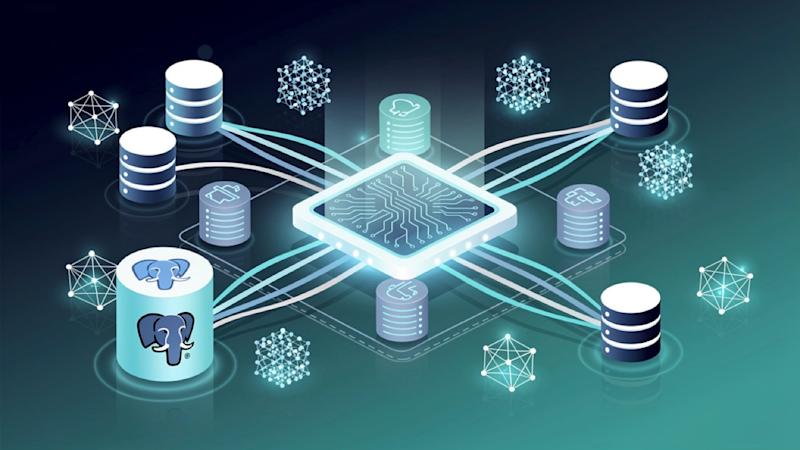
As 2026 begins, enterprise data infrastructure is shifting from basic RAG pipelines toward contextual (agentic/long‑context) memory and multimodel support for vectors, with vendors (e.g., Snowflake’s agentic document analytics) and new frameworks (Hindsight, A‑MEM, GAM, LangMem, Memobase) driving operational changes. The sector is consolidating and attracting large capital — Meta's $14.3B investment in Scale AI, IBM’s planned $11B Confluent deal, Salesforce’s $8B Informatica acquisition, Snowflake’s $250M Crunchy Data purchase, Databricks’ $1B on Neon, and Supabase’s $100M Series E at a $5B valuation — signaling that durable data platforms (not just models or prompts) and widespread PostgreSQL adoption will determine which AI deployments scale commercially.
Market structure: The shift toward multimodal DBs, PostgreSQL proliferation, and agentic memory advantages favors large cloud and enterprise DB players (SNOW, ORCL, GOOGL/GOOG, AMZN) and consolidators (IBM, CRM). Purpose-built vector DBs and small specialist vendors face TAM compression; expect narrower use cases and premium pricing only for top-tier low-latency needs. Over 12–24 months market share should re‑concentrate: top 5 platform vendors can capture +10–25% incremental revenue in data services vs fragmented specialists.
Risk assessment: Key tail risks are antitrust/M&A blocks (IBM/Confluent, CRM/Informatica), rapid LLM architecture shifts that invalidate current indexing approaches, or a major vector-indexing performance flaw causing re-engineering costs. Immediate (days) risks are earnings guidance; short-term (weeks–months) are regulatory filings and product releases; long-term (quarters–years) are platform lock‑ins and customer migration costs. Hidden dependencies: latency/indexing economics, open-source PostgreSQL forks, and cloud egress pricing.
Trade implications: Favor large-cap data-platform longs and allocate to optionality on M&A re‑ratings. Tactically trim pure-play vector specialists and redeploy into ORCL, SNOW, GOOGL, AMZN and select software consolidation beneficiaries (IBM, CRM). Use event-driven option structures around expected M&A/earnings (90–180 day expiries) and implement relative-value pairs to capture platform vs specialist compression.
Contrarian angles: Consensus underestimates resilience of niche high-performance vector engines — they can sustain 2–3x price/perf premium for latency-sensitive customers. The market may be overpricing consolidation risk; regulatory delays could create 10–30% temporary mispricings in targets (CFLT, INFA). Historical parallel: enterprise DB consolidation in 2010s led to durable incumbents plus a few high‑margin specialists, not wholesale extinction of specialists.
AI-powered research, real-time alerts, and portfolio analytics for institutional investors.
Request DemoOverall Sentiment
mildly positive
Sentiment Score
0.28
Ticker Sentiment
