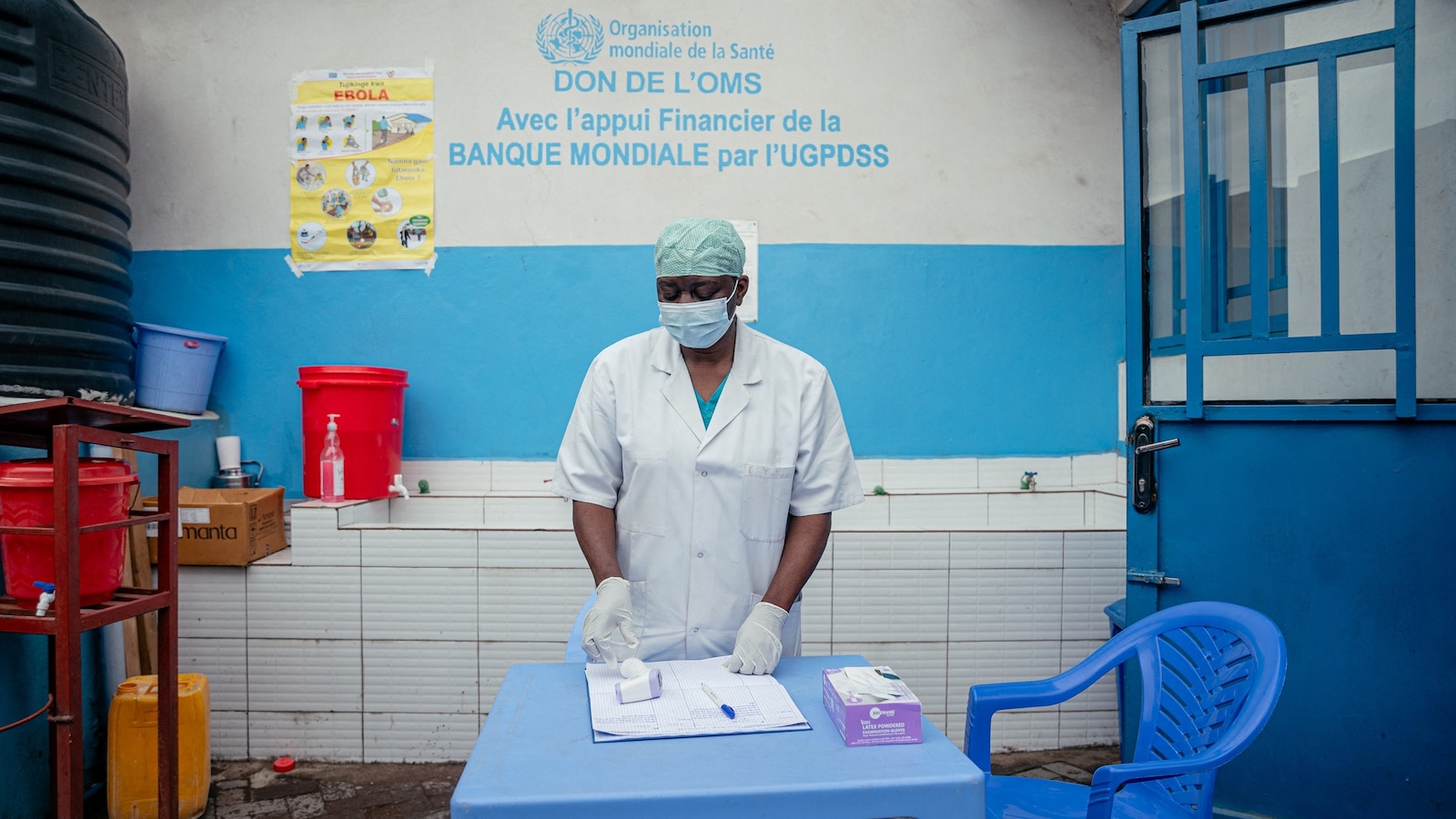
More than 1,000 suspected Ebola cases and over 230 suspected deaths have been reported in eastern DRC, with seven confirmed cases in neighboring Uganda and no vaccine available for the Bundibugyo strain. Doctors say the outbreak is spreading at an exponential rate, likely undetected for up to three months, while mistrust, attacks on health facilities, and limited lab capacity are hindering containment. The WHO has declared the outbreak a public health emergency of international concern, and officials warn the response is being weakened by cuts to U.S. humanitarian aid.
This is less a direct equity event than a latent EM public-health shock with asymmetric second-order risk: the near-term market impact is likely concentrated in border-region travel, NGO logistics, and sovereign-risk sentiment rather than broad global risk assets. The more important mechanism is operational drag in eastern DRC/Uganda corridors — reduced mobility, checkpoint friction, and intermittent closures can disrupt local supply chains for fuel, food, and consumer staples, while pushing informal economic activity further underground and worsening credit deterioration for local banks and microfinance lenders.
The bigger market signal is institutional weakening: when surveillance, lab throughput, and contact tracing capacity are impaired, outbreak duration extends nonlinearly, so the tail risk is not the case count itself but a months-long persistence premium. That raises the probability of ad hoc funding requests, multilateral emergency spending, and donor reprioritization — a small but real headwind for fiscally constrained EM governments that rely on external support. Any secondary spread into Uganda or neighboring trade hubs would matter more for sentiment than for direct earnings, but could still hit regional transport, telecom field operations, and insurers with political-risk exposure.
Consensus will likely underprice the probability of repeated “false containment” episodes over the next 4-12 weeks, especially if testing delays continue to create blind spots. The upside catalyst for risk assets would be a rapid surge in lab capacity and community compliance, but that is operationally hard to deliver quickly; absent that, the base case is prolonged headlines and intermittent escalation. The contrarian point: because this is not yet a global travel-demand shock, the selloff in broad healthcare/EM proxies should be limited unless cross-border transmission accelerates materially.
AI-powered research, real-time alerts, and portfolio analytics for institutional investors.
Request TrialOverall Sentiment
strongly negative
Sentiment Score
-0.84
