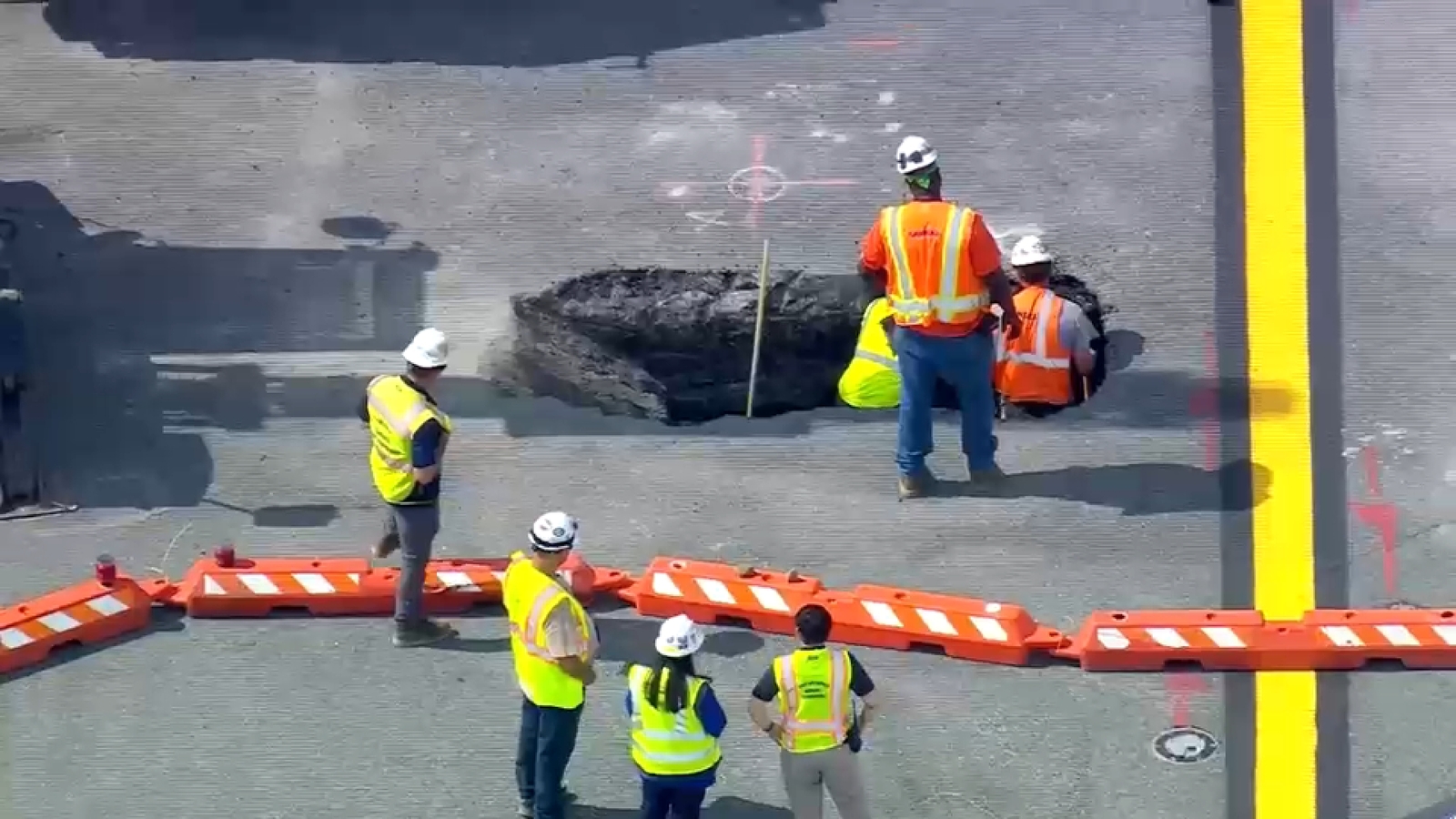
A sinkhole closed LaGuardia Airport's Runway 4/22, forcing cancellations and delays to hundreds of flights and reducing the airport to one operating runway. The disruption hit during a busy Memorial Day travel period, with crews working overnight to reopen the runway while weather-related delays also compounded operations. The event is operationally negative for the airport and travelers, but the broader market impact is limited.
This is a micro-duration capacity shock, not a macro event. When a slot-constrained airport loses a runway at the start of a holiday travel window, the first-order pain is localized to the airport operator and regional air traffic routing, but the second-order effect is a temporary re-pricing of reliability across the whole New York metro travel system. The market usually underestimates how quickly small infrastructure failures cascade into missed connections, crew displacement, and aircraft being stranded in the wrong station, which can create a 1-3 day ripple even after the physical repair is complete.
The real losers are not the airlines with the biggest exposure to the airport, but the carriers that rely on tight turns and hub-and-spoke complexity. Legacy airlines with the most constrained schedules absorb the worst operational knock-on effects, while larger network carriers can often re-accommodate across nearby airports or shift passengers onto later banks; the bigger hidden beneficiary is the ecosystem of alternative airports and ground transport. If disruptions extend through the weekend, rideshare, rail, bus, and airport hotel demand can get a short burst, but that is more of a same-week trade than a durable theme.
The key catalyst is repair speed versus weather. If the runway is fully restored within 24-48 hours, the equity impact should be negligible beyond a transient headline overhang; if inspection reveals broader pavement or drainage issues, the event can become a maintenance narrative that keeps capacity perceptions impaired for weeks and forces carriers to pad schedules. The contrarian angle is that the market may overreact to the visible chaos while underpricing the fact that runway redundancy at this airport is limited by design, so even a small asset failure creates outsized operational noise without necessarily meaningfully changing long-run traffic demand.
For investors, the setup is better expressed as a relative-value travel volatility trade than a directional macro bet. In the near term, the cleanest expression is long operators that benefit from travel spillover and short the most schedule-sensitive airline exposure, with the position closed once repair confirmation and Sunday demand data normalize. The risk/reward is attractive only if the disruption persists past the holiday peak; otherwise the move should mean-revert quickly and any outright airline short becomes a theta bleed.
AI-powered research, real-time alerts, and portfolio analytics for institutional investors.
Request DemoOverall Sentiment
mildly negative
Sentiment Score
-0.20
