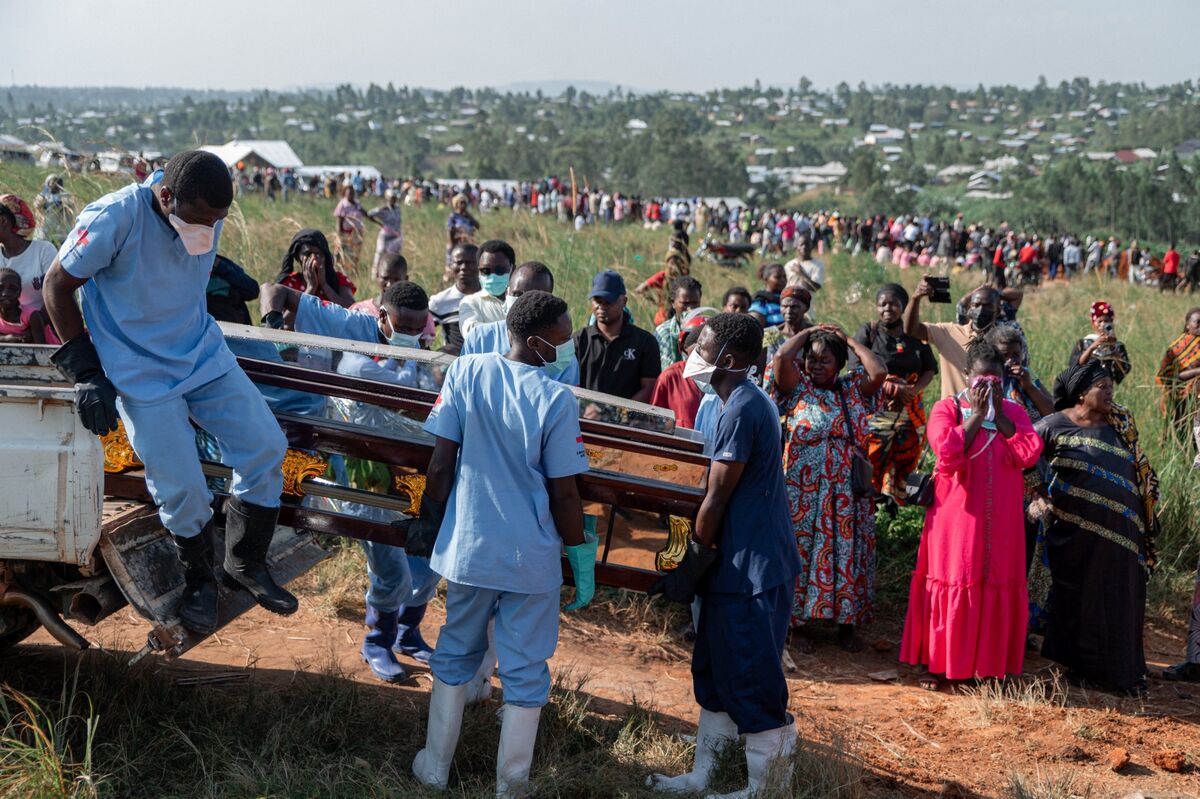
Ebola confirmed cases in eastern Democratic Republic of Congo have topped 800, with aid groups warning the outbreak may be larger than reported as treatment centers become overwhelmed. Surveillance, testing, and contact tracing are struggling to keep pace amid conflict and displacement that has uprooted nearly 1 million people. The situation raises the risk of a broader regional health crisis and could drive significant humanitarian and market-risk implications for the area.
The market impact is less about direct company exposure and more about risk premium re-pricing across fragile EM assets. An outbreak that is losing visibility in a conflict zone increases the odds of a longer-duration public health shock, which tends to hit local-currency sovereigns, border-region logistics, and any business dependent on uninterrupted field operations before it shows up in headline case counts.
Second-order winners are mostly defensive and indirect: global diagnostics, vaccine/platform developers, and cold-chain/logistics names with outbreak-response capabilities can see funding and procurement upside if agencies move from containment to escalation. The bigger loser set is EM transport, select miners, NGOs/contractors on the ground, and any consumer-facing exposure in the Congo-adjacent trade corridor, where workforce absenteeism and checkpoint friction can compound the health problem into a distribution problem.
The key catalyst is not the case count itself but whether surveillance failure persists for 2-6 weeks; if so, the probability of cross-border spread rises nonlinearly and forces emergency spending, travel restrictions, and donor mobilization. The consensus may be underpricing how quickly conflict can break the response loop: when contact tracing fails, the market usually anchors on current fatality rates, but the real risk is a delayed jump in undetected transmission that only becomes visible after regional mobility has already spread the outbreak.
Contrarian view: some of the immediate fear may be overdone if the response is rapidly militarized/logistically supported by African regional actors and NGOs, which could compress the tail within days rather than months. But given the displaced population and operational constraints, the more asymmetric risk is that the situation stays locally contained yet persistently disruptive, creating a long, grinding drag on EM sentiment rather than a single acute panic event.
AI-powered research, real-time alerts, and portfolio analytics for institutional investors.
Request DemoOverall Sentiment
strongly negative
Sentiment Score
-0.78
