The US goods trade deficit widened 27.4% in May to $105.8 billion, the largest shortfall in more than a year, as exports fell and imports rose. The print missed economists’ $85 billion estimate by a wide margin, signaling a weaker net trade contribution to growth. The figure is not inflation-adjusted, but it points to softer external demand and firmer import demand.
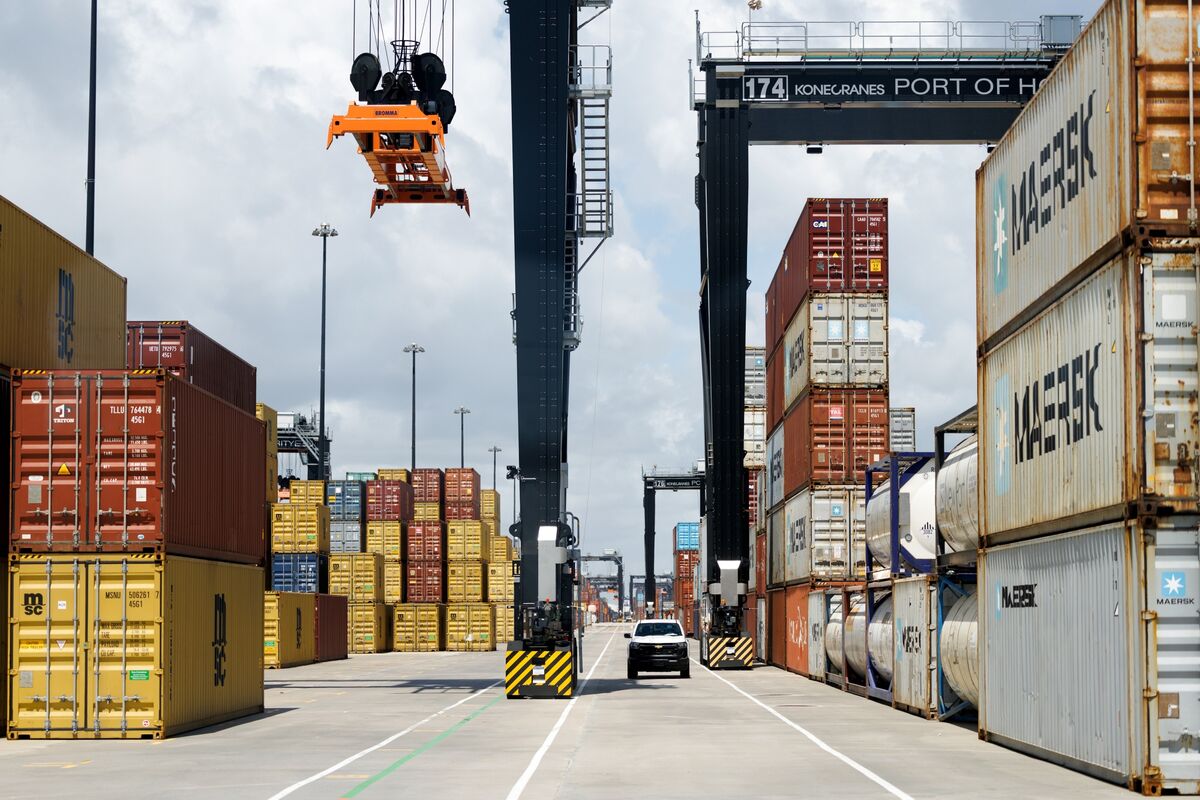
A wider goods deficit is not just a growth leak; it is a direct drag on second-half GDP and a quiet signal that domestic demand is being met by foreign supply instead of local production. The second-order winner is the large-cap import/logistics stack: ocean carriers, ports, rail intermodal, and distributors with scale to manage inventory timing, while domestic manufacturers with weaker pricing power and longer lead times face margin pressure if the import mix persists.
The FX implication is more important than the headline suggests. A persistent trade gap usually keeps upward pressure on the dollar via capital financing needs, but in the near term it can also reflect a “front-loaded import” impulse from tariff uncertainty, which would be disinflationary for goods prices over the next 1-2 quarters even if it looks growth-negative today. That creates a cross-current: weaker industrial activity, but potentially softer goods inflation, complicating Fed reaction function and rate-cut timing.
The key risk is that this is not a one-off month but the start of a restocking and tariff-prep cycle. If companies keep pulling inventory forward, the trade balance can remain weak for several months, then reverse abruptly once inventory clears; if instead demand is simply softening, the deficit narrows later but at the cost of a broader earnings slowdown. In either case, the most exposed names are US cyclicals with high domestic revenue sensitivity and limited import substitution ability.
Consensus may be underestimating how much of this is a sequencing effect rather than a pure demand signal. If imports were accelerated ahead of policy changes, the market should treat the current weakness as temporary but still tradable: goods-heavy inflation prints may cool before activity does, creating a window where duration assets outperform while industrials lag. The trade is less about the headline deficit and more about which asset class wins if growth slows before inflation fully reaccelerates.
AI-powered research, real-time alerts, and portfolio analytics for institutional investors.
Request DemoOverall Sentiment
mildly negative
Sentiment Score
-0.15
