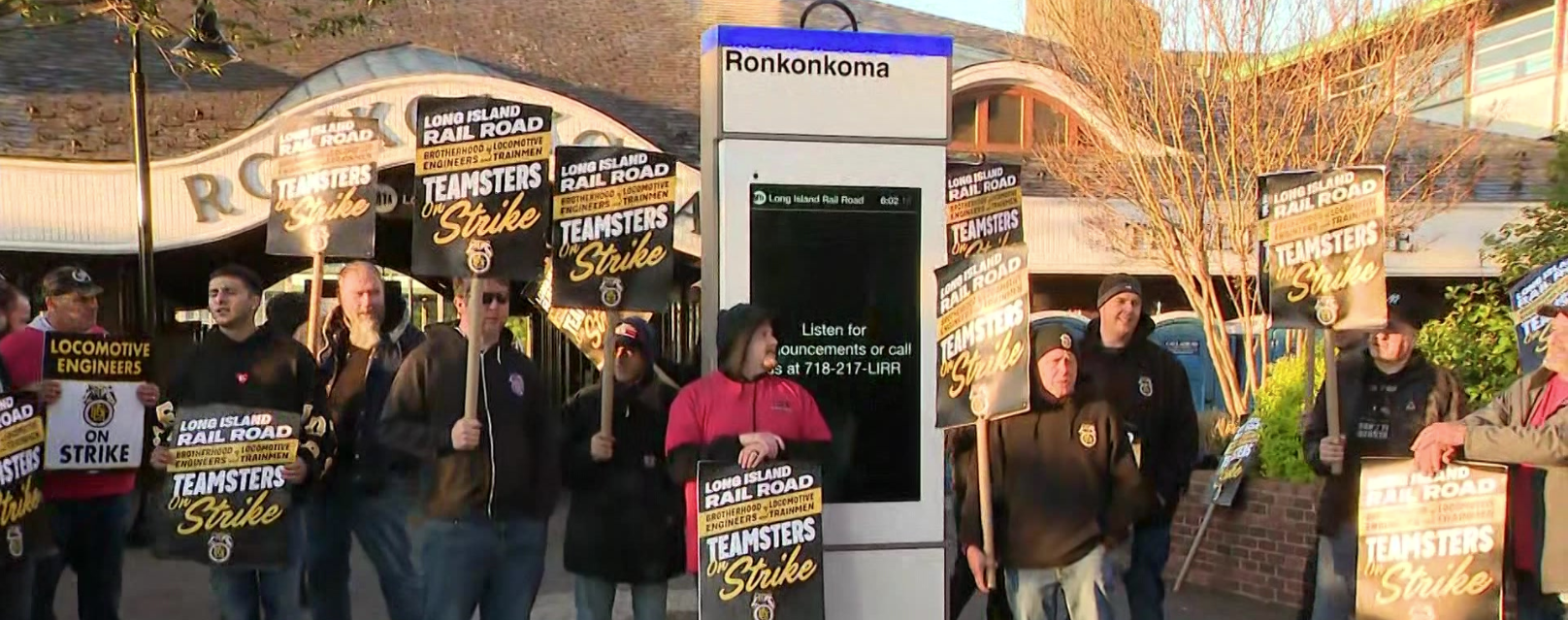
About 3,500 Long Island Rail Road workers have gone on strike, shutting down all LIRR service for the first time since 1994 and disrupting more than 200,000 daily riders. The dispute centers on pay and health-care terms, with the MTA saying a 5% raise is unaffordable and unions saying they want a 5% increase this year after a 9.5% retroactive raise over the prior three years. The shutdown is already affecting commuting, airport/city access and event travel, including Subway Series transportation to Citi Field.
The immediate market read is not the strike itself but the forced substitution effect: every day the rail is down shifts demand into cars, buses, ride-hail, and last-mile parking, which raises both time cost and effective trip cost for the entire Long Island–NYC commuter belt. That typically benefits discretionary travel alternatives at the margin, but the larger second-order effect is a short, sharp compression in local economic activity around stations, CBD foot traffic, and same-day services that depend on predictable commuter flow. The MTA itself becomes a political pricing object rather than a transport operator, which increases the odds of headline-driven policy responses before any operational resolution.
The key risk window is days, not months: the longer the shutdown persists, the more quickly commuters reset behavior, especially hybrid workers who may discover they can avoid the system entirely. That creates a non-linear revenue and ridership hit even after service resumes, because some lost frequency never comes back. For the broader transit and logistics stack, the winner set is narrow and tactical; the loser set is broader and cumulative, including parking operators, suburban retail footfall, and any business tied to weekday station-area traffic.
Consensus is likely over-focusing on labor optics and underestimating the fiscal constraint on the MTA. If wage concessions are granted, the market should expect the cost to be socialized through either fare pressure, deferred capex, or softer service quality — all negative for long-duration asset confidence. If no deal arrives quickly, the damage compounds through political escalation, but if a resolution lands abruptly, the rebound in mobility sentiment could be fast, making this a short-horizon event with high headline beta and limited fundamental persistence.
AI-powered research, real-time alerts, and portfolio analytics for institutional investors.
Request DemoOverall Sentiment
strongly negative
Sentiment Score
-0.72
Ticker Sentiment
