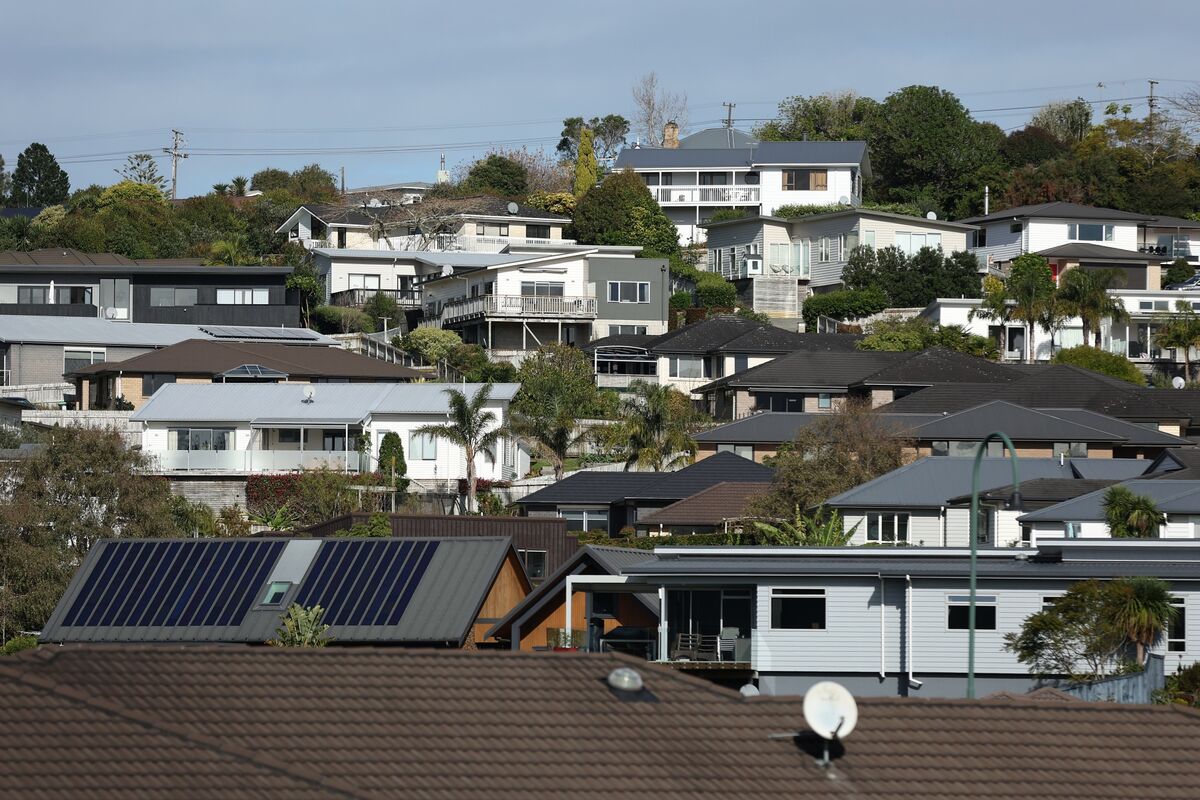
New Zealand house prices fell for the fifth consecutive month in August, reaching a two-year low, as sluggish economic growth and rising unemployment deter buyers. Data from Cotality shows a 0.2% monthly decline, following a revised 0.4% drop in July, and a 0.1% year-over-year decrease, signaling continued weakness in the nation's real estate market amidst challenging economic conditions.
The New Zealand housing market is exhibiting sustained weakness, with prices declining for a fifth consecutive month in August to reach a two-year low. Data from property consultancy Cotality indicates a 0.2% month-over-month price drop, following a revised 0.4% decline in July, and a 0.1% contraction on a year-over-year basis. This persistent downturn is directly attributed to deteriorating macroeconomic fundamentals, specifically sluggish economic growth and rising unemployment, which are deterring potential buyers and suppressing demand. The trend underscores a clear cooling in the real estate sector, moving beyond a minor fluctuation to signal a more entrenched market correction driven by adverse economic conditions, a view supported by the strongly negative sentiment score of -0.65.
AI-powered research, real-time alerts, and portfolio analytics for institutional investors.
Request DemoOverall Sentiment
strongly negative
Sentiment Score
-0.65
