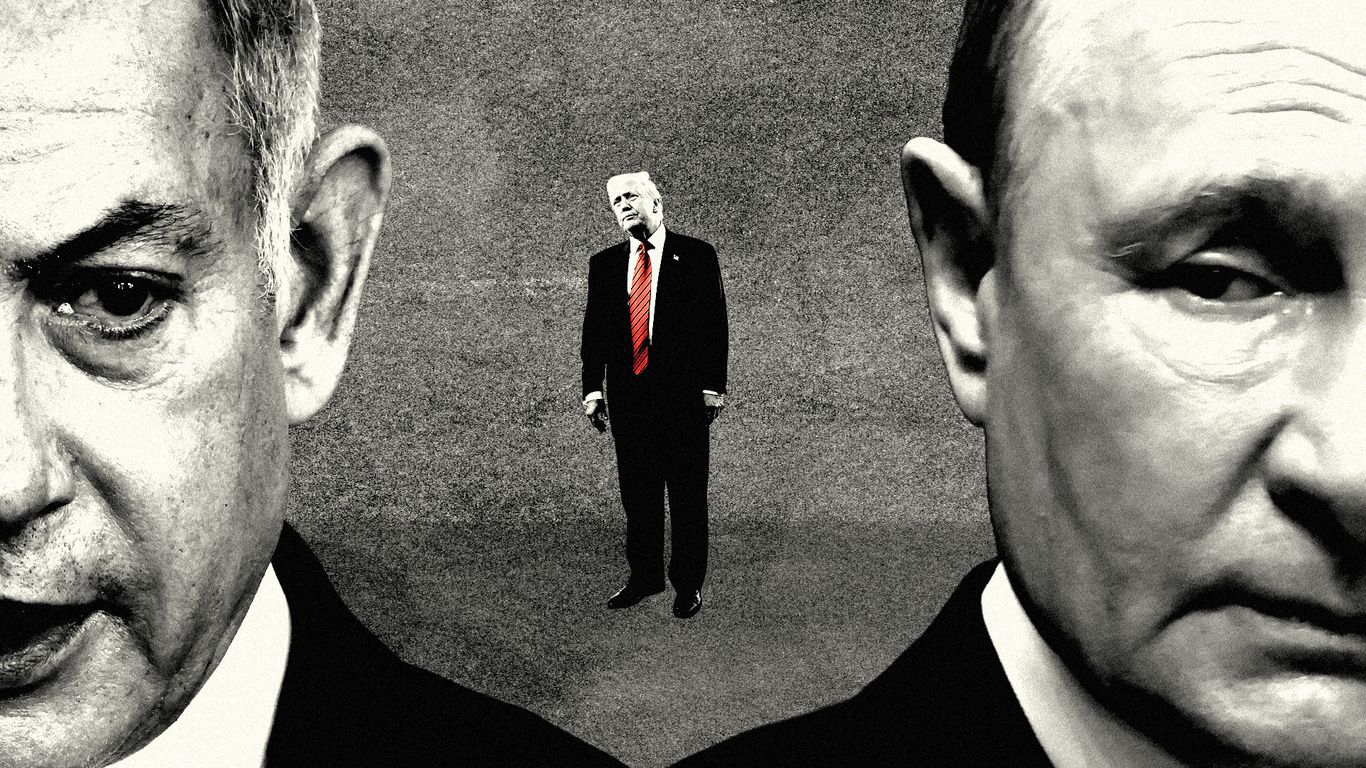
President Trump exhibits frustration over his limited ability to influence Benjamin Netanyahu and Vladimir Putin regarding the ongoing conflicts in Gaza and Ukraine, despite his public claims of control. Recent events, including Russia's intensified aerial attacks and Israel's uncoordinated bombing of Qatar, underscore Trump's mild reactions and a perceived lack of leverage, with sources indicating he misjudged Putin's peace intentions and often defers to Netanyahu, even when U.S. diplomatic initiatives are undermined. This dynamic suggests continued instability in these critical regions and raises questions about the efficacy of U.S. foreign policy in de-escalating major global conflicts.
The provided intelligence points to a significant disconnect between the U.S. administration's public assertions of control and its private inability to influence key geopolitical outcomes, particularly concerning the conflicts in Ukraine and Gaza. The administration's frustration is evident as both nominal adversary Vladimir Putin and ally Benjamin Netanyahu appear to be acting unilaterally, undermining U.S. diplomatic initiatives. For instance, a summit with Putin was framed as a success despite yielding no tangible de-escalation, while threatened "severe consequences" failed to materialize, leading the White House to shift the onus for pressure onto European allies. Similarly, the administration has been reluctant to use its stated "overwhelming leverage" over Israel, whose uncoordinated military actions, such as the attack in Doha during peace talks, have directly subverted U.S. policy goals. This pattern of reactive and seemingly ineffective diplomacy, highlighted by the article's 'strongly negative' sentiment, suggests a persistence of geopolitical instability in two critical regions, elevating background risk for global markets.
AI-powered research, real-time alerts, and portfolio analytics for institutional investors.
Request DemoOverall Sentiment
strongly negative
Sentiment Score
-0.60
