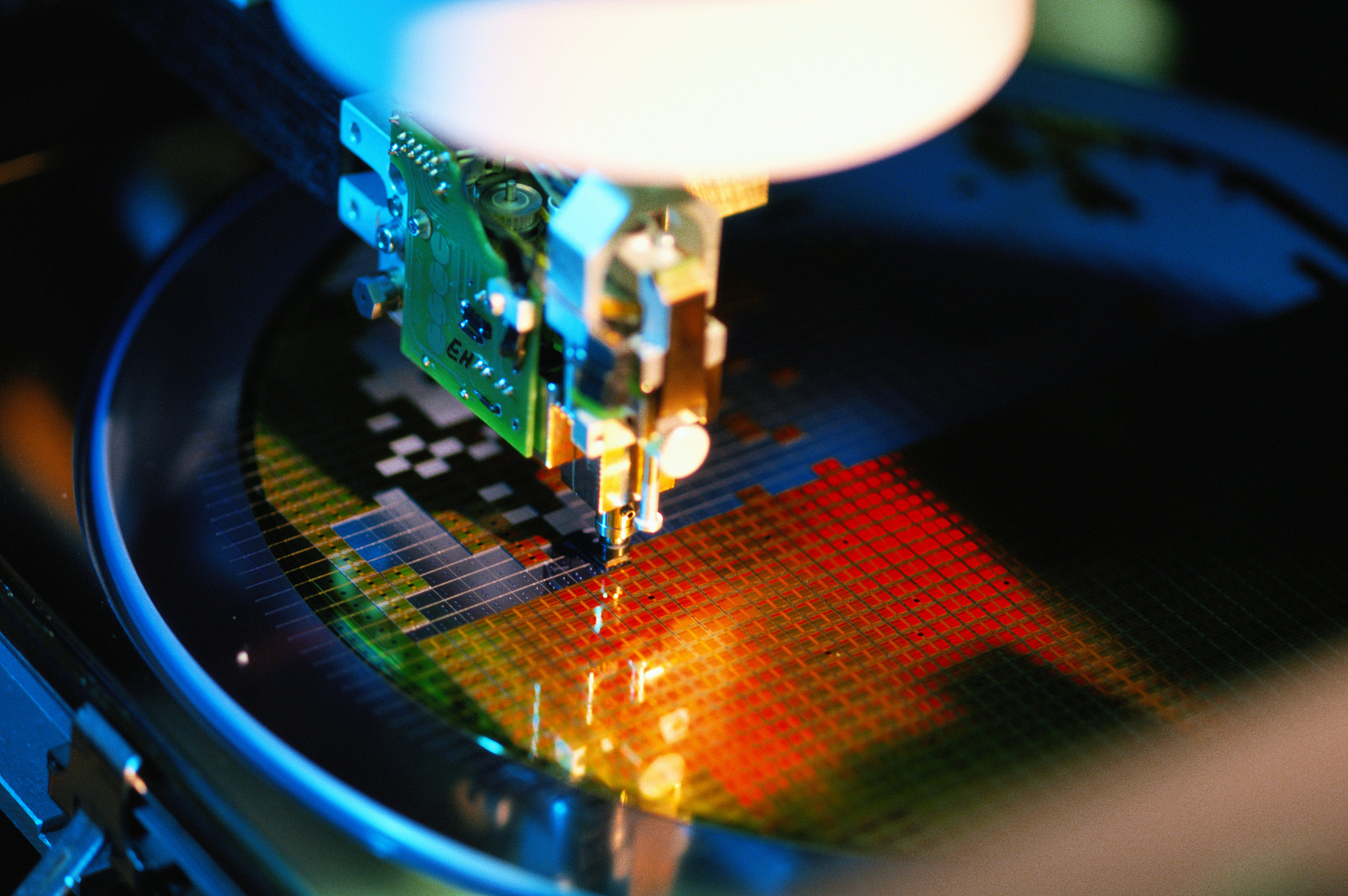
The Trump administration is set to announce results of its Section 232 national security investigation into semiconductor imports within two weeks, a move expected to precede new chip tariffs that Barclays projects for implementation between mid-August and September. President Trump indicated the EU has found a 'better way' to avoid these specific chip tariffs, possibly through a broader trade agreement involving significant EU investment in the US and energy purchases. He also anticipates companies will increase US semiconductor manufacturing to mitigate the impact of these tariffs.
The market is bracing for imminent U.S. tariffs on semiconductors, as the Trump administration is set to announce the results of its Section 232 national security investigation into chip imports within two weeks. This action, which follows a pattern used to impose tariffs on steel and aluminum, creates a clear timeline for new trade barriers, with a Barclays research report forecasting implementation between mid-August and September. However, the administration's strategy appears to involve both punitive measures and negotiated settlements. President Trump indicated the European Union has circumvented these specific tariffs through a 'better way'—a broader trade agreement reportedly involving a 15% tariff rate, $600 billion in new EU investment into the U.S., and $750 billion in purchases of U.S. energy products. This dual approach suggests the tariff threat is a tool to compel trade partners into negotiations and to incentivize the reshoring of manufacturing, as Trump anticipates companies will increase investment in U.S. semiconductor production to avoid the duties.
AI-powered research, real-time alerts, and portfolio analytics for institutional investors.
Overall Sentiment
mildly positive
Sentiment Score
0.25
Ticker Sentiment
