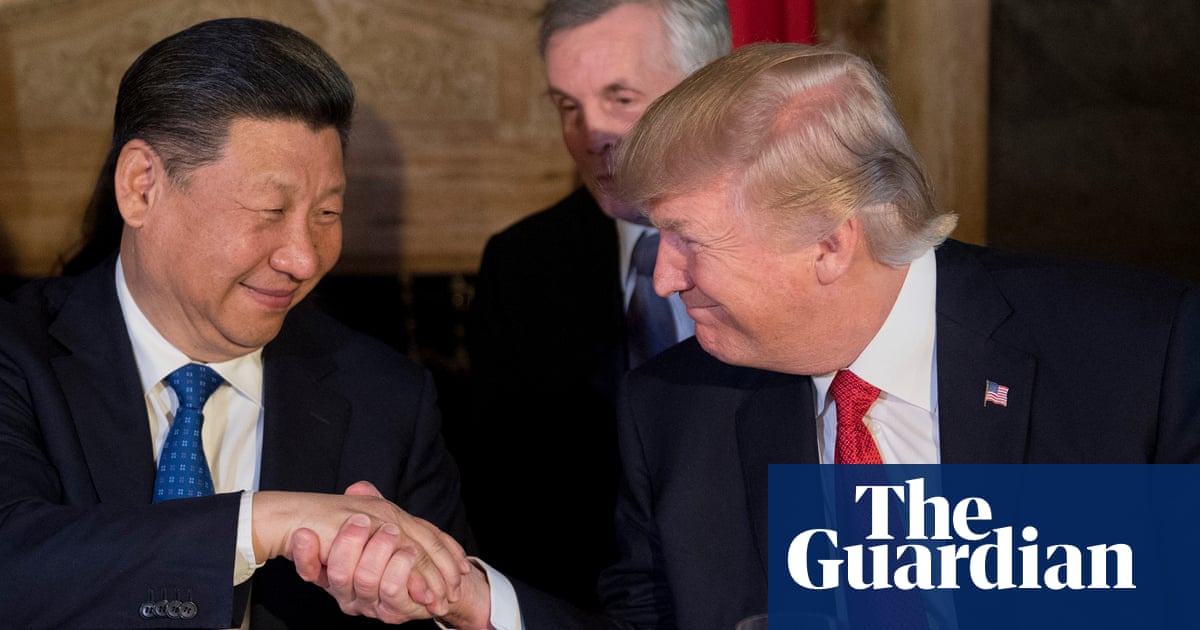
Trump is set to visit China with a guest list heavy on tech CEOs, including Tim Cook, Elon Musk, Micron's Sanjay Mehrotra, Cisco's Chuck Robbins and Qualcomm's Cristiano Amon, while Nvidia's Jensen Huang will not attend. The trip raises the prospect of semiconductor and AI-related announcements, with Micron cited as a possible beneficiary, amid ongoing U.S.-China tensions over chip access and AI oversight. The article also notes the White House is considering an executive order requiring frontier AI models to undergo White House review, following recent national security reviews involving Google DeepMind, Microsoft and xAI.
This reads less like a bilateral trade summit and more like a coordinated attempt to reprice the AI supply chain around policy risk. The immediate beneficiaries are the firms with the best ability to convert geopolitical theater into purchase orders or regulatory optionality: Apple, Micron, Qualcomm, and, secondarily, Microsoft. Apple stands out because its China exposure is now a two-way lever — stronger consumer demand there offsets the long-term need to keep production diversified, which should support multiple expansion if management can show margin protection while shifting capacity.
The underappreciated loser is Nvidia, not because demand is weakening, but because policy is increasingly trying to force alternative winners into the frame. If chip sales to China remain constrained while the White House formalizes pre-release model reviews, the market may start valuing “allowed to scale” rather than “best model,” which is mildly negative for NVDA’s China upside and more positive for compliant ecosystems and domestic infrastructure names. Cisco is a quieter beneficiary if the trip turns into telecom/enterprise procurement signaling, but that is likely a lower-conviction trade than semis or endpoints.
The bigger second-order effect is that U.S. AI governance is converging toward a quasi-export-control regime for models, not just chips. That shifts risk from hardware shipment volumes to launch timing, partner selection, and model feature sets over the next 3-12 months. For large-cap software, this is modestly bullish for Microsoft because it already has the compliance machinery and distribution scale to absorb review friction better than smaller frontier labs.
Contrarian view: the market may be overestimating the probability of a meaningful China deal and underestimating the chance this becomes symbolic diplomacy with limited follow-through. The real catalyst is not a headline agreement, but whether Apple, Micron, or Qualcomm secure concrete commercial accommodations over the next few weeks. If those don’t materialize, the event likely fades into a mild sentiment pop rather than a durable re-rating.
AI-powered research, real-time alerts, and portfolio analytics for institutional investors.
Request DemoOverall Sentiment
neutral
Sentiment Score
0.05
Ticker Sentiment
