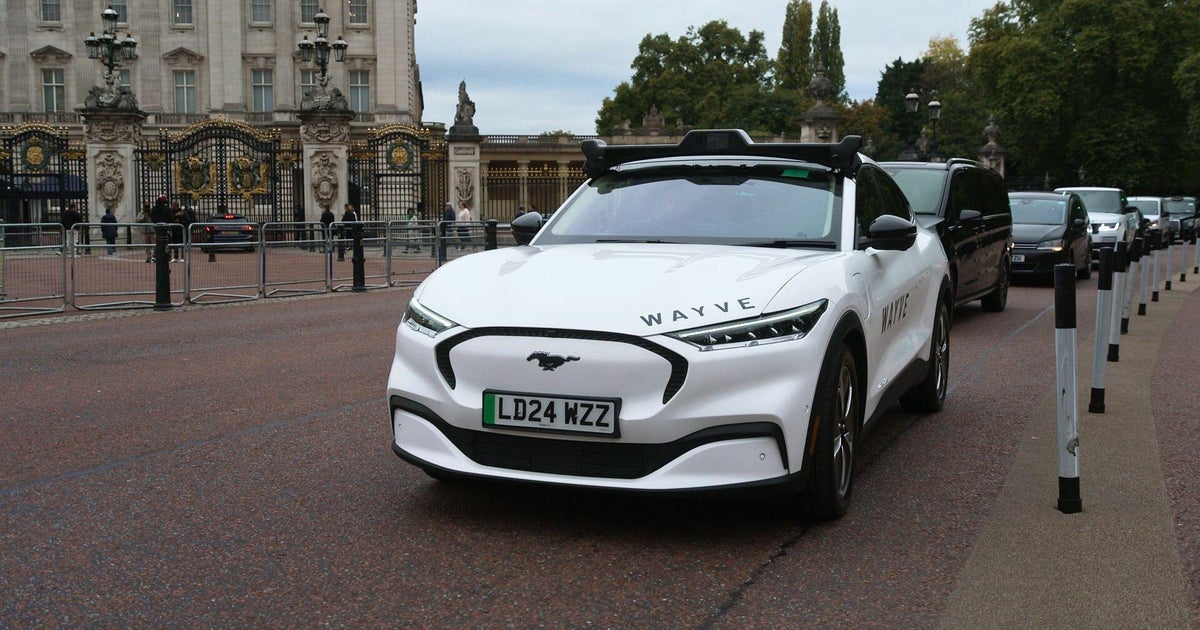
London’s black cab industry is facing potential competition from AI-powered robotaxis, with Wayve and Waymo both testing vehicles in the city ahead of possible approvals. Waymo says its system is five times safer than a human driver and has logged millions of rides in 11 U.S. cities, while London cabbies continue to rely on the 161-year-old Knowledge exam. The story is mainly a strategic update on autonomous vehicle adoption and regulation rather than a near-term market catalyst.
The near-term market read is less about robotaxis displacing incumbents overnight and more about a widening regulatory credibility gap. The companies with the best data, sensor stacks, and capital intensity today are not the ones with the cleanest path to scale; the bottleneck is municipal approval, operating permits, liability allocation, and public tolerance after the first high-profile incident. That means the first financial winners are likely to be hardware and cloud enablers, while the first listed loser is still the network-effect ride-hail incumbent whose unit economics get pressured every time autonomous supply becomes politically acceptable.
For Alphabet and Microsoft, this is a slow-burn option on infrastructure demand: mapping, simulation, inference, and enterprise AI tooling all benefit from every incremental AV fleet mile, even if consumer deployment lags 12-24 months. Nvidia is the clearest pick-and-shovel beneficiary because AV development is compute-hungry even before commercial rollout; the trade is not about London specifically, but about the signal that another dense, regulated city is becoming a validation lab. The second-order effect is on data-center capex expectations: AV winners will likely spend aggressively on training and simulation before they monetize, which supports semiconductor and cloud demand regardless of near-term ride volume.
Uber looks over-discounted on the headline because the first revenue impact from London is years away, but the strategic overhang is real: every new approved city lowers the perceived scarcity of human drivers in premium urban corridors and compresses pricing power in airport and late-night rides first. The more important risk is that autonomous deployment starts in low-friction geographies and then migrates into exactly the urban lanes where Uber’s take-rate is richest. Consensus may be underestimating how quickly fleet operators can win share in dense markets once regulators accept a safety record, but overestimating how fast that translates into broad consumer adoption.
The cleanest expression is a relative-value long NVDA/MSFT basket versus short UBER, using a 6-12 month horizon; the upside on the long leg is driven by pre-revenue infrastructure spend, while the short leg is a valuation reset if investors start pricing a 2026-2028 margin headwind. For a more tactical structure, buy GOOGL calls six to nine months out and fund them with UBER puts: GOOGL has both the optionality and the distribution to benefit if Waymo becomes the default autonomous standard, while UBER bears the burden of disruption without owning the core stack. If the article’s narrative is right, the market will first reward the picks-and-shovels before it punishes the incumbent platform.
AI-powered research, real-time alerts, and portfolio analytics for institutional investors.
Request DemoOverall Sentiment
neutral
Sentiment Score
0.05
Ticker Sentiment
