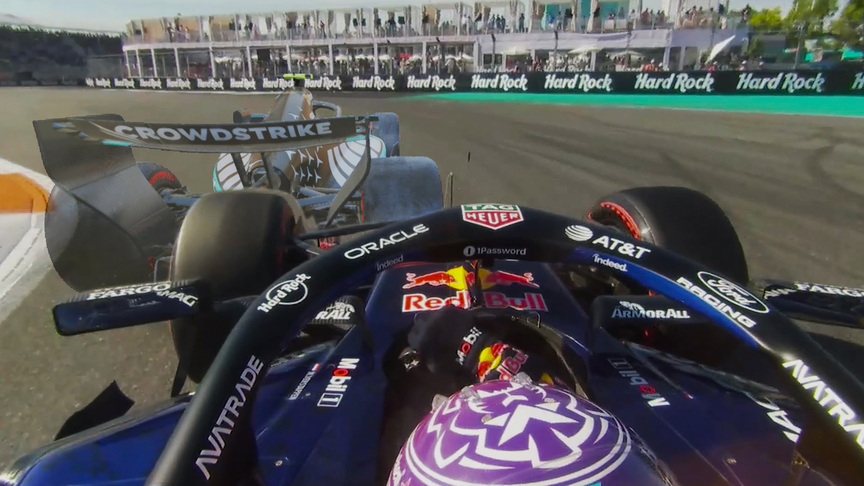
Kimi Antonelli took pole for the 2026 Miami Grand Prix with a 1:27.798 lap, beating Max Verstappen by 0.166s and Charles Leclerc by 0.345s. Lando Norris recovered from a boost issue to qualify fourth, while Mercedes placed Antonelli and Russell in the top five. The result is a positive motorsport headline but has limited direct market impact.
The market takeaway is less about the headline pole and more about the persistence of Mercedes extracting single-lap performance from a package that has looked inconsistent on race trim. When one team can repeatedly convert track evolution into clean laps, it tends to extend the optimism around its aero/suspension development path and keep implied upside in the name elevated into Sunday, especially when the gap to the field is small enough that pit wall execution can decide the result.
The bigger second-order implication is for the front-row ecosystem: Ferrari and Red Bull still appear competitive enough to keep the championship narrative alive, but they are now in a regime where tiny setup or tire-window misses get punished disproportionately. That usually compresses margins for suppliers and partner narratives tied to “performance rebound” stories, while increasing volatility in anything leveraged to race-weekend momentum, because the difference between P1 and P5 can flip on a single gust, tire choice, or systems issue.
Consensus may be overrating the durability of the current order because qualifying strength in Miami has a weaker translation to race outcome than at many power tracks. If the lead car is exposed to dirty air, safety cars, or an early undercut, the favorite can quickly become a collection of defensive strategies rather than a clean win, which matters for anyone extrapolating this into a multi-race trend. The key risk to the bullish read is not that the pole is false, but that it is too visible: once the market embraces the “Mercedes turnaround” trade, the next race only needs a normal result to fade it.
From a timing standpoint, this is a days-to-weeks event for sentiment, not a years-long fundamental re-rate. The move is probably underappreciated if Mercedes can convert pole into a podium, but if Sunday reveals race-pace weakness, the share reaction should mean-revert quickly because the setup is more headline-driven than structurally self-reinforcing.
AI-powered research, real-time alerts, and portfolio analytics for institutional investors.
Request DemoOverall Sentiment
mildly positive
Sentiment Score
0.35
Ticker Sentiment
