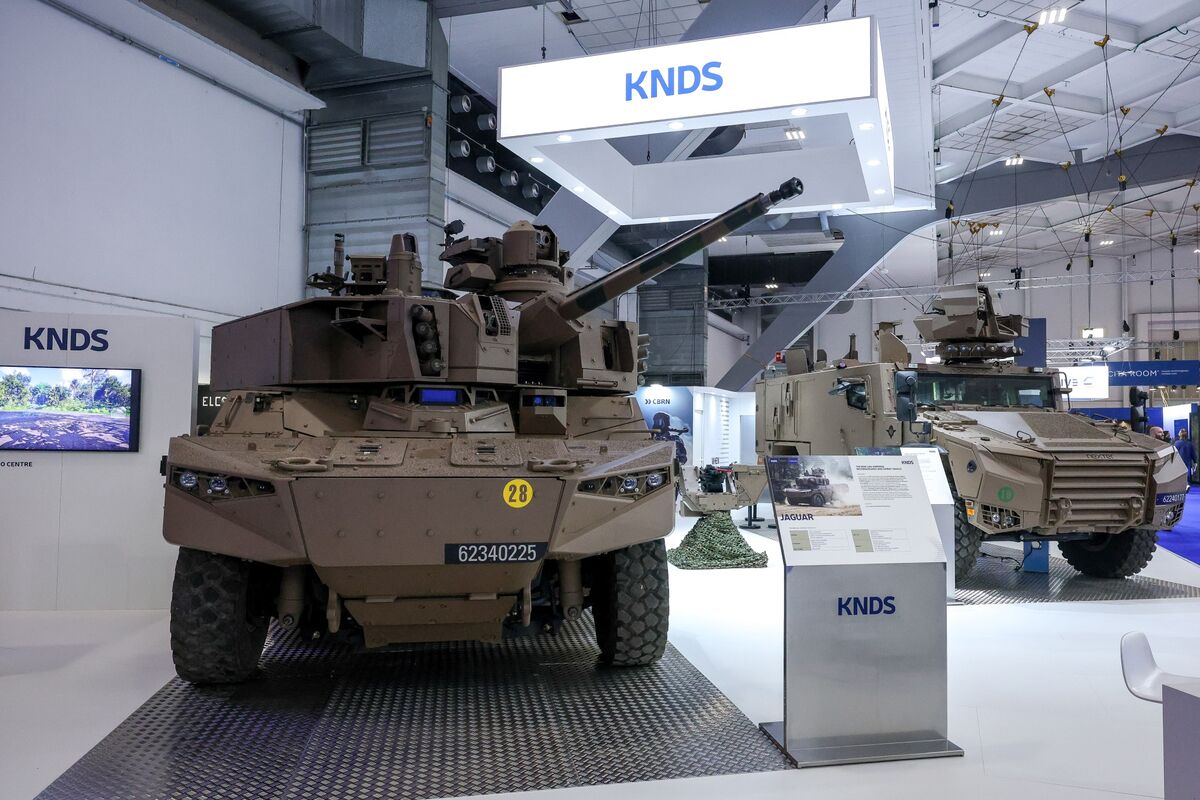
KNDS NV is in talks with Middle East customers to provide counter-drone equipment, CEO Jean-Paul Alary said. The discussions reflect potential upside to defense sales amid increased drone use in the conflict, but no contracts, timelines or financial terms were disclosed. This is a company-level business-development update that could modestly support KNDS revenue if talks convert to orders.
Rapidly rising demand for counter-drone layers in the Gulf favors suppliers that combine sensors, EW and integration services rather than single-point jammers; that implies higher gross margins and recurring revenue potential from maintenance/firmware updates — expect meaningful P&L recognition on awarded programs in 9–18 months, with aftermarket R&M sustaining revenues beyond year two. Supply-chain pinch points will be concentrated in RF/GaN power devices, EO/IR assemblies and high-reliability FPGA inventory; lead-time stretches of 3–9 months for these components can both delay deliveries (compressing near-term revenue) and increase pricing power for incumbents with secured supplier relationships. Competitive winners are likely to be primes that can offer sovereign co-production/offset packages — second-order beneficiaries include European mid-cap sensor houses and systems integrators able to embed software-defined EW modules; losers are small single-product jammer vendors and low-cost non-Western suppliers if buyers insist on full-system integration and political-risk-compliant suppliers. Key catalysts are visible contract awards and export-license movements over the next 3–12 months; primary downside catalysts are rapid commoditization of C-UAS tech (cheap software jammers) or a diplomatic cooling that reduces procurement urgency, any of which could halve the near-term upside case within 6–12 months.
AI-powered research, real-time alerts, and portfolio analytics for institutional investors.
Request DemoOverall Sentiment
neutral
Sentiment Score
0.10
