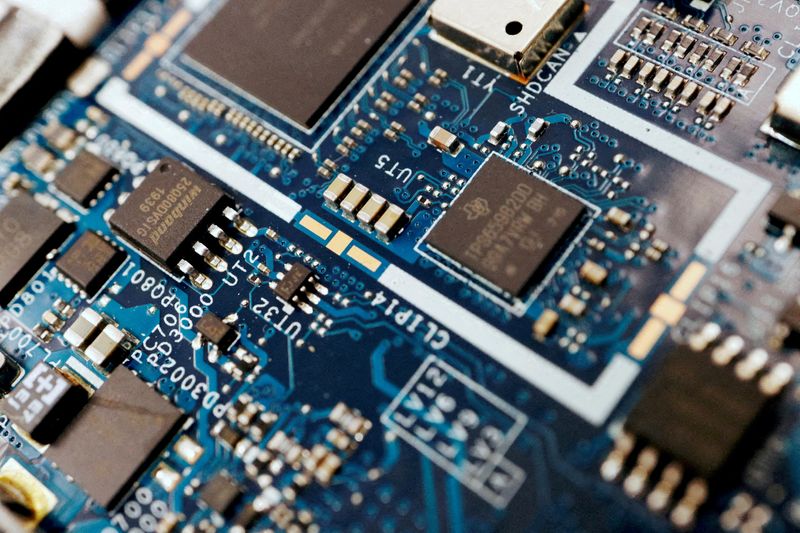
Nomura argues fears of a tech-memory downturn are overstated despite South Korean chipmakers announcing ~$3.5T (4.8 quadrillion won) in long-term investments, including ~$2.6T (3.7 quadrillion won) in memory projects. The note says a severe AI-driven shortage is more likely, with producers prioritizing high-margin HBM while commodity DRAM and NAND remain constrained, and that long semiconductor lead times (e.g., late-2027 production from a cluster launched ~9 years ago) make oversupply unlikely for years. Nomura also downplayed Meta’s plan to sell excess computing capacity as a negative signal for AI demand, suggesting it could lower compute costs and increase usage.
The market is likely confusing headline capex with actual supply. In semis, the binding constraint is not announced investment but tool installation, yield ramp, and cluster build-out; that gap can keep commodity DRAM/NAND tight even while the supply story looks bearish on paper. The immediate beneficiaries are the memory vendors with HBM exposure, especially MU, because mix shift protects margins while spot pricing stays supported; the losers are downstream hardware assemblers and any customer base assuming falling memory costs will offset AI infrastructure spend.
The Meta compute-monetization angle is more important than it looks: cheaper effective compute usually expands utilization, which raises, not lowers, demand for GPUs, networking, and power infrastructure. That is a constructive read-through for NVDA, AMD, ANET, CRDO, and VRT over the next 1-3 quarters, while reducing the odds that hyperscaler capex rolls over quickly. The main falsifier is a sudden pause in hyperscaler capex commentary or evidence that Meta is selling capacity because internal utilization is actually deteriorating.
Contrarian view: consensus is still too quick to assume the memory cycle is peaking because it extrapolates future Korean fab announcements into near-term bits. With HBM absorbing capacity and new greenfield supply years out, the more likely error is underestimating how long pricing power persists. A real reversal needs either a sharp macro demand shock or clear evidence that HBM demand stalls; absent that, the setup can remain constructive for 6-18 months.
AI-powered research, real-time alerts, and portfolio analytics for institutional investors.
Overall Sentiment
neutral
Sentiment Score
0.10
Ticker Sentiment
