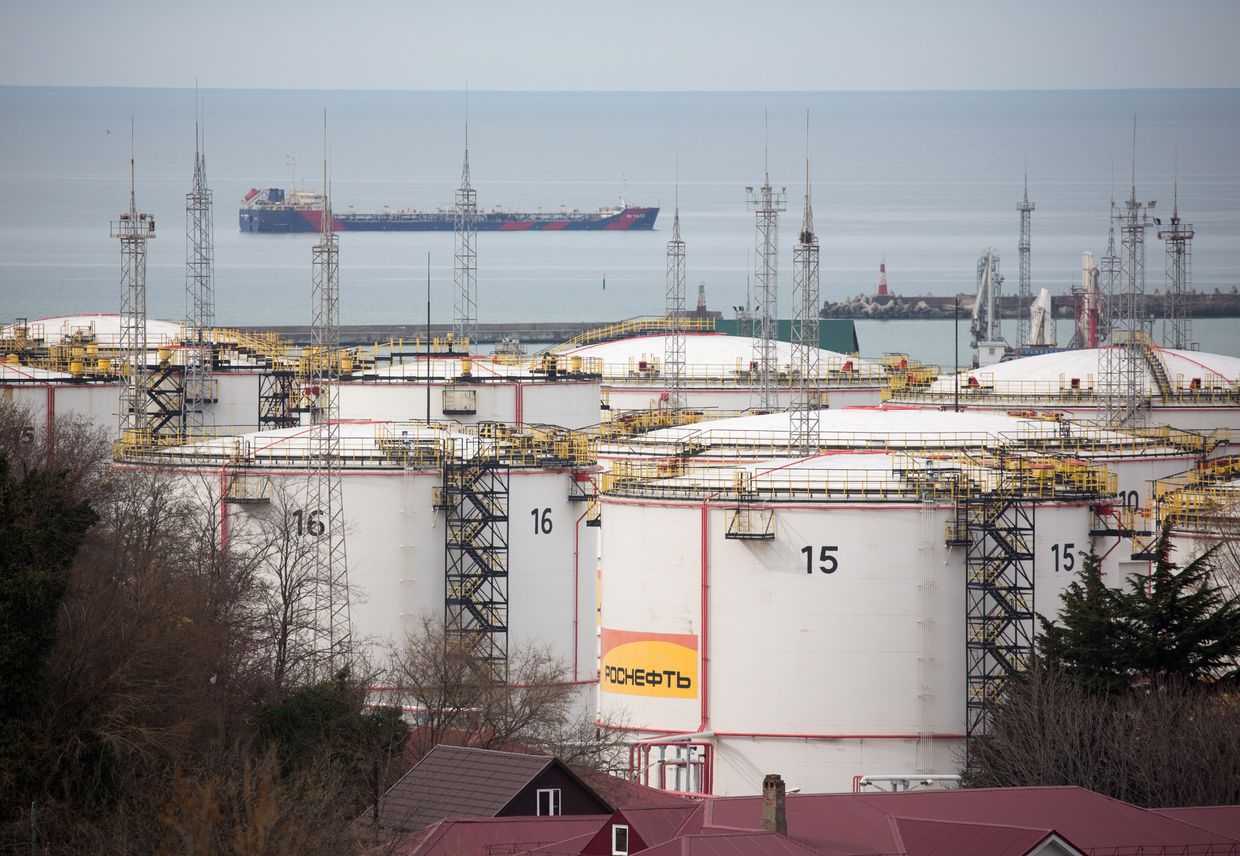
Russia's seaborne crude exports saw their sharpest weekly decline since January 2024, dropping by 190,000 barrels per day to a four-week average of 3.58 million bpd, following new U.S. sanctions on Rosneft and Lukoil. This has led major buyers like India, China, and Turkey to reduce or pause imports due to compliance risks, with significant volumes of Russian oil now held in floating storage. Concurrently, Western energy majors including ExxonMobil and Shell reported a 61% increase in refining profits in Q3, benefiting from the altered global supply dynamics and reduced Russian output exacerbated by Ukrainian strikes.
Russia's seaborne crude exports experienced their sharpest weekly decline since January 2024 in early November, with the four-week average volume falling to 3.58 million barrels per day, a 190,000 bpd reduction. This significant drop follows the U.S. blocking sanctions imposed on Rosneft and Lukoil on October 22, freezing U.S.-based assets and threatening secondary sanctions. Weekly exports decreased from 26.41 million barrels to 21.11 million barrels, marking the steepest decline in 22 months.
Major buyers like India, China, and Turkey, representing 95% of Russia's crude exports, have paused or reduced imports due to compliance risks, with Reliance Industries shifting to alternative sources and Indian Oil Corp. placing no new Russian orders. This has led to an 8% increase in Russian oil held in floating storage since early September, now exceeding 380 million barrels, equivalent to over 100 days of exports.
The disruption in Russian supply, compounded by Ukrainian strikes on oil infrastructure, has significantly benefited Western energy majors. ExxonMobil, Chevron, Shell, and TotalEnergies reported a 61% increase in refining profits in Q3 compared to Q2, contributing to a 20% rise in their overall earnings. This altered global supply dynamic creates a more favorable operating environment for these diversified players.
AI-powered research, real-time alerts, and portfolio analytics for institutional investors.
Overall Sentiment
mixed
Sentiment Score
-0.10
Ticker Sentiment
