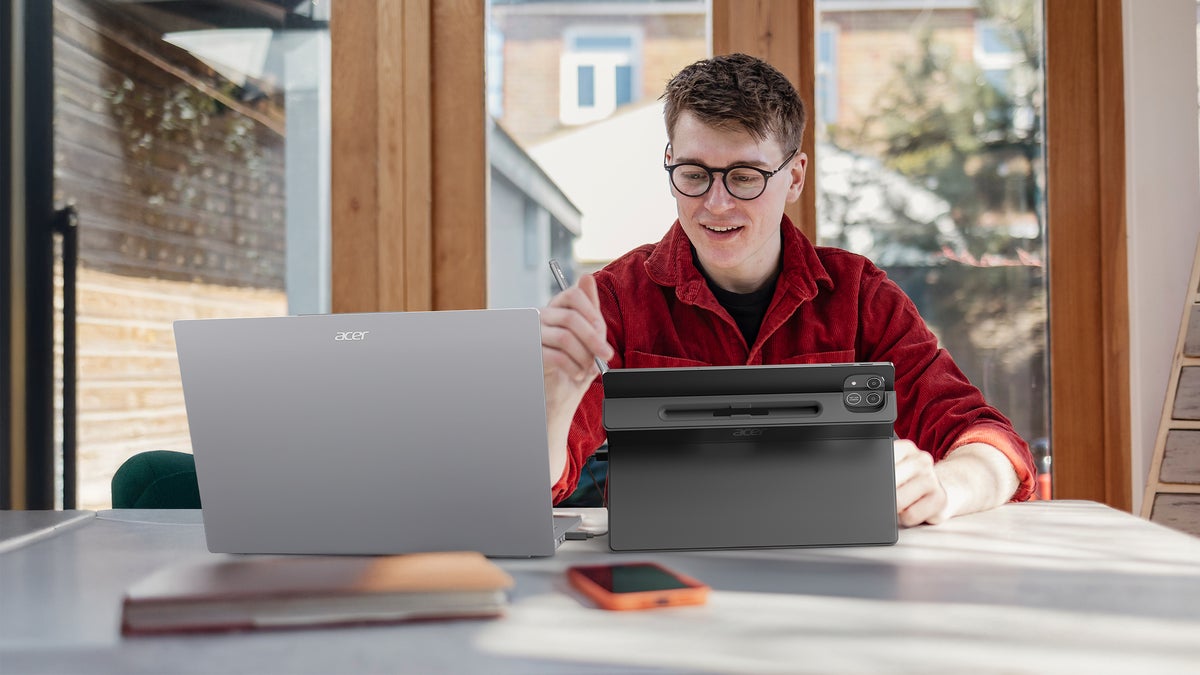
Acer unveiled three new Iconia Duo tablets ahead of Computex 2026, including the flagship S14 with a 14.2-inch 2.8K OLED display, MediaTek Dimensity 8300, Android 16, and a North America launch in September. The S12 and D12 will arrive in August, with pricing positioned against Samsung’s Galaxy Tab line in a relatively sparse large-screen Android tablet market. The launch is constructive for Acer’s tablet push, but the broader market impact should be limited.
Acer’s real significance is not that it launched another large Android tablet, but that it is validating a premium-form-factor gap Samsung has effectively monopolized. If Acer can get meaningful U.S. distribution at a lower price point, the first-order winner is likely component vendors tied to midrange OLED and MediaTek-class application processors, while the second-order loser is Samsung’s ability to defend the high end purely on hardware. That matters because the category has been constrained less by demand for larger screens than by the lack of credible alternatives; a broader supply of good-enough hardware can force pricing pressure without needing a full consumer replacement cycle.
The bigger implication is for ecosystem economics, not unit sales. Large-screen Android remains software-constrained, so hardware progress alone may expand TAM only incrementally over the next 6-12 months; however, it can still shift buyer mix toward value-conscious users who would otherwise have bought a lower-spec Windows detachable or a used iPad. That creates a mild headwind for premium tablet ASPs and a modest tailwind for accessories, display suppliers, and mobile SoC vendors that win design slots across multiple OEMs.
The contrarian read is that this is more competitive noise than platform disruption. Samsung’s moat in tablets is less about screen size and more about app continuity, stylus workflows, and enterprise relationships; Acer entering with attractive specs likely compresses margins before it meaningfully expands Android tablet software adoption. The risk to the bullish hardware thesis is execution: if initial reviews highlight mediocre battery life, pen latency, or update support, demand will be front-loaded into launch windows and fade quickly after August-September.
For the market, the tradeable angle is not Acer itself but the pressure signal on adjacent suppliers and incumbents. A credible U.S.-bound large Android slate can be a useful read-through for broader Android OEM willingness to spend on premium tablets and AI-adjacent devices, but the upside likely accrues in supply-chain names rather than finished-device leaders.
AI-powered research, real-time alerts, and portfolio analytics for institutional investors.
Request DemoOverall Sentiment
mildly positive
Sentiment Score
0.25
