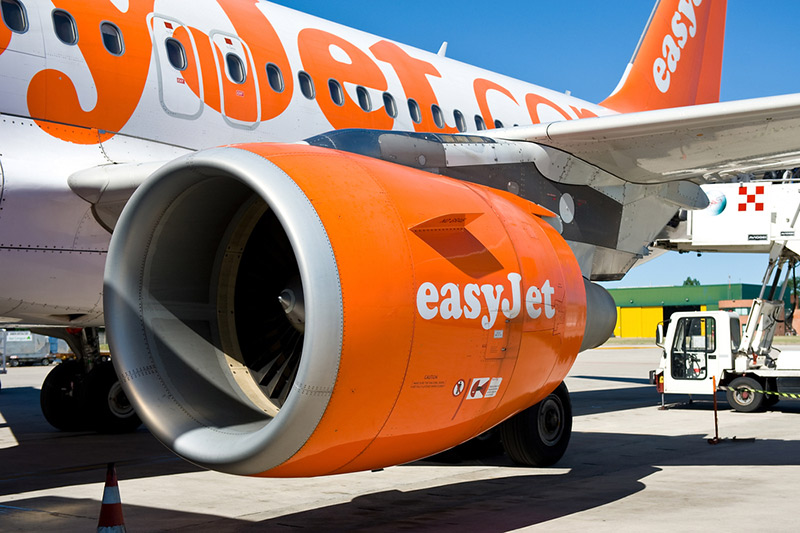
Italy’s antitrust authority has opened an investigation into easyJet over allegedly unfair baggage-service practices, including default bundling of round-trip baggage and sports equipment check-in and displaying only average prices for one-leg purchases. The probe will assess whether the airline’s website and app violate Italian consumer protection rules. The news is a modest negative for easyJet, with limited near-term market impact unless enforcement escalates.
This is less a one-off legal headline than a structural attack on ancillary revenue capture. For short-haul carriers, bags, seat selection, and add-ons often contribute a disproportionate share of margin; if regulators force cleaner price presentation or unbundle defaults, the earnings hit can be outsized relative to the apparent consumer issue. The market usually underprices these cases at announcement because the first-order fine risk is small, but the second-order risk is that a ruling creates a template for other EU jurisdictions to copy.
The bigger near-term variable is not the investigation itself but behavior change before any ruling: airlines tend to preemptively soften checkout flows to avoid headline risk, which can reduce conversion on ancillary attach rates even before formal remedies. That creates a gradual margin bleed over the next 2-6 quarters rather than an instant P&L shock. If easyJet is forced to show leg-specific pricing more prominently, it could also pressure peers with similar UX designs, especially low-cost carriers that rely on friction in the booking funnel.
Contrarianly, the market may overestimate the long-run damage if it assumes baggage demand is highly elastic. Many leisure travelers still need bags; the real issue is timing and framing, not whether the service is purchased. So the right lens is not an existential demand story, but a modest multiple de-rating on regulatory overhang plus a likely haircut to ancillary growth assumptions.
The clean trade is to avoid overreacting on the headline and instead express relative exposure: this is more negative for low-cost carriers with high ancillary reliance than for network airlines. If the stock sells off hard on opening, the better entry is likely after the first pass at de-risking, since legal processes in Italy/EU tend to be slow and probabilistic. The event can drag on for months, but the setup for sector-wide UX scrutiny can persist for years.
AI-powered research, real-time alerts, and portfolio analytics for institutional investors.
Request DemoOverall Sentiment
mildly negative
Sentiment Score
-0.15
