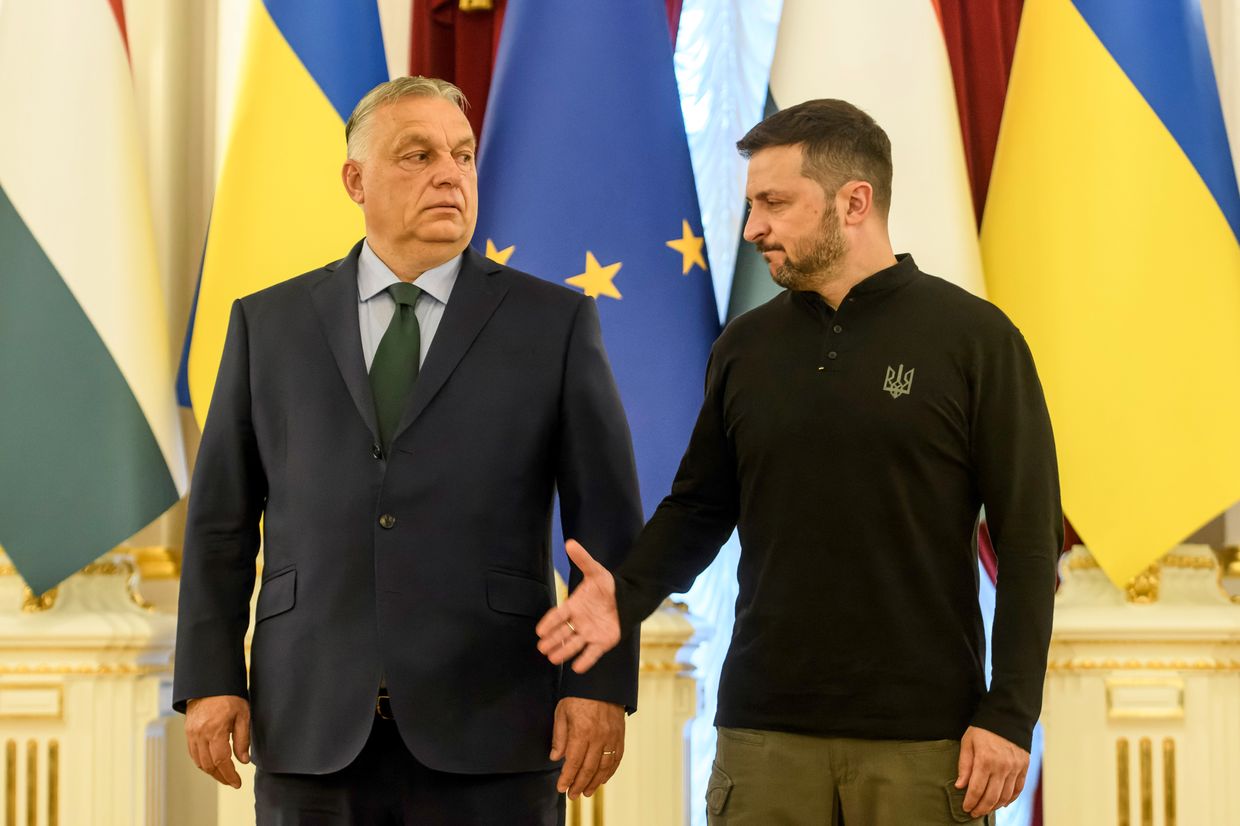
Ukrainian drone strikes on Russian oil infrastructure, which temporarily disrupted crude flows via the critical Druzhba pipeline to Hungary and Slovakia, have escalated diplomatic tensions. Ukrainian President Zelensky linked the pipeline's future to Hungary's support for Ukraine's EU accession, prompting sharp rebukes from Budapest regarding energy security threats. This incident underscores the precarious balance of energy dependence and geopolitical leverage, particularly for Hungary, which remains reliant on Russian crude while opposing broader EU sanctions and Ukraine's EU path.
A Ukrainian drone strike on the Nikolskoye pumping station in Russia has escalated geopolitical tensions by disrupting crude flows via the Druzhba pipeline, a critical energy artery for Hungary and Slovakia. The incident has moved beyond a simple supply interruption, with Ukrainian President Volodymyr Zelensky explicitly linking the pipeline's future operation to Hungary's political support for Ukraine's EU accession. This represents a significant weaponization of energy transit, creating direct leverage against Budapest. The financial stakes are substantial, with Hungary and Slovakia having imported $232 million and $196 million worth of Russian crude via this route in July, respectively, highlighting their unique and continued dependence within the EU. The sharp exchange between the two nations underscores the precarious position of countries reliant on Russian energy infrastructure, which is now a recurring target in Ukraine's strategy to undermine Moscow's war revenues. This event introduces a new dimension of supply-side risk to Central European energy markets, where infrastructure vulnerability is now directly tied to political alignment.
AI-powered research, real-time alerts, and portfolio analytics for institutional investors.
Overall Sentiment
strongly negative
Sentiment Score
-0.60
Ticker Sentiment
