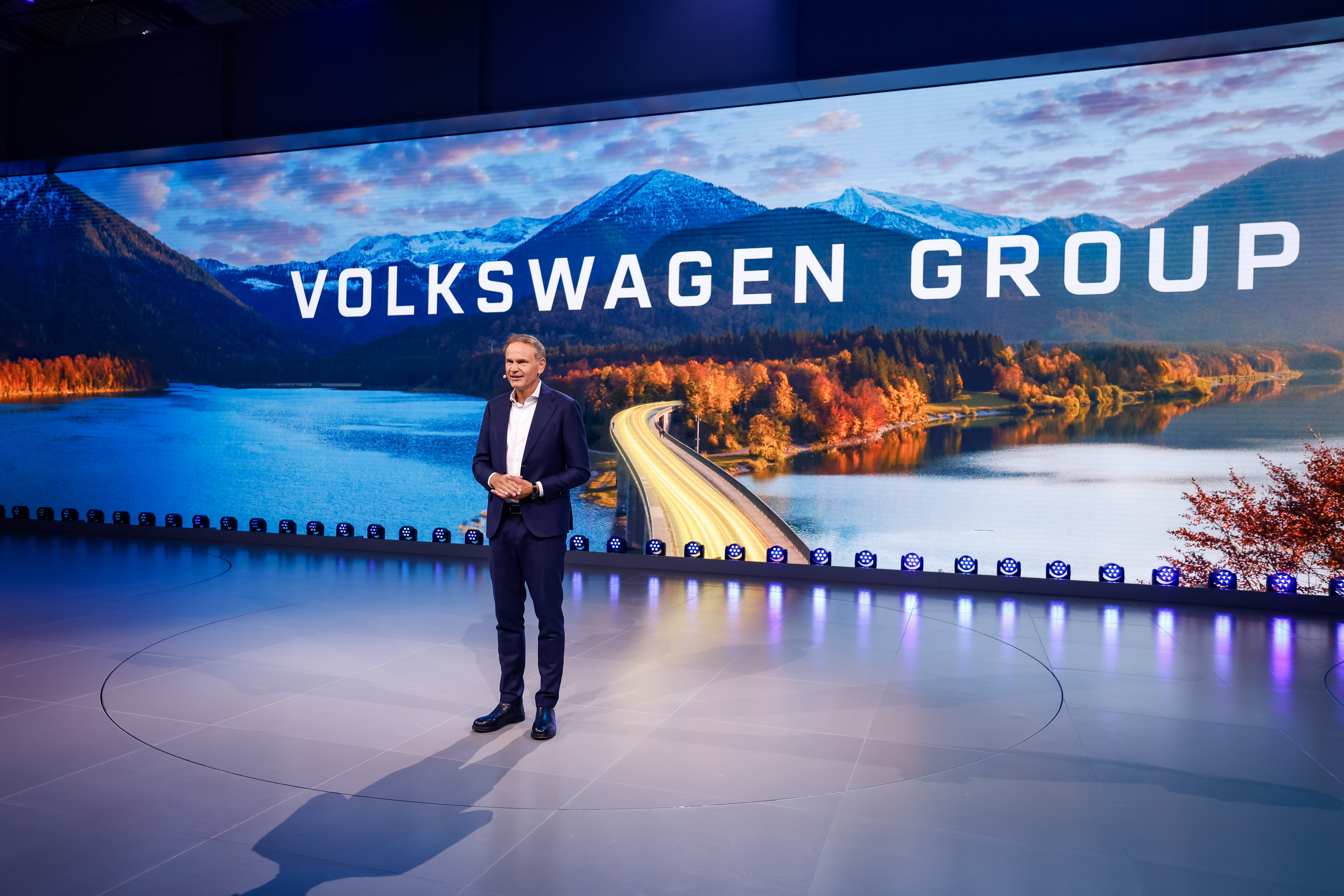
VW Group’s recovery depends on ramping sales in China, the rollout of new EV models and executing restructuring to restore margins. The company’s turnaround hinges on improving volumes and product mix in China and realizing cost savings from restructuring, while the Mideast crisis introduces near-term demand and supply-chain uncertainty. These factors make VW’s recovery conditional and could move the stock/sector roughly 1-3% on material execution updates or worsening geopolitical developments.
The re-introduction of an ultra-low-price EV into GM’s lineup is a demand-side weapon that forces incumbents and new entrants to reprice the entry segment, compressing ASPs and residual values across models priced sub-$30k. That pressure cascades into higher dealer inventory days for used ICE trade-ins, faster depreciation for low-mileage EVs, and a squeeze on OEM gross margins because fixed battery cost declines will lag pricing moves by 6–18 months. Battery suppliers and logistics partners will feel a timing mismatch: cell order growth may be lumpy, pushing OEMs to either hoard cells (working capital hit) or accept more aggressive payables terms that shorten supplier margins.
Geopolitical shocks to supply or shipping (e.g., Mideast instability) are a non-linear risk: a transient freight spike or insurance premium change can make sub-$30k EV economics negative in the near term, prompting production pauses or localized incentives — which would reverse pricing competition abruptly. Regulatory catalysts (state ZEV rules, federal incentive renewals) provide the highest-probability inflection points inside 3–12 months; material changes to US EV tax credits or state rebate programs would flip demand elasticities quickly. Watch monthly retail delivery data and dealer inventory days-to-turn as leading indicators — moves of >10% month-over-month historically presage margin re-rating within a quarter.
Second-order winners include regional dealers with large service franchises and aftermarket parts suppliers (used-ICE maintenance pools), which capture spare-parts churn while EV residuals reset; losers include specialist EV startups and premium-trim commoditizers whose unit economics depend on stable ASPs. Capital allocation risk at OEMs increases: firms that choose share defense by cutting prices will see near-term volume gains but suffer 12–24 month FCF dilution, opening M&A or JV windows for cash-rich players. The market is underpricing the probability of a forced inventory correction at OEM dealers within 3–6 months should price competition accelerate or shipping costs spike.
AI-powered research, real-time alerts, and portfolio analytics for institutional investors.
Request DemoOverall Sentiment
mildly negative
Sentiment Score
-0.15
Ticker Sentiment
