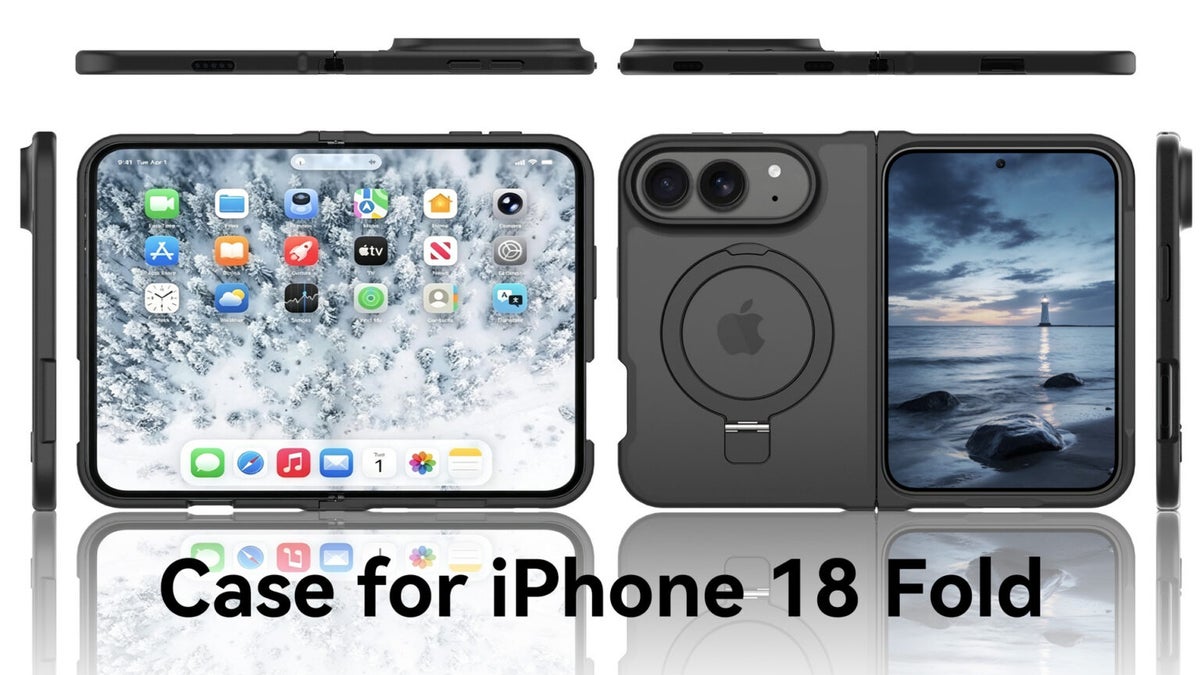
Leaked images suggest Apple is already sharing foldable iPhone Ultra specifications with accessory makers, reinforcing expectations for an imminent product launch. The device is described as a wide-folding design with MagSafe support, two rear cameras, and Touch ID instead of Face ID, while reports indicate Apple abandoned an under-display camera for now. The article is largely speculative, but it points to growing momentum around Apple entering the foldable smartphone category.
This is less about a single handset launch and more about Apple forcing the foldable category into a validation phase. Once accessory makers are getting dimensions, the supply chain is effectively being trained ahead of volume shipments, which usually compresses the gap between launch hype and retail availability; that favors a faster revenue ramp for component vendors with Apple exposure, but it also raises the bar for execution because any mismatch on hinge durability, battery life, or crease visibility becomes immediately visible at scale.
The first-order winner is Apple’s ecosystem economics, not unit share. A wide-format foldable would likely monetize existing high-ARPU users through attach rates in cases, charging, AppleCare, and app upgrades optimized for larger screens, while pressuring Android foldables by resetting consumer expectations around fit/finish and resale value. If Apple ships into a category where early adopters are already signaling interest, the likely second-order effect is less about stealing smartphone share and more about pulling premium upgrade demand forward by 1-2 cycles.
The main risk is product mismatch: a foldable that prioritizes industrial design over display crease, camera parity, or biometric convenience could cap the addressable market outside the Apple faithful. Timing matters too—this is a months-to-years catalyst, not a days-to-weeks trade, and the market may be front-running the launch narrative before any hard demand data appears. A weaker-than-expected reveal would hit the highest-beta accessory and hinge supply names first, while Apple itself would likely absorb the disappointment because the base case already assumes strategic category expansion.
The contrarian view is that consensus is probably underestimating how much a foldable iPhone could be margin-accretive even at modest unit share. Apple does not need category dominance; it needs enough premium pricing and ecosystem lock-in to make the device a halo product, which could be more important for services and accessories than for iPhone unit growth. If that thesis is right, the trade is not just on launch day—it is on the next 4-8 quarters of mix shift and attachment.
AI-powered research, real-time alerts, and portfolio analytics for institutional investors.
Request DemoOverall Sentiment
mildly positive
Sentiment Score
0.15
Ticker Sentiment
