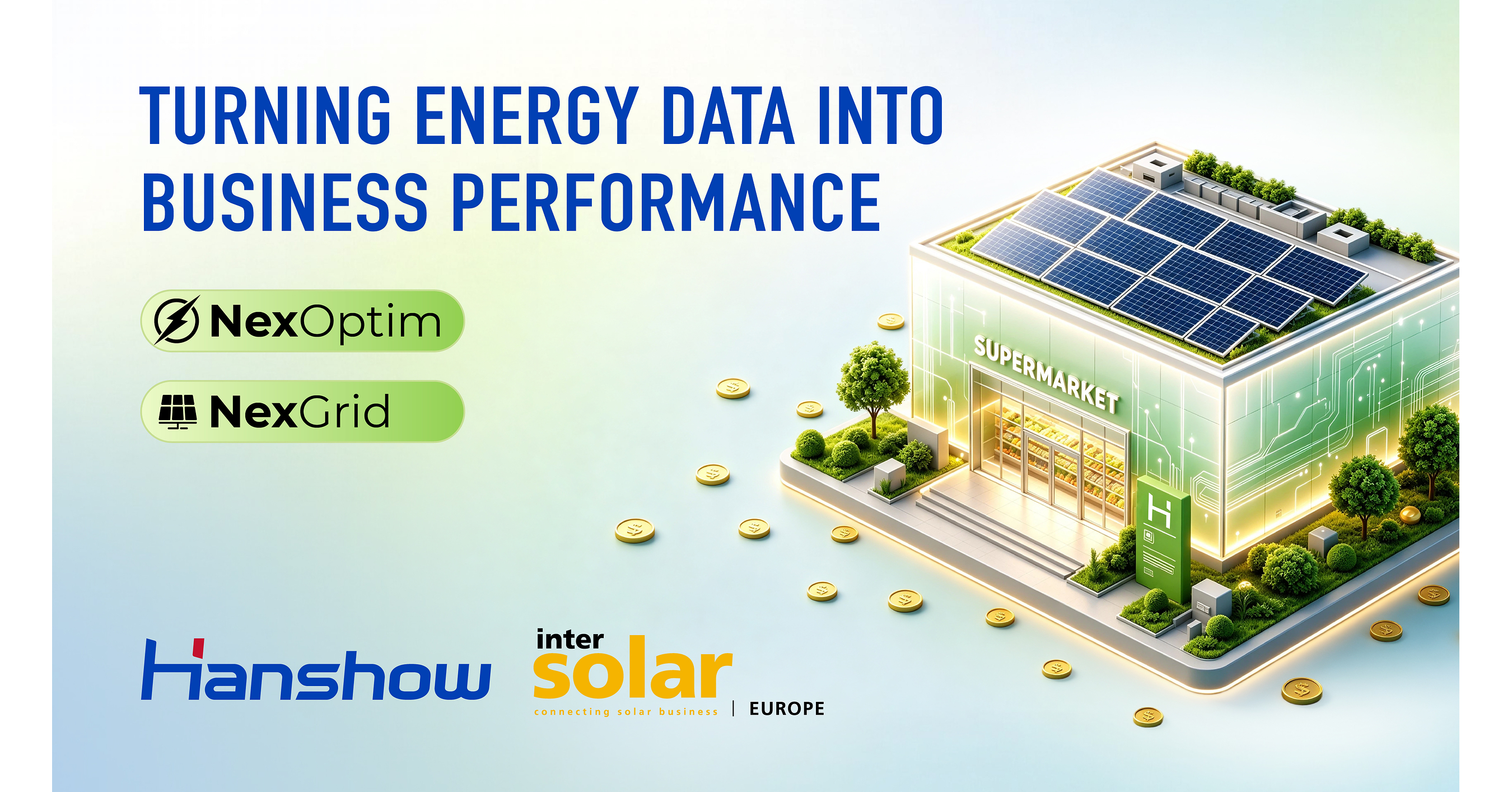
Hanshow Energy showcased integrated energy solutions at Intersolar Europe 2026 (June 23–25, Munich), spanning solar PV, energy storage, EV charging, and intelligent energy management. The company emphasized its NexGrid platform for centralized monitoring/optimization and NexOptim for IoT-enabled store equipment management and AI-backed demand-side/energy consumption optimization. The update is primarily product/positioning-focused with no quantified financial or operational results reported, implying limited near-term market impact.
This reads more like channel signaling than investable evidence. For a company of this type, the economic question is not whether it can present an integrated stack, but whether it can convert demos into repeatable install revenue, service contracts, and software-like margins; absent disclosed backlog or ARR, the market should assign little immediate value. The only actionable read-through is that C&I energy procurement is moving toward bundled solutions, which structurally favors incumbents with distribution, financing, and field-service capacity over narrow hardware vendors.
Second-order, the bundling trend is mildly negative for standalone PV/inverter names and point-solution EV charging providers because buyers will increasingly benchmark total payback across storage, controls, and maintenance rather than hardware price alone. That shifts pricing power toward electrical equipment and automation platforms with large installed bases and recurring service revenue; they can monetize orchestration and uptime while the hardware layer commoditizes. The near-term catalyst horizon is weak, but over 6-18 months Europe’s flexibility regime could reward firms that can prove measurable peak-shaving and demand-response economics.
Contrarian view: the consensus often overvalues "AI energy" branding and underweights execution risk. In commercial energy management, customers pay for reduced bills and lower downtime, not software narratives, so a trade-show appearance without proof of conversion is mostly noise. The thesis would be falsified if the next two reporting periods show no improvement in bookings, installation cadence, or service attach rates, or if lower power prices/subsidy changes undermine ROI assumptions.
AI-powered research, real-time alerts, and portfolio analytics for institutional investors.
Request DemoOverall Sentiment
neutral
Sentiment Score
0.08
Ticker Sentiment
