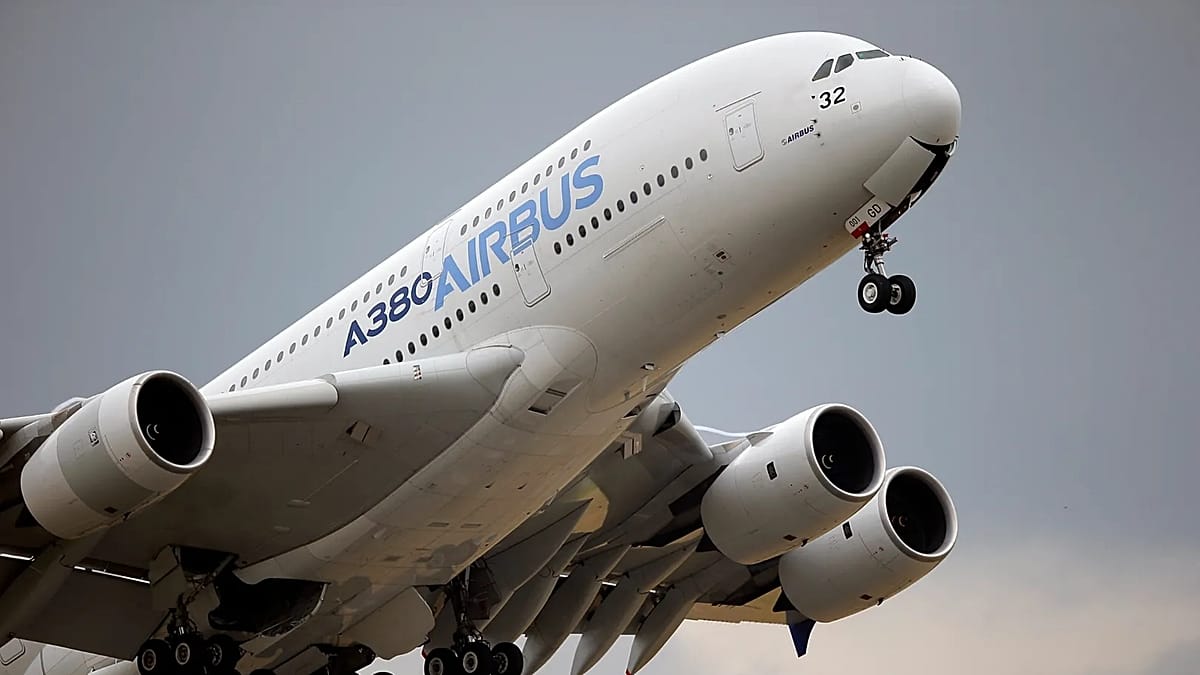
Airbus reported a strong 2025 with 793 commercial deliveries, revenue up 6% to €73.4bn, adjusted operating profit of €7.1bn, net income of €5.2bn and proposed a €3.20 per-share dividend; free cash flow before customer financing was €4.6bn. The group recorded 1,000 gross orders, a year-end backlog of 8,754 jets and a total order book of €619bn, and guided to ~870 deliveries and ~€7.5bn adjusted operating profit for 2026, but warned that Pratt & Whitney engine shortages and transatlantic political support for Boeing (including $244bn of government-assisted foreign contracts and large Gulf/Vietnam orders) pose material production and competitive risks; shares were down ~6.9% at €186.9.
Market structure: Airbus’s 2025 metrics (793 deliveries, €619bn order book, backlog 8,754 jets) show durable demand but binding supply-side constraints — chiefly Pratt & Whitney engine shortages — that create a two-speed market: Boeing benefits from US government-facilitated export wins (Boeing net orders 1,075, US government-assisted contracts $244bn) while Airbus faces near-term delivery caps. Pricing power for OEMs remains intact, but conversion risk (orders → deliveries) has become the dominant value driver, shifting premium to suppliers and politically-backed OEMs. Risk assessment: Tail risks include a prolonged Pratt & Whitney failure (6–12+ months) that forces Airbus to miss its ~870 2026 target, or retaliatory trade restrictions that curb Boeing export momentum; both would move share prices >15–25% quickly. Immediate (days) risk is headline-driven volatility; short-term (weeks–months) is production ramp execution; long-term (quarters–years) is market-share reallocation embedded in airline fleet plans. Hidden dependencies include less-visible customer financing stress and engine MRO capacity bottlenecks that can cascade into deferrals. Trade implications: Favor asymmetric, event-driven exposure to BA versus Airbus (EADSY/EU equivalents). Political momentum and large announced deals suggest 6–12 month upside for BA but execution/quality risk remains. Use options to express directional views while limiting capital at risk; prefer spreads and catalysts-based sizing tied to monthly delivery updates and US trade announcements over the next 90 days. Contrarian angles: Consensus overlooks that Airbus’s enormous backlog (8,754) creates multi-year revenue visibility even if deliveries slow — downside is time-shifted, not lost cash flow, so protracted supply disruptions could present buying opportunities at >20% drawdowns. Conversely, Boeing’s politically-driven wins are binary: if subsequent financing/acceptance issues or quality scares emerge, upside can evaporate quickly; position sizing should reflect asymmetric policy tail risk.
AI-powered research, real-time alerts, and portfolio analytics for institutional investors.
Request DemoOverall Sentiment
mixed
Sentiment Score
0.05
Ticker Sentiment
