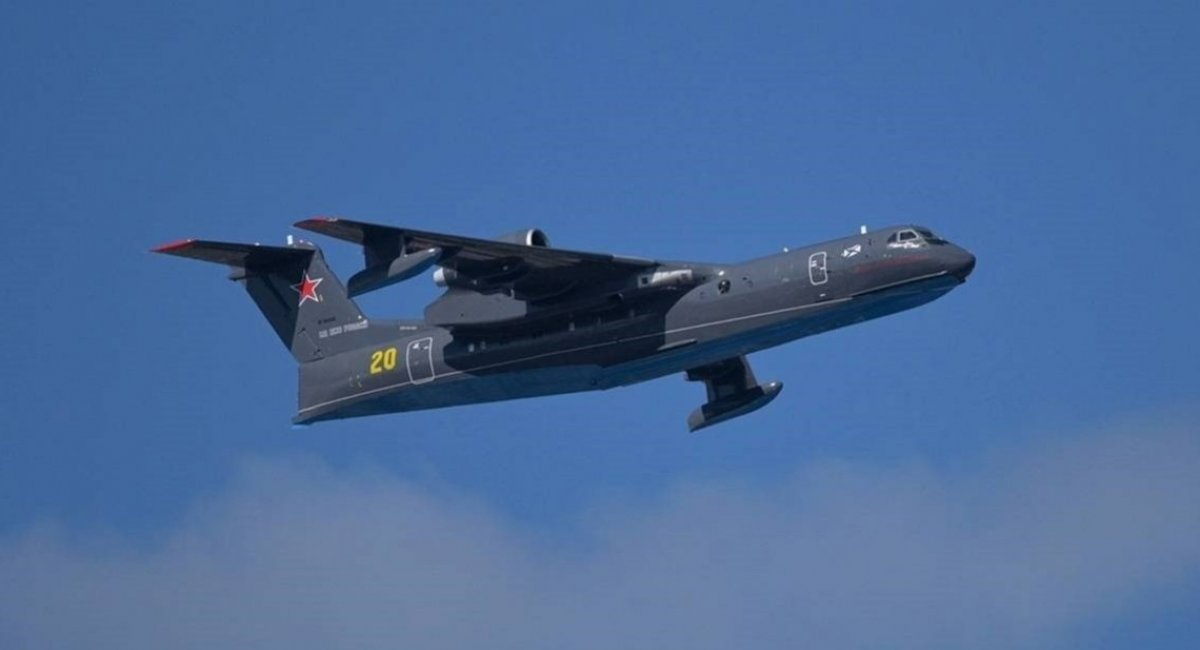
Ukraine reported overnight strikes on May 15 against Russian military assets, including air defense systems, an ammunition cargo ship in Berdiansk, a training center in Luhansk, and aviation assets near Yeysk. The most notable reported loss was a rare Beriev Be-200 amphibious aircraft, with only about 20 ever built and just three believed to be in Russian naval aviation and MoD service. The article also suggests Ukraine may be evolving its long-range drone tactics using FP-1 or FP-2 systems with relay communications.
The immediate market read is not about the tactical loss itself but about the marginal cost curve for Russian rear-area defense. Each successful deep strike forces a higher density of point-defense systems, radar coverage, and crew dispersion across a broader geography, which is exactly the kind of burden that degrades defense effectiveness over time and raises operating costs without creating corresponding offensive capability. The second-order effect is a widening gap between the nominal size of Russian air defense inventory and the fraction that is actually mission-ready in any one sector.
For defense suppliers, the more important implication is budget mix, not just budget size. A campaign that keeps proving inexpensive drones can penetrate layered defenses should bias procurement toward cheap interceptors, passive sensors, and electronic warfare rather than premium platforms; that is constructive for firms exposed to counter-UAS and short-range air defense demand. The valuation risk is that the market already owns the obvious large-prime beneficiaries, while underappreciating the smaller-cap names with higher operating leverage to urgent replenishment orders and faster contract conversion.
The tradeable catalyst is a multi-month, not multi-day, re-rating if these strikes continue at a high cadence and force visible procurement changes. The key reversal risk is political: if Russia rapidly hardens bases, disperses high-value assets, or improves GPS/SATCOM jamming and local relay interdiction, the marginal success rate of deep strikes can fall quickly. In that case, the headline count of attacks would stay high but the kill-rate would compress, which matters more for defense spending follow-through than the strike volume itself.
The contrarian angle is that this is bullish for defense but not indiscriminately bullish for all defense. Legacy air-defense platforms and large-airframe avionics vendors may actually see slower incremental demand if militaries conclude the cheapest effective response is a layered mix of expendable interceptors and software-defined networks. The bigger winner may be the firms that monetize “drone-swarm defense” rather than traditional high-end aerospace primes.
AI-powered research, real-time alerts, and portfolio analytics for institutional investors.
Request DemoOverall Sentiment
mildly negative
Sentiment Score
-0.20
