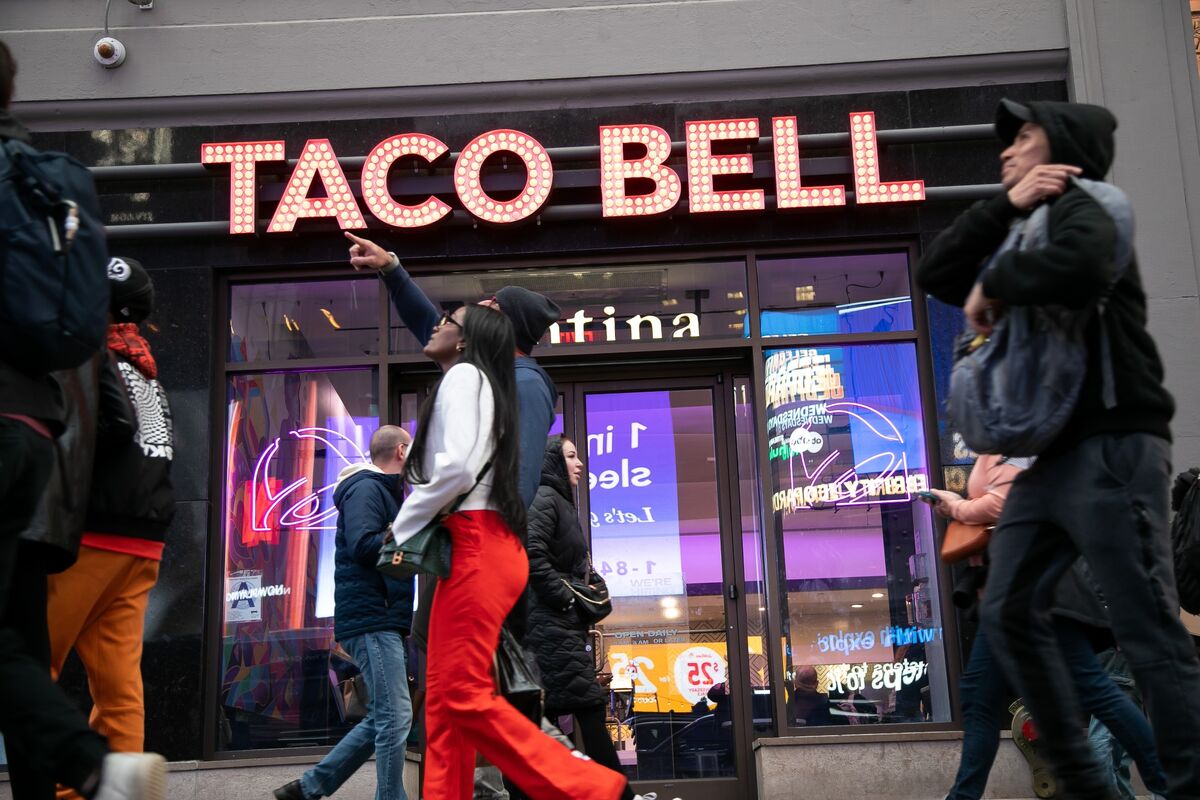
Yum! Brands' sales beat expectations, driven by Taco Bell same-store sales growth of 8% versus 5% expected, the fastest pace in a year. KFC rose 2%, slightly below estimates, while Pizza Hut was flat, underscoring continued weakness across parts of the portfolio. The headline beat is positive, but the mixed brand performance limits the overall upside.
The key read-through is not that Yum is “healthy,” but that the mix is becoming more polarized: the concept with the most pricing flexibility and innovation cadence is taking share, while the legacy brands are increasingly acting like a drag on consolidated quality. That matters because the market will likely keep awarding a premium to the company as long as Taco Bell can offset the rest, but the durability of that offset is what determines whether this is a one-quarter beat or a multi-quarter rerating.
Second-order, the strongest operator here is the value-and-frequency player, which tends to benefit disproportionately in a softer consumer backdrop. If the trade-down cohort is still showing up for small-ticket indulgence, that is a negative signal for higher-ticket casual dining and a relative positive for suppliers exposed to value-led QSR traffic; it also suggests the competitive battleground is shifting from premiumization to menu engineering and promotional efficiency. The weak spots in the portfolio are now more visible, which raises the odds of future refranchising, portfolio simplification, or heavier reinvestment to defend share.
Near term, the risk is that investors extrapolate Taco Bell’s momentum too aggressively just as it becomes harder to sustain high-single-digit comps off a value base. Over the next 1-2 quarters, the key catalysts are menu novelty fatigue, margin pressure from promotions, and whether KFC/Pizza Hut stabilize or worsen; if they deteriorate, the market will start discounting the consolidated story as a single-brand phenomenon rather than a diversified growth platform. In other words, the stock can grind higher on execution, but the downside asymmetry increases if the company has to spend more to keep the growth engine running.
The contrarian angle is that consensus may be underestimating how much of the headline beat is already “paid for” by a robust Taco Bell narrative. That usually leaves the shares vulnerable to a disappointingly small amount of incremental upside on the next print, especially if same-store sales normalize from 8% toward mid-single digits. The better question is whether management can convert this into durable margin expansion; if not, the current optimism could be overextended relative to the underlying franchise mix.
AI-powered research, real-time alerts, and portfolio analytics for institutional investors.
Request DemoOverall Sentiment
mildly positive
Sentiment Score
0.35
Ticker Sentiment
