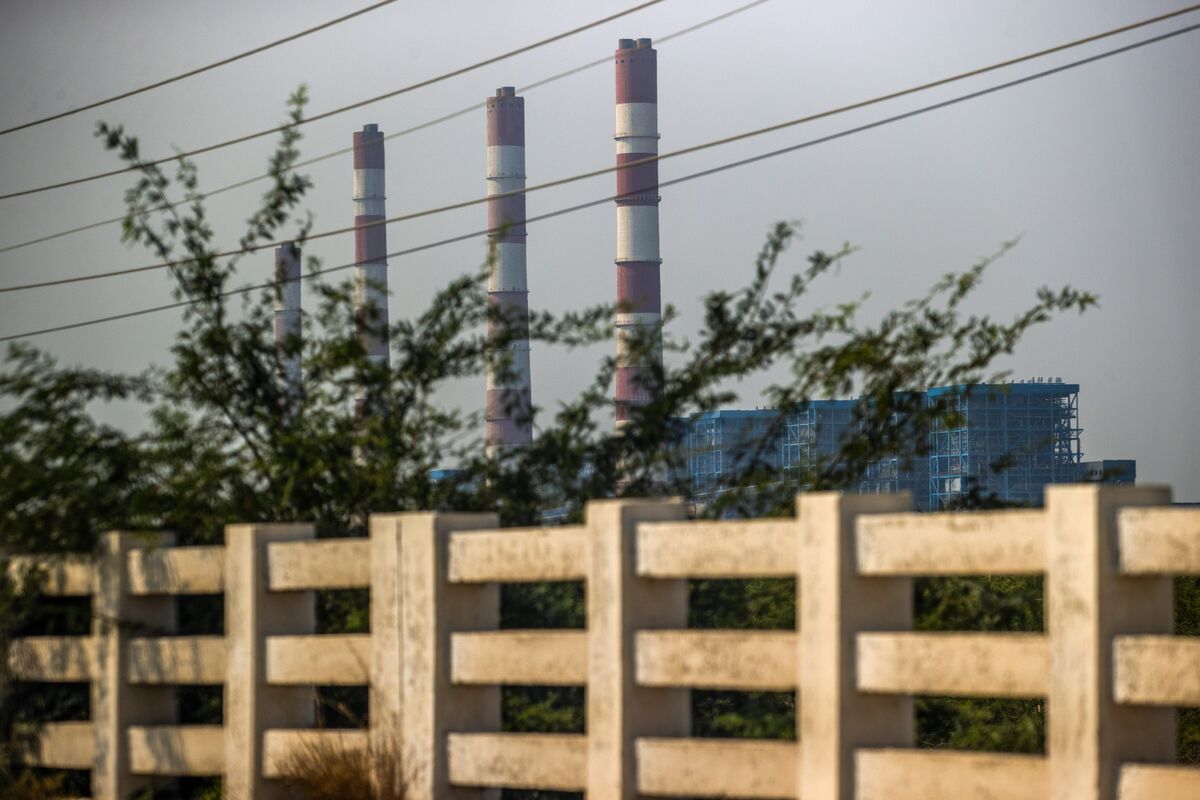
Adani Power plans to raise 80 billion rupees ($836 million) in local debt this year to fund expansion, including 50 billion rupees of public debt and about 30 billion rupees in bank loans led by State Bank of India. The financing indicates continued growth investment but does not include any operational or earnings update. Impact is likely contained to the company and its lenders rather than the broader market.
This is less a credit event than a balance-sheet transfer from equity optionality into regulated cash-flow lock-in. For lenders, the key issue is that incremental funding for a large thermal expansion usually gets underwritten on the assumption of stable dispatch and recoverable tariffs; that works until the policy regime shifts toward faster renewable buildout or carbon-cost pass-through becomes politically constrained. The result is a subtle but important asymmetry: banks may earn attractive spread income now, while duration and refinancing risk accumulate over the next 3-5 years if asset utilization disappoints.
Second-order, the beneficiaries are domestic banks and local bond investors looking for quasi-sovereign-ish spread pickup in a market where high-quality rupee credit supply is still constrained. That said, this can crowd out marginal borrowers in the same industrial cluster, especially infrastructure names dependent on bank lines rather than capital markets access. If State Bank of India leads the loan club, it likely improves market confidence for the syndicate, but it also concentrates exposure to a sector that is already highly sensitive to policy, coal logistics, and weather-driven demand volatility.
The contrarian angle is that expansion announcements in thermal power can be read as confidence in demand growth, but they can just as easily signal that internal cash generation is insufficient to self-fund growth. If power demand softens or renewable penetration accelerates faster than expected, the expected incremental EBITDA may not cover the capital deployed at the hurdle rate implied by local debt costs. The catalyst to watch is not completion of financing but whether project execution stays on schedule without cost inflation; if capex overruns appear, the market will reprice the story from growth to leverage within months.
Over the next 1-2 quarters, the main reversal trigger is any sign of tighter banking liquidity or a risk-off move in Indian credit spreads, which would force pricing wider and could delay drawdowns. In that case, the winners flip: banks may retrench, while competing independent power producers with cleaner balance sheets could gain pricing power for merchant supply and future project finance.
AI-powered research, real-time alerts, and portfolio analytics for institutional investors.
Request DemoOverall Sentiment
neutral
Sentiment Score
0.12
