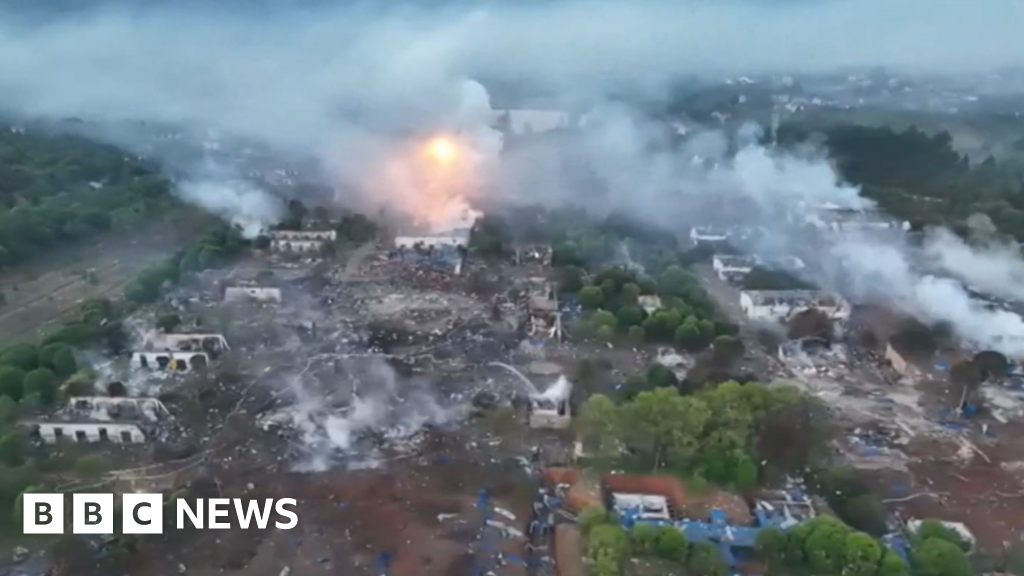
An explosion at the Huasheng Fireworks plant in Liuyang, Hunan province killed 21 people and injured 61, prompting evacuations within a 3km radius and a large-scale rescue operation involving nearly 500 personnel and robots. Authorities are investigating the cause and have taken control measures against the company负责人, while President Xi Jinping ordered all-out rescue efforts and an accountability probe. The incident highlights ongoing safety risks in China's fireworks manufacturing hub, but the immediate market impact appears limited.
This is not a one-off human tragedy; it is a signal of tightening compliance pressure across China’s high-hazard, locally concentrated manufacturing clusters. The second-order effect is on the marginal producer: smaller fireworks operators, warehouse owners, and local logistics firms will face faster shutdowns, more intrusive inspections, and likely temporary supply interruptions that can ripple into national distribution ahead of peak seasonal demand. The immediate macro impact is low, but the equity implication is meaningful where local industrial accidents become a catalyst for broader regulatory enforcement.
The key market read-through is negative for any business model that depends on lenient enforcement in fragmented, provincially managed supply chains. If authorities use this event as a template, expect a wave of safety audits and production suspensions across adjacent categories with combustible inventory, which can lift compliance costs and compress margins for smaller private operators over the next 1-3 months. The winners are the firms with formalized safety systems, centralized warehousing, and better insurance coverage; the losers are the highly levered local incumbents that cannot absorb downtime.
The contrarian point is that the headline horror may overstate the medium-term economic damage to the broader sector. In China, enforcement intensity often spikes for a few weeks after a fatal accident and then normalizes unless there is direct central political attention or repeat incidents. So the trade is less about a permanent demand collapse and more about a short-duration shakeout that can create relative-value dislocations between compliant leaders and lower-quality peers.
Risk to the bearish read: if the investigation reveals a very specific negligence case rather than a systemic safety failure, the policy response could stay localized and fade quickly. The main catalyst to watch is whether provincial authorities expand inspections beyond fireworks into chemicals, storage, and transport over the next 2-6 weeks; that would turn this into a broader industrial-risk event rather than an isolated accident.
AI-powered research, real-time alerts, and portfolio analytics for institutional investors.
Request DemoOverall Sentiment
extremely negative
Sentiment Score
-0.90
