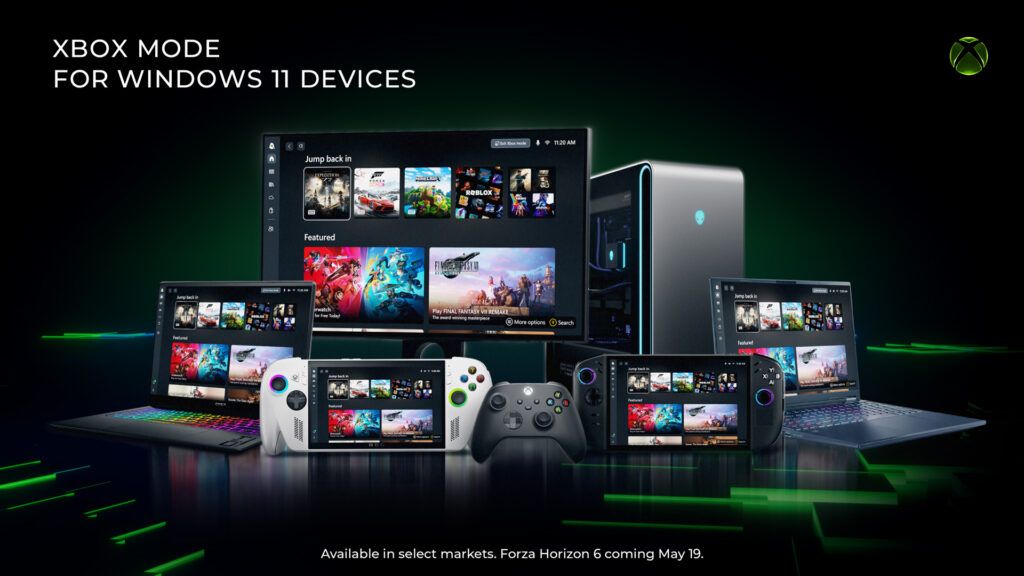
Microsoft is rolling out Xbox Mode on Windows 11 in phases, a console-style gaming experience that launches the Xbox app full screen with reduced background tasks to improve performance. The update adds controller-friendly browsing, quick switching to the desktop, and an aggregated library across installed games, Xbox, and Game Pass. The article frames the launch as a modest product improvement rather than a material business catalyst.
This is not a headline revenue event for MSFT so much as a platform-quality signal: reducing friction around gaming on Windows increases the odds that the PC becomes the default endpoint for handheld and living-room-style play. The second-order winner is Azure-backed game services and, more importantly, Windows engagement depth; the monetization vector is less direct, but higher gaming session frequency can improve ecosystem stickiness and reduce churn to alternative launchers and devices.
The more interesting competitive implication is pressure on the Windows gaming middleware stack, not on console hardware alone. If Microsoft can make the OS feel like an appliance without sacrificing desktop escape hatches, it narrows one of Steam’s biggest UX advantages; that said, Valve still owns the strongest distribution layer and community graph, so the battleground is incremental share of time spent, not a wholesale platform shift. OEMs building handhelds may benefit from better attach rates and lower support burden, while third-party launchers and peripheral makers could see modest tailwinds from more controller-first usage.
Near term, the market will likely underreact because this is a phased rollout and the feature is easy to dismiss as cosmetic. The real catalyst window is 3-9 months, when adoption data from handhelds and Windows telemetry can validate whether this meaningfully lifts gaming engagement or just adds another UI layer. Key risk: if the experience remains slower or more fragile than Steam’s equivalent, this becomes a PR win with no durable usage lift; that would cap any multiple expansion from the gaming narrative.
Contrarian take: the consensus is probably too focused on the direct gaming revenue path and not enough on retention. Even a small improvement in Windows gaming satisfaction can help protect the broader Windows franchise by reducing the incentive to dual-boot, switch ecosystems, or treat Windows PCs as second-class gaming devices. The upside is subtle but cumulative, which usually matters more for a large-cap compounder like MSFT than a one-quarter monetization pop.
AI-powered research, real-time alerts, and portfolio analytics for institutional investors.
Request DemoOverall Sentiment
mildly positive
Sentiment Score
0.18
Ticker Sentiment
