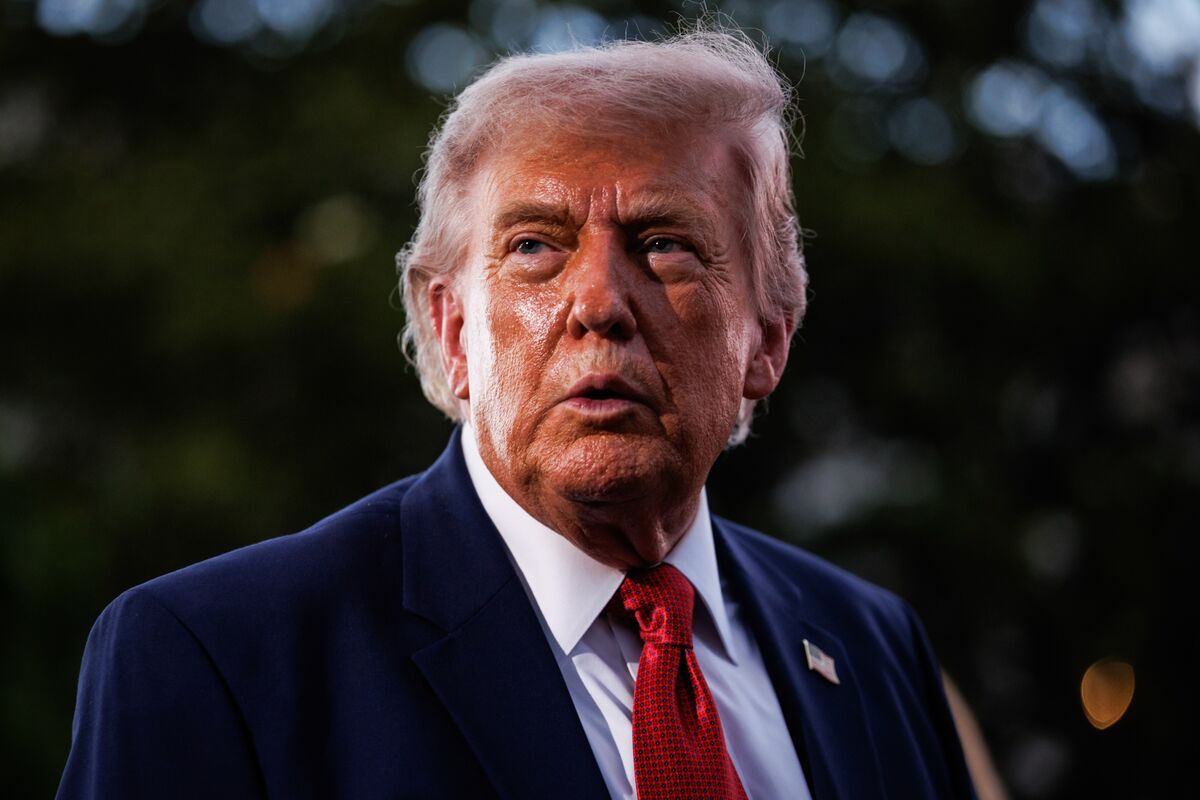
President Donald Trump is scheduled for his fourth publicly disclosed doctor’s appointment since the start of his second term, with the White House describing it as routine annual dental and medical assessments. The article mainly highlights renewed health scrutiny ahead of Trump’s 80th birthday, but provides no new medical details or policy implications. Market impact appears minimal.
The market impact is not in the exam itself; it is in the optionality around information asymmetry. Any health-related headline risk for a polarizing incumbent creates a short-duration volatility bid in election-sensitive assets, but the deeper effect is that it keeps succession, governance, and policy-continuity probability distributions wide. That tends to support a “buy convexity, sell linearity” stance: assets that benefit from uncertainty, not from a specific outcome.
The second-order winners are in healthcare information flow, not hospitals. Scrutiny around presidential exams tends to lift attention on diagnostics, imaging, and age-related disease-management narratives, which can subtly support high-quality med-tech and select biotech names if the market starts pricing increased testing frequency or broader aging-health policy debate. The losers are election beta sectors that need stable policy signaling—industrials tied to long-cycle procurement, regulated healthcare reimbursement names, and any crowded “Trump trade” expressions that were leaning on certainty rather than volatility.
The catalyst window is days to weeks, but the real setup is into the next major campaign inflection if this turns into a recurring disclosure issue. A benign read will likely mean a fast fade in implied volatility; a non-benign or simply vague follow-up would keep the story alive and can widen election odds dispersion without requiring new policy news. The key contrarian point is that a healthy result may be bearish for volatility sellers if it removes tail-risk premium too quickly, while a negative surprise could be much larger than consensus expects because the market is currently underpricing the impact of repeated ambiguity rather than one isolated exam.
AI-powered research, real-time alerts, and portfolio analytics for institutional investors.
Request DemoOverall Sentiment
neutral
Sentiment Score
0.00
