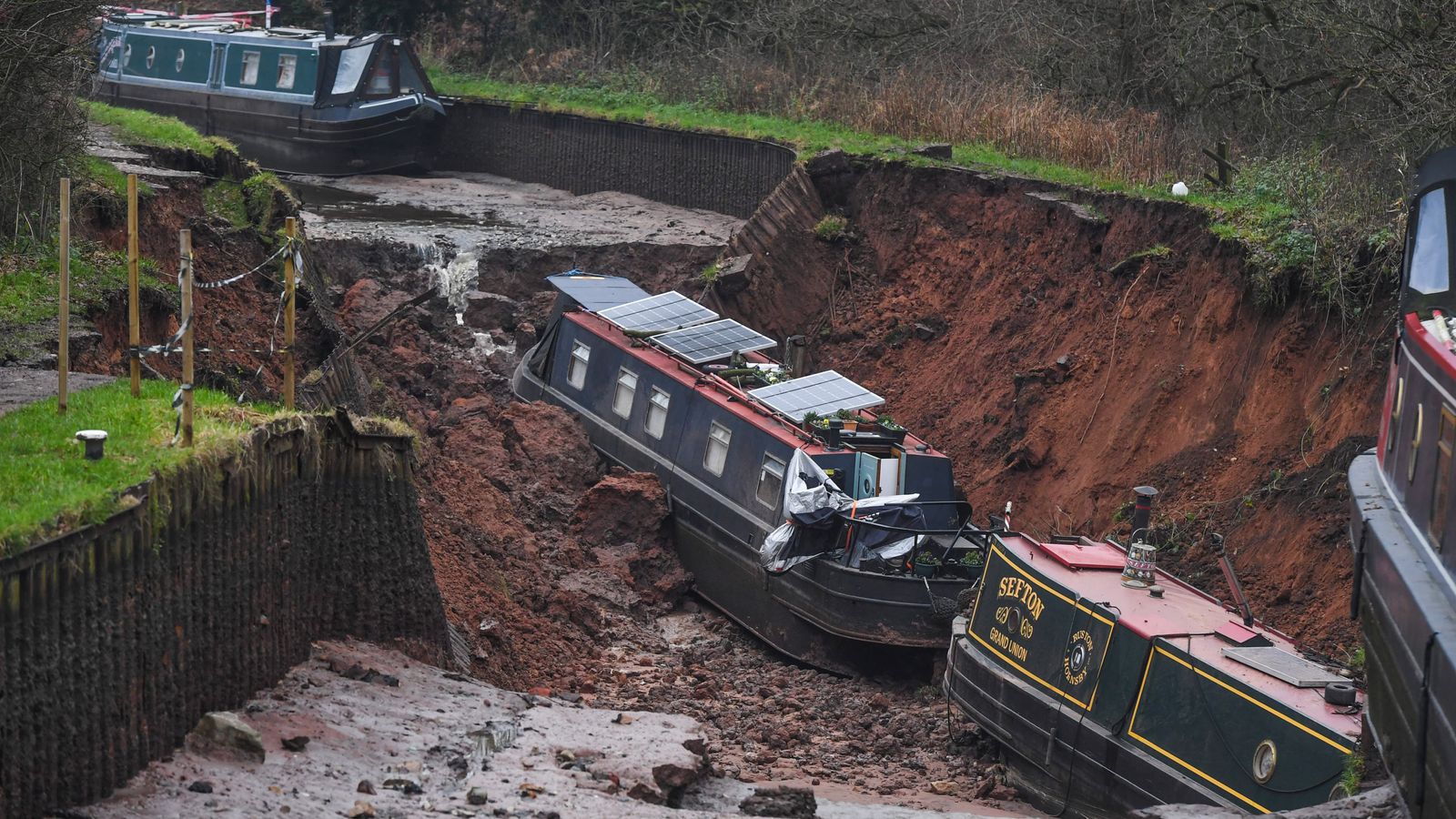
A canal embankment collapsed at Whitchurch, Shropshire just after 04:00 on Monday, creating a roughly 50m-long void that swept one ~17‑tonne steel boat into the hole and left two others precariously overhanging; 12 people were evacuated and there were no injuries. Shropshire Council reported one vessel was winched to safety and the Canal & River Trust expects embankment repairs to take at least six months, indicating prolonged local disruption and potential repair and liability costs for the Trust and local authorities.
Market structure: This is a localized infrastructure shock that creates immediate winners (civil‑engineering contractors, heavy-aggregates suppliers) and losers (small leisure operators, narrowboat rental businesses, local insurers). Expect a modest boost to tender volumes for regional contractors over 6–12 months and a 5–15% incremental demand bump for crushed stone/aggregate in Shropshire-area supply chains while repair works proceed; pricing power will be strongest for contractors with regional capacity and plant (e.g., Balfour Beatty-type profiles).
Risk assessment: Tail risks include cascading embankment failures after further storms, a high‑profile regulatory inquiry raising compliance costs, or a concentrated insurance loss event — each could expand fiscal response or litigation exposure. Time horizons: immediate (days) evacuation/liquidation flows; short (weeks–months) procurement and award of repair contracts; long (6–24 months) elevated maintenance budgets and potential material inflation. Hidden dependencies: plant/aggregate availability, skilled labour reallocation, and central/local government budget constraints; catalysts include a government emergency funding announcement or Canal & River Trust contracting notices.
Trade implications: Tactical exposure to UK-listed civil‑engineering and materials names (see decisions) with tight position sizing (1–2% NAV) is the preferred direct play; use 3–9 month call spreads to target contract wins while limiting downside. Hedging: buy short-dated puts on regional leisure/boating names or reduce small-cap leisure exposure by 25–50% in favour of contractors; watch procurement awards within 30–90 days to scale positions.
Contrarian angles: The market will likely underprice a broader UK waterways maintenance cycle — a single high-visibility collapse can trigger multi-year capital programmes as in past storm-driven spends (2013–2015 flood defenses). Risk of overcrowding into contractors is real: if capacity is tight, margin compression and material price inflation (5–10% on certain aggregates/bitumen) can offset revenue gains, so prefer firms with flexible margins and balance-sheet capacity.
AI-powered research, real-time alerts, and portfolio analytics for institutional investors.
Request DemoOverall Sentiment
neutral
Sentiment Score
-0.15
