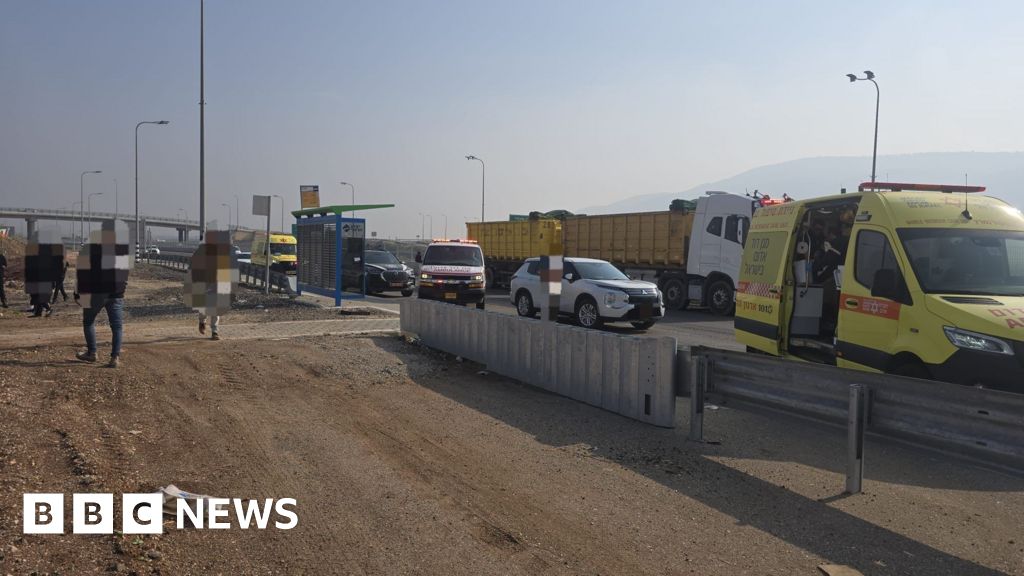
A suspected 'rolling terror attack' in northern Israel left two people dead (a 68-year-old man in a ramming and an 18-year-old woman in a subsequent stabbing) and at least two injured; the 37-year-old suspect from Qabatiya was later shot and wounded. Israel's defence minister instructed the IDF to carry out immediate operations in Qabatiya, with the military saying the suspect had infiltrated Israeli territory days earlier, elevating the risk of retaliatory actions and escalatory responses. Given the broader context of significant casualties since 7 October and ongoing West Bank tensions, the incident raises near-term security risk and potential localized market volatility for regional assets and operations.
Market structure: Short, localized terror incidents raise demand for force-protection and intelligence-linked products, benefiting large defense primes (e.g., LMT, RTX, NOC) and Israeli security suppliers (ESLT) while pressuring Israeli tourism, regional banks and the iShares MSCI Israel ETF (EIS). Expect a tactical 2–6% re-price of defense equities and a 1–3% risk-off move in FX/commods (USD/ILS +1–2%, gold +1–3%, Brent +1–4%) over the next 48–72 hours if operations in Qabatiya proceed.
Risk assessment: Tail risk is asymmetric — a limited escalation has low probability but could cause oil >$100/bbl and global equity drawdowns of 5–15% within weeks; probability rises materially if IDF operations expand or major cross-border strikes occur. Hidden dependencies include US Congressional defense funding/timing (affects backlogs over 6–18 months) and Israeli domestic stability impacting tech exports; key catalysts are casualty counts, IDF mobilization announcements and US diplomatic/military posture.
Trade implications: Tactical direct plays: establish small, defined-size positions (1–3% NAV) long LMT/RTX/NOC or ITA (ETF) and buy 3-month calls 5–10% OTM to cap downside; hedge Israel-specific exposure by shorting EIS or buying 3-month puts on EIS. Cross-asset: add 0.5–1% GLD exposure as tail hedges and consider selling 1–2% notional S&P downside protection only if downside vol >30%.
Contrarian angles: The market may overreact to headline risk but underprice persistence — if escalation is limited, defense names can mean-revert 5–10% from peak; use option structures (call spreads) to avoid overpaying. Historical parallels (2014/2021 escalations) show defense rallies fade within 3–6 months absent sustained conflict; prefer pairs (long US defense, short EIS) to isolate relative value and avoid pure directional geopolitical bets.
AI-powered research, real-time alerts, and portfolio analytics for institutional investors.
Request DemoOverall Sentiment
moderately negative
Sentiment Score
-0.60
