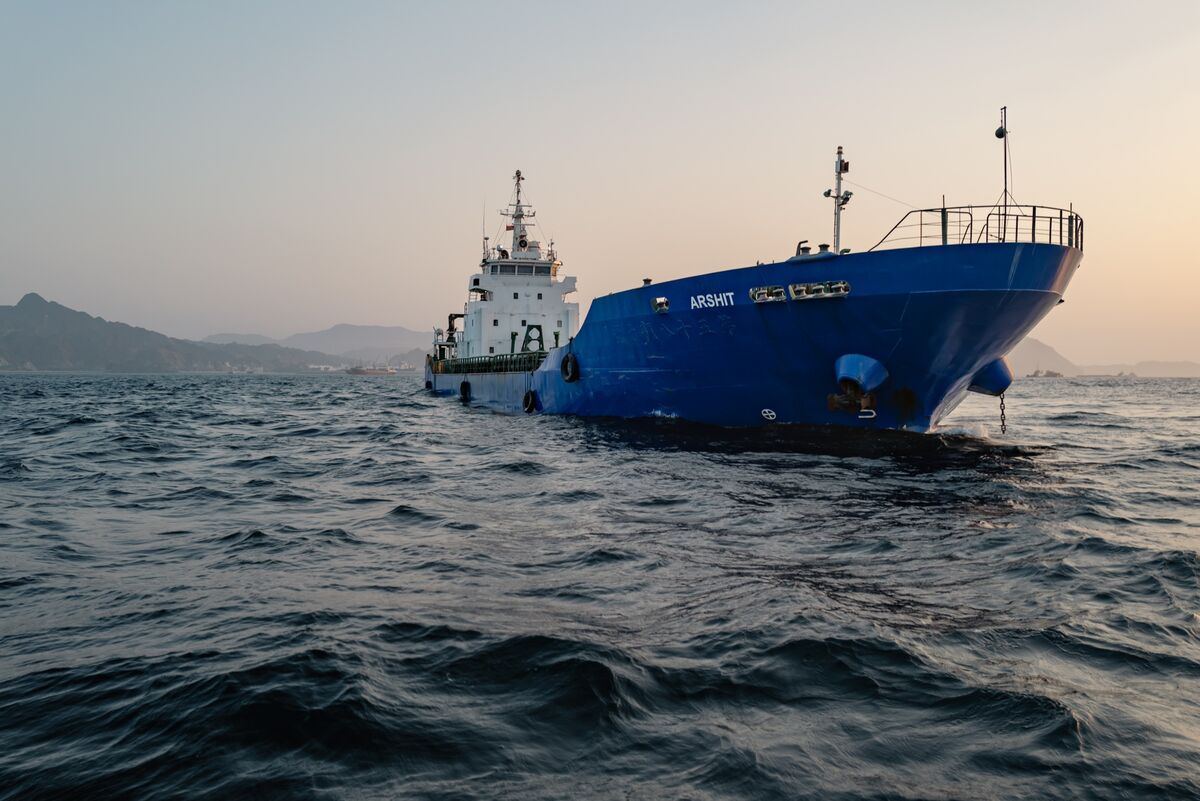
Kuwait Petroleum Corp. issued a tender for naphtha cargoes that buyers must collect from Kuwait’s Persian Gulf ports, implying transit through the Strait of Hormuz. The move adds to signs that traffic through the waterway is reopening as regional oil producers look to increase exports. The article is geopolitically relevant for energy flows, but it contains no price data or direct disruption.
The market implication is not just that Gulf barrels can move again, but that the system is shifting from a pure supply-shock regime to a logistics-normalization regime. That matters because freight, insurance, and optionality premia tend to compress faster than outright crude differentials, so the first beneficiaries are likely to be refiners and shipping names rather than upstream producers. If cargoes are being loaded from deep inside the Gulf with buyers responsible for pickup, the pricing signal is that regional sellers believe transit risk is declining enough to re-open the arb window — a negative for volatility sellers in crude, positive for physical traders who can warehouse and route flexibly.
The second-order effect is on product spreads, especially naphtha and gasoline cracks. More Gulf product flow would pressure Asian import margins and reduce the scarcity premium embedded in eastbound barrels, which is a headwind for non-Middle East refiners that had been capturing elevated replacement costs. At the same time, a less-disrupted Hormuz lowers tanker day rates and insurance surcharges, which can bleed into lower landed costs for import-dependent economies over the next few weeks rather than months.
The key risk is that this is a congestion-relief story, not a durable geopolitical resolution. The catalyst set is asymmetric: a single attack, seizure, or mine-related incident can reprice the entire routing stack in hours, while normalization takes days to prove and weeks to monetize. Consensus may be underestimating how quickly the volatility premium can unwind if traffic keeps rising, but also underestimating how fragile that unwind is if inventories are being restocked ahead of a potential re-tightening.
Contrarian take: the trade is not to short oil beta outright, but to fade the hidden beneficiaries of elevated perceived risk. The best risk/reward is likely in names that had benefited from freight and product dislocation, because those earnings are more elastic to routing normalization than to spot crude itself. Conversely, if this trend persists, refiners with secure feedstock and consumer-facing fuel exposure could see margin support from cheaper delivered input costs, even if headline crude weakens only modestly.
AI-powered research, real-time alerts, and portfolio analytics for institutional investors.
Request DemoOverall Sentiment
neutral
Sentiment Score
0.05
