
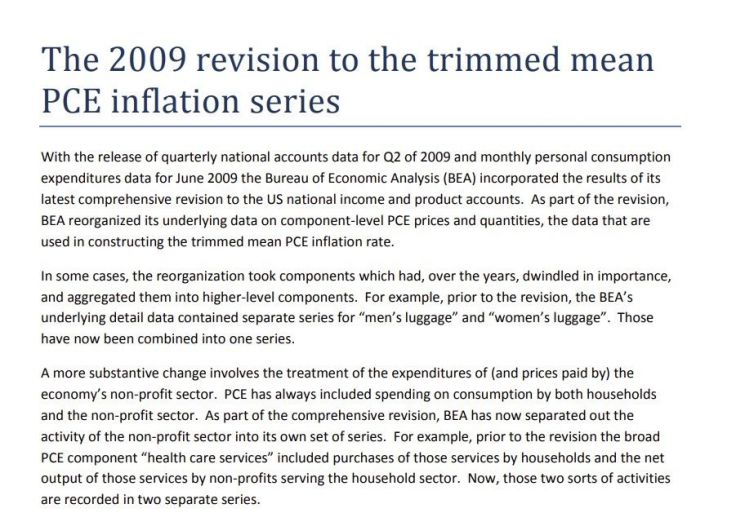
The article highlights a key inflation measurement gap: April core PCE rose 3.3% year-on-year, while the Dallas Fed's Trimmed Mean PCE rose only 2.3%, a 100 bps divergence. Fed chair nominee Kevin Warsh is urging policymakers to place more weight on trimmed-mean measures that exclude extreme price moves, but critics warn this may understate inflation when shocks are broad-based. The debate is important for Fed policy because tariff, AI, and geopolitical-driven price volatility could affect how aggressively the central bank responds.
The market implication is not that inflation is falling, but that the Fed may be moving toward a regime where it discounts the first derivative of price shocks until they bleed through into wages or services. That is bullish duration in the very short term, but only if investors believe policy reaction function will be slower than pricing models currently imply; the bigger risk is a delayed but sharper policy response later, which tends to steepen the front-end selloff when it arrives.
The second-order winner is not the obvious rate-sensitive growth basket, but firms with pricing power and low working-capital exposure to tariff- and freight-driven input volatility. Businesses with long contract duration and domestic supply chains should outperform those reliant on imported intermediate goods, because a “temporary shock” framework lets underlying cost inflation persist longer before policy relief comes. Conversely, retailers, consumer durables, and small industrials are exposed if the market’s softer-inflation narrative proves too optimistic and input costs re-accelerate.
The contrarian mistake is treating trimmed-mean style measures as a cleaner truth rather than a lagging filter. In an economy where tariffs, energy disruption, and AI capex are creating broader relative-price dispersion, excluding the extremes can systematically understate the breadth of inflationary pressure for months. That creates a trap: breakeven inflation and cuts pricing can stay too dovish until the data force a repricing, at which point the Fed credibility trade reverses quickly.
For EVR, the direct read-through is minimal, but the broader macro backdrop matters for M&A and capital-markets volumes: a more uncertain Fed path can delay deal activity, while a later hawkish reset could increase financing friction and advisory urgency. Expect the first move to be in rates and USD; the equity second-order effect should show up in factor rotation rather than single-name alpha.
AI-powered research, real-time alerts, and portfolio analytics for institutional investors.
Request TrialOverall Sentiment
neutral
Sentiment Score
-0.05
Ticker Sentiment
