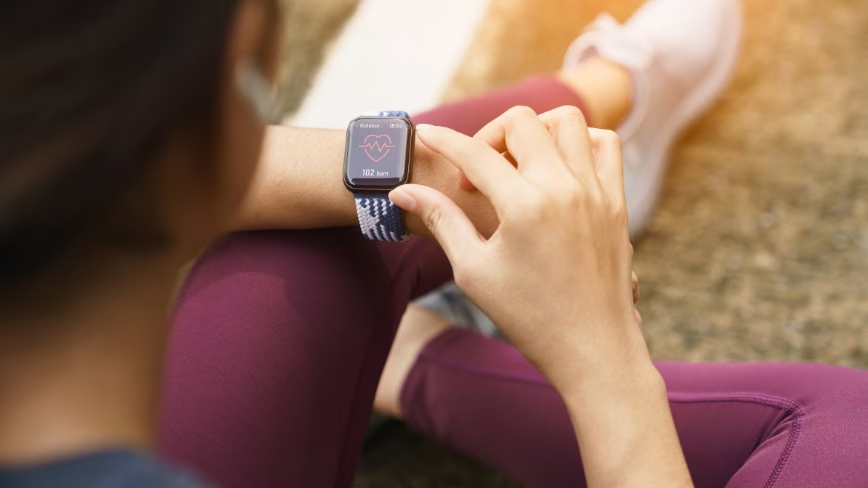
Apple Watch innovation is described as stalled, with watchOS 27 focused on stability rather than major new features and Apple increasingly relying on promotions, including first-time education-store discounts and aggressive retailer markdowns. Leadership turnover in health and wearables is adding pressure, while Oura has confidentially filed for a U.S. IPO and is now seen as a competitive threat in screenless health devices. Apple is still pursuing glucose monitoring and AI health coaching, but the article suggests it is lagging Whoop, Oura, and Google in the next phase of wearable health tech.
The key market implication is not that Apple Watch unit growth slows, but that Apple’s health stack is at risk of becoming a platform tax on a category it can no longer define. If screenless wearables keep taking share of mind, Apple’s moat shifts from ecosystem lock-in to feature parity, which is structurally worse for gross margins because it forces more promotion and more R&D without a meaningful pricing premium. The early giveaway is channel behavior: once Apple starts leaning on discounts and education-store incentives, it signals the product is being managed to maintain installed base rather than expand ARPU.
The second-order winner is the broader “ambient health” ecosystem, not just the named private companies. Better passive data creates higher engagement for insurers, telehealth, and wellness software, while also improving the value of on-device AI inference in adjacent hardware classes like glasses and earbuds. That makes GOOGL the cleaner public-market beneficiary than AAPL: if health becomes a continuous, voice-driven workflow, Google’s Android XR and Cast ecosystem can compound across more surfaces, whereas Apple’s slower product cadence risks ceding the low-friction default layer.
The real catalyst is whether glucose monitoring becomes commercially viable within 12-24 months. If Apple ships a credible non-invasive glucose feature, the narrative can reset quickly because it would re-anchor Apple Watch as a medical utility rather than a lifestyle accessory. But if the project slips again, the market should expect another year of share drift toward Oura/Whoop-like products and continued margin pressure from promotions; the leadership churn raises execution risk exactly when the category is shifting from smartwatch to sensor network.
Contrarian read: the consensus is probably too focused on Apple “missing” a fashion cycle and too little on Apple’s ability to bundle health into the iPhone/AirPods/Watch triangle. That means the bear case on AAPL is less about a single lost product cycle and more about a prolonged loss of relevance in data capture, which is harder to fix. The upside surprise for AAPL is not a better watch; it is a genuinely differentiated health service layered across hardware that reduces churn and lifts services attach.
AI-powered research, real-time alerts, and portfolio analytics for institutional investors.
Request DemoOverall Sentiment
mildly negative
Sentiment Score
-0.35
Ticker Sentiment
