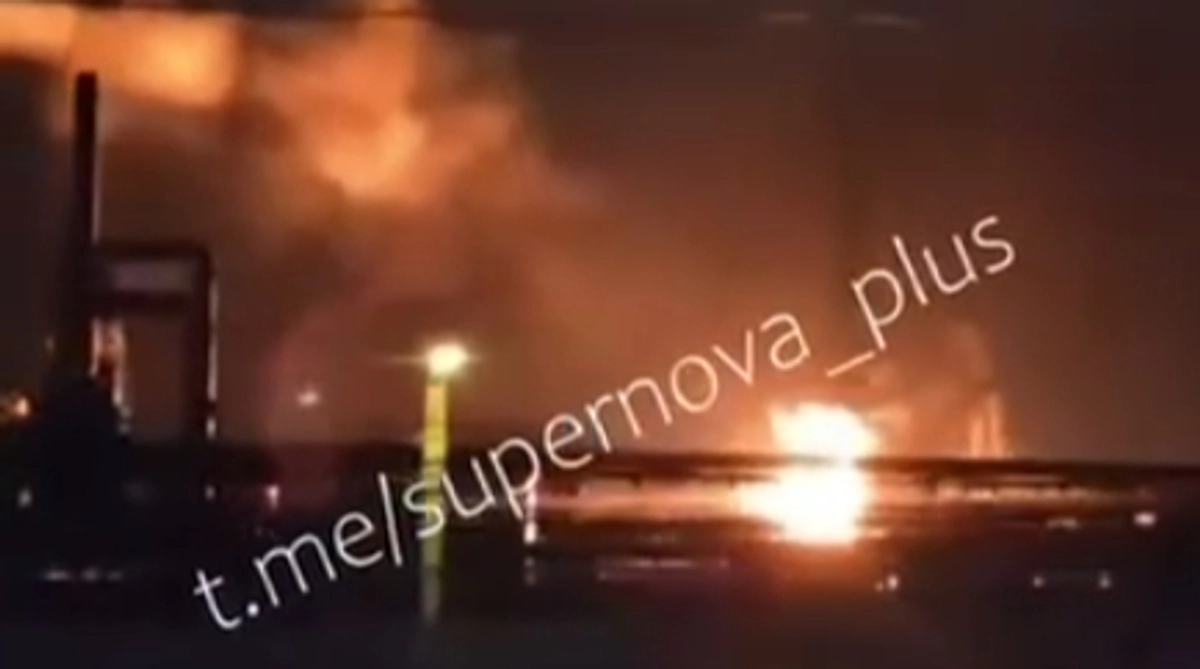
Ukraine's General Staff said its forces struck the Yaroslavl oil refinery on 26 April, causing a fire, and also hit Russian military trains in occupied Donetsk Oblast. It additionally confirmed earlier strikes on 24 April against a Kasta-2E1 radar station in Melitopol and a Pantsir-S1 air-defense system in Mariupol. The refinery is described as a strategically important facility with processing capacity of about 15 million tonnes of oil per year.
The market implication is less about the headline damage and more about the cumulative attrition of Russia’s rear-area logistics. Repeated hits on refining and rail assets force a choice between diverting air defenses inward or accepting rising downtime in energy and transport nodes; either path is negative for throughput and military mobility over the next several weeks to months. The second-order effect is that even limited physical damage can create disproportionate operational friction if repair crews, spares, and convoy scheduling are repeatedly disrupted.
For energy markets, the key issue is not global crude supply but Russian product availability and regional pricing dislocation. Refinery interruptions typically matter first in diesel and fuel oil, where military and industrial demand competes with export flows; that can tighten non-OECD product balances before it shows up in headline Brent. If the campaign broadens or becomes more persistent, the bigger signal is a higher probability of Russia prioritizing domestic supply over exports, which would pressure seaborne product margins and potentially support crack spreads outside the U.S.
The contrarian read is that the move may be strategically meaningful but financially overstated if damage remains intermittent and rapidly repairable. Markets often overreact to refinery strikes as crude bullish, when the more durable trade is on refined products and logistics-sensitive equities rather than outright oil. The real tail risk is escalation into more frequent attacks that force Russia to harden infrastructure and reroute flows, raising wartime operating costs and embedding a persistent risk premium rather than a one-off price spike.
AI-powered research, real-time alerts, and portfolio analytics for institutional investors.
Request DemoOverall Sentiment
moderately negative
Sentiment Score
-0.40
