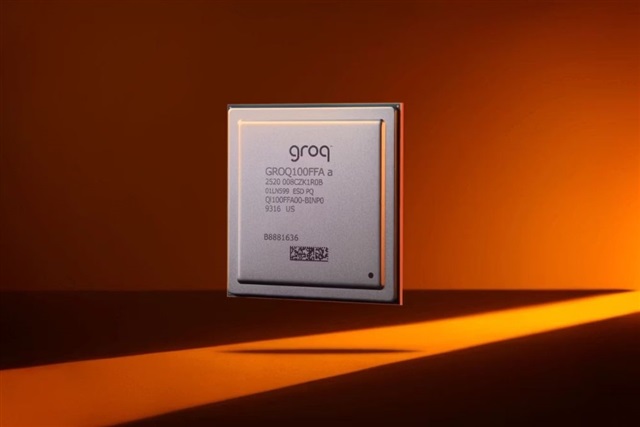
Groq plans to raise 2025 wafer orders at Samsung Foundry from ~9,000 to ~15,000 (≈+66.7%), primarily for sample chips ahead of large-scale mass production targeted for 2026. Samsung will produce these on an enhanced 4nm node and is aggressively pursuing 4–5nm inference AI orders to strengthen its position versus TSMC. Nvidia is expected to unveil an inference-focused chip based on Groq designs at GTC 2026, reportedly replacing HBM with SRAM to boost bandwidth, power efficiency, and reduce costs, underpinning robust growth prospects in the inference-AI chip market.
The market is treating recent foundry demand signals as a broader reallocation of strategic capacity toward inference-optimized designs, which implies a multi-quarter reshaping of pricing power across the foundry ecosystem. That reallocation will raise incremental margins for the foundry that captures premium node demand, but it also forces trade-offs: any surge in short-lead, high-margin inference work crowds out general-purpose logic and forces larger customers to compete on pricing or wait for capacity, creating a durable two-tier pricing environment over 6–18 months.
A subtle but material second-order effect is on memory and packaging vendors: a shift toward on-die SRAM or lower-HBM configurations reduces near-term demand for external HBM stacks and wide-interposer substrates, compressing revenue growth for specialized memory vendors while benefiting companies that supply advanced on-chip IP, eFuses, and test/validation tooling. Similarly, early-stage sampling cycles concentrate test & validation spend in 2025–H1 2026, shifting capital equipment cadence (and earnings visibility) for test-equipment vendors into a tighter, more lumpy pattern.
Key catalysts include GTC event messaging and 2026 mass-production ramps; both can re-rate adopters quickly if yields and power curves are demonstrably superior. Tail risks are discrete and binary: design wins that fail to scale yield, a de facto industry pivot back to HBM for specific workloads, or an unexpected capacity expansion from incumbent foundries that reintroduces price competition—any of which could materially reverse the premium for the foundry capturing early inference orders within months.
Given these dynamics, the opportunity set is time-boxed and event-driven: position size should be calibrated to capture a 3–12 month convex payoff (product reveals, initial customer benchmarks, early volume yields) while protecting against execution and yield disappointment that would compress multiples quickly.
AI-powered research, real-time alerts, and portfolio analytics for institutional investors.
Request DemoOverall Sentiment
mildly positive
Sentiment Score
0.40
Ticker Sentiment
