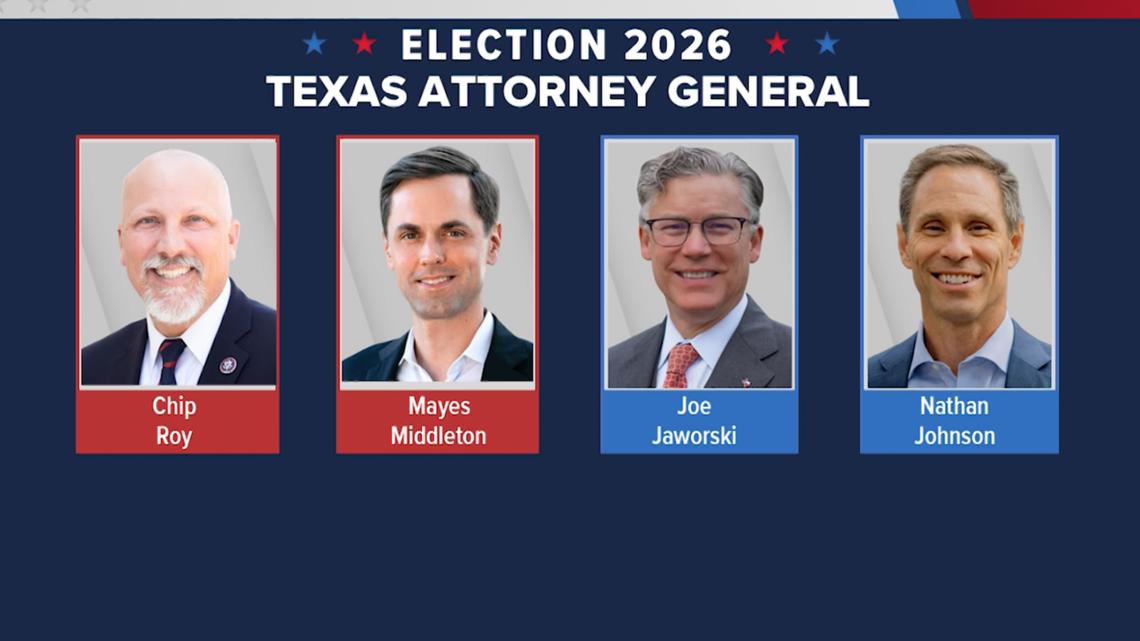
Texas attorney general candidates Mayes Middleton, Nathan Johnson, and opponents in the Republican and Democratic runoffs are heading into the November election, with the seat currently held by Ken Paxton. The article focuses on campaign positioning, spending, and legal/governance priorities, including border security, immigration enforcement, and litigation against Democrats and progressive policies. The news is politically relevant but has minimal direct market impact.
This race is less about Texas law and more about the marginal direction of institutional enforcement risk in the state: a Paxton-style continuation raises the probability of highly selective, politically weaponized AG actions that can create headline volatility for regulated industries. The immediate market relevance is not the winner per se, but the expected increase in litigation tempo around immigration, ESG, education, tech content moderation, and consumer finance — areas where AG offices can shape compliance costs without needing legislative change.
For corporates, the second-order effect is a higher probability of forum-shopping and injunction risk, especially for firms with Texas exposure but national footprints. That tends to favor large-cap incumbents with deeper legal budgets over smaller Texas-based operators, and it can widen the valuation gap between “policy-sensitive” subsectors and cash-generative compounders. If the AG office becomes an extension of national culture-war litigation, the real beneficiaries are law firms, consultants, and headline-driven media ecosystems; the losers are businesses that need regulatory predictability to invest.
The key catalyst window is November through the first 100 days after inauguration: appointment choices, early lawsuits, and posture on federal-state conflicts will matter more than campaign rhetoric. A reversal would require either a moderation signal from the eventual winner or a broader political reset that de-escalates AG-led enforcement. Until then, the base case is continued policy noise rather than direct macro impact, but with enough idiosyncratic risk to justify hedging Texas-exposed names.
AI-powered research, real-time alerts, and portfolio analytics for institutional investors.
Overall Sentiment
neutral
Sentiment Score
0.00
