
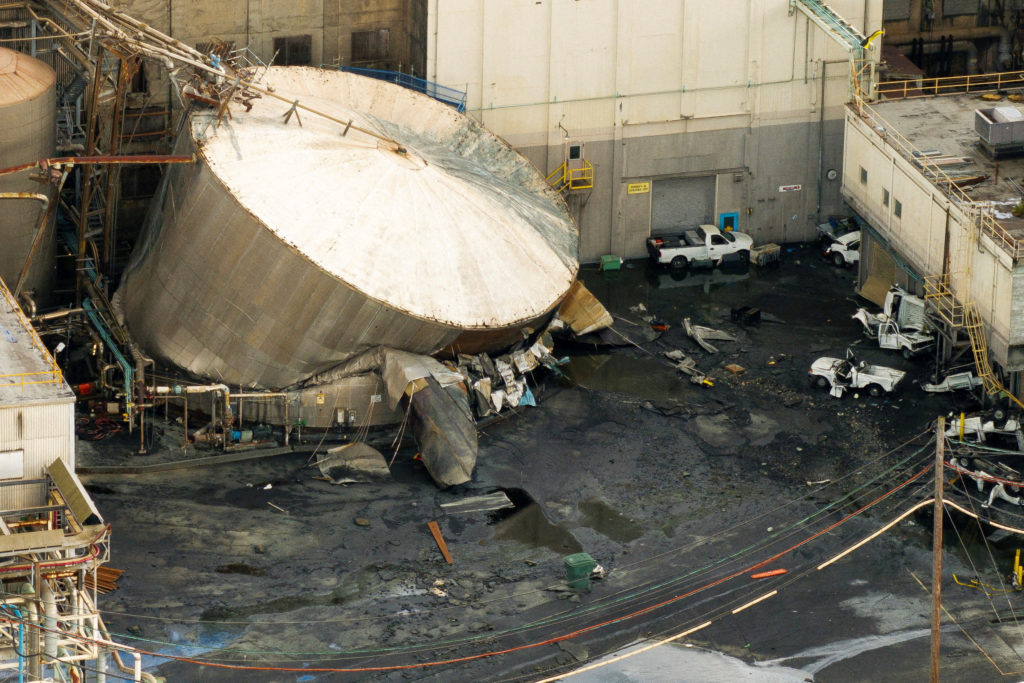
Washington authorities now say 11 people are presumed dead after the Nippon Dynawave Packaging tank implosion, with two confirmed fatalities, nine missing, and eight injured; some white liquor contamination reached the Columbia River but officials say the local water supply is not at risk. The article also highlights ongoing geopolitical तनाव around U.S.-Iran talks, Israel-Hamas strikes that killed Hamas's latest Gaza military leader, and Uganda's immediate border closure with the DRC to curb Ebola. Markets were otherwise broadly steady, with U.S. indices at record highs and Ferrari's first EV launch drawing a weak reception.
The cleanest market read is not the headline carnage itself, but the widening gap between headline geopolitical noise and actual cross-asset positioning. Energy easing and fresh record highs in U.S. equities suggest the market is still treating Middle East escalation as a tradable volatility event rather than a regime change, which usually compresses defense-premia trades and rewards event-driven fades unless shipping or energy infrastructure is directly impaired. The implication is that defense, cyber, and select industrial names tied to contingency spending are better expressed on dips than chased after broad risk-on moves.
The strongest second-order winner from the industrial accident is likely not the local utility complex, but insurers/reinsurers and environmental remediation contractors if liability expands beyond the site. A toxic release entering a major river system creates a multi-quarter claims tail, with the real risk showing up in reserve uncertainty and litigation rather than the immediate clean-up bill. That makes casualty-heavy insurers and regional specialty carriers more vulnerable to negative reserve revisions over the next 1-3 quarters if investigations point to maintenance or process-control failures.
Ferrari is the only directly investable corporate story here, and the issue is less EV demand per se than brand dilution risk at the luxury end. Ultra-luxury buyers are willing to pay for scarcity and emotional status, but an EV launch can compress the halo if enthusiasts interpret it as compliance rather than craftsmanship, which matters because Ferrari's valuation depends on perpetual pricing power and mix discipline. Near term, the stock likely trades on sentiment and order-book chatter; over 6-12 months the key variable is whether the EV broadens the addressable base without cannibalizing high-margin combustion models.
The contrarian view: the knee-jerk disappointment in Ferrari may be overdone if the market is implicitly comparing it to mass-market EV economics instead of brand monetization. At the same time, the geopolitical backdrop is still fragile enough that any interruption in the Strait of Hormuz would quickly reprice risk assets and expose how complacent the current equity tape is. That asymmetry argues for owning cheap optionality on both volatility and defense while fading any assumption that today’s calm macro tape is durable.
AI-powered research, real-time alerts, and portfolio analytics for institutional investors.
Request TrialOverall Sentiment
mildly negative
Sentiment Score
-0.25
Ticker Sentiment
