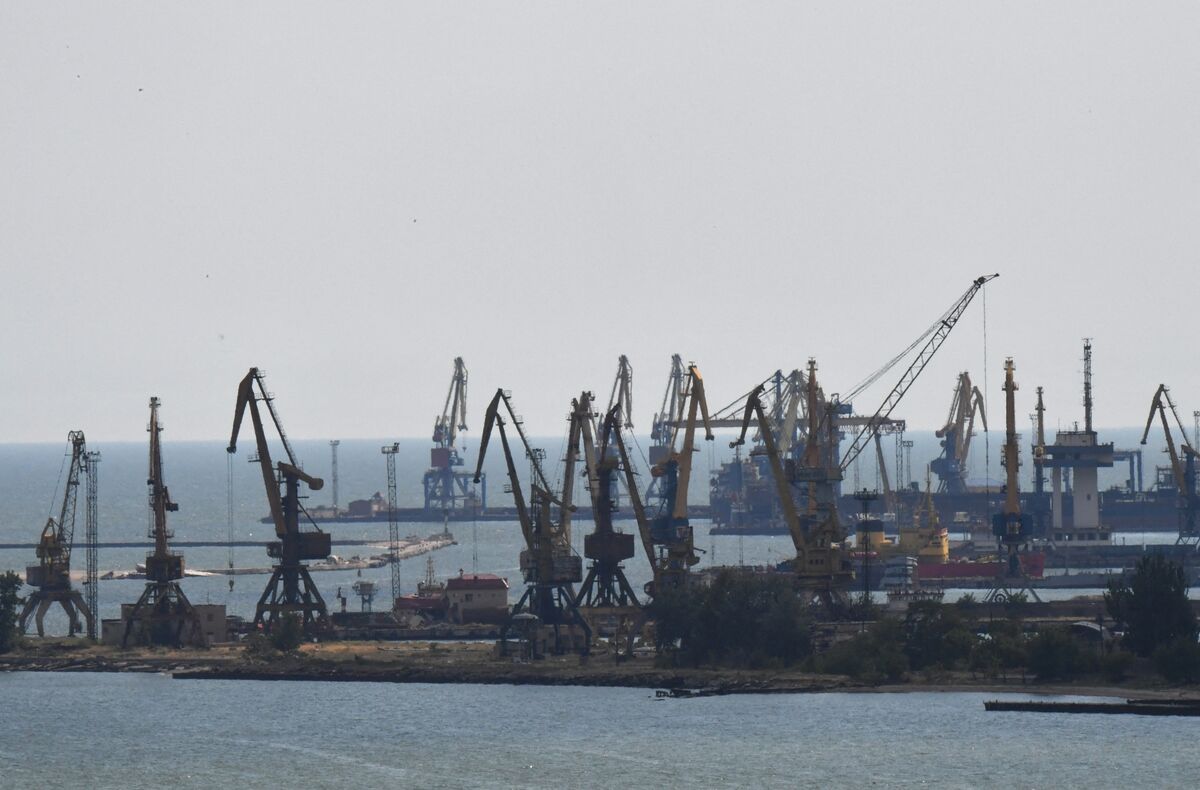
Ukraine said it struck seven Russian fuel tankers and five dry-cargo vessels in the Sea of Azov, expanding maritime attack scope. Kyiv claims the tankers support shipments of Russian oil/petroleum products used to work around international sanctions, while dry-cargo ships and tugboats help move military cargo and logistics. The development raises near-term supply-risk for Russian maritime energy flows and sanctions-impacted trade routes.
This is less a headline supply shock than a margin shock to sanctioned-barrel logistics. The first-order market move should be a small war-risk premium in Brent/Urals spreads and in Black Sea freight/insurance, with the real winners being non-Russian exporters that can sell into any incremental substitution demand. The losers are the shadow-fleet operators, Russian budget receipts, and any refiners or traders structurally reliant on discounted Russian feedstock.
The second-order effect is that repeated maritime attrition forces Russia to route more volume through slower, more expensive inland options and higher-friction ports, which compresses realized netbacks even if headline export volumes hold up. That matters more for 1-3 months than for day one: the market will initially price the risk, then reassess as insurers, charterers, and shipowners decide whether to keep tonnage in the area. If the attacks stay episodic, the premium fades quickly; if they become systematic, the sanctions discount can widen materially without requiring a global crude shortage.
Contrarianly, consensus may be overestimating immediate global oil tightness and underestimating compliance effects. The most important falsifier is whether freight, insurance, and Urals differentials revert within 2-4 weeks; if they do, this is noise. If they do not, the setup shifts from a tactical energy trade to a structural squeeze on Russian export logistics and a relative tailwind for Atlantic Basin crude and tanker owners.
AI-powered research, real-time alerts, and portfolio analytics for institutional investors.
Request TrialOverall Sentiment
mildly negative
Sentiment Score
-0.25
