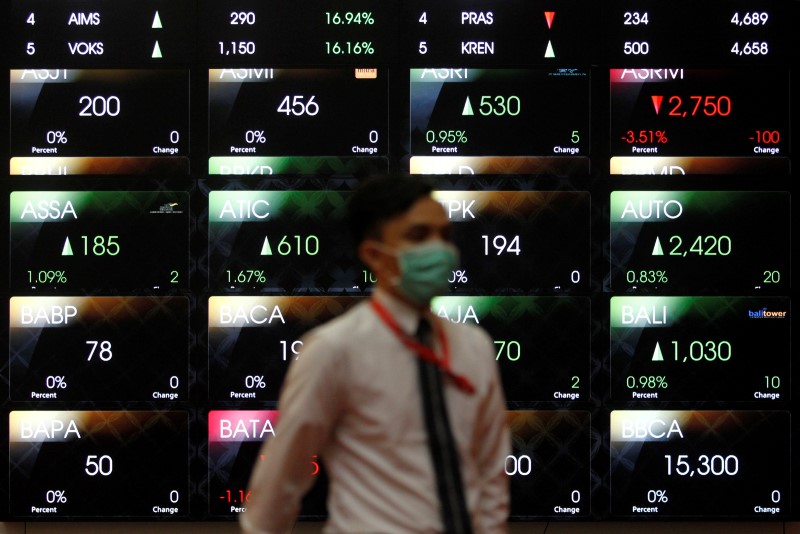
Indonesia's IDX Composite fell 0.84% to a new 6-month low, with losers outnumbering gainers 483 to 248 as Financials, Agriculture and Basic Industry led declines. Crude oil rose 2.10% to $97.42 a barrel and Brent climbed 2.47% to $103.79, while gold slipped 1.06% to $4,680.44. USD/IDR strengthened 0.40% to 17,408.90, reinforcing a risk-off tone for Indonesian assets.
The cleanest read is that this is not just an oil headline; it is a broad risk-premium repricing. Higher crude plus a softer local currency is a double hit to Indonesia’s import-sensitive economy: it compresses consumer discretionary margins, raises logistics/fuel costs, and can force the central bank to stay tighter for longer even if domestic growth is slowing. That combination typically pressures financials first through slower credit growth and weaker asset quality before it shows up in the broader index.
The second-order effect is sector rotation inside the market rather than a simple index-level selloff. Energy-linked names and selective commodity exporters can absorb the macro shock, while domestic cyclicals with weak pricing power are vulnerable to a multi-week de-rating. The sharp dispersion in single names suggests liquidity is thinning; in that environment, trend followers and retail flows can extend moves beyond fundamentals for several sessions, especially when the local currency is breaking incremental support.
The bigger catalyst risk is that this remains a fast-moving headline-driven trade, not yet a full macro regime change. If oil gives back even half of the move or USD/IDR stabilizes, the pressure on Indonesian equities should ease quickly; if Brent holds above the low-$100s for more than 1-2 weeks, expect consensus to cut EPS for consumer and transport names and raise risk premium assumptions across the index. That creates a window where short-duration tactical trades are preferable to structural shorts.
The U.S. growth/AI complex is also relevant through the global liquidity channel: rising energy prices and a firmer dollar are typically a modest headwind for long-duration multiple names, but the impact is second-order unless oil keeps pushing higher. The current setup is more supportive of relative-value hedges than outright factor rotation, with commodity sensitivity and FX pressure doing most of the work.
AI-powered research, real-time alerts, and portfolio analytics for institutional investors.
Request DemoOverall Sentiment
mildly negative
Sentiment Score
-0.15
Ticker Sentiment
