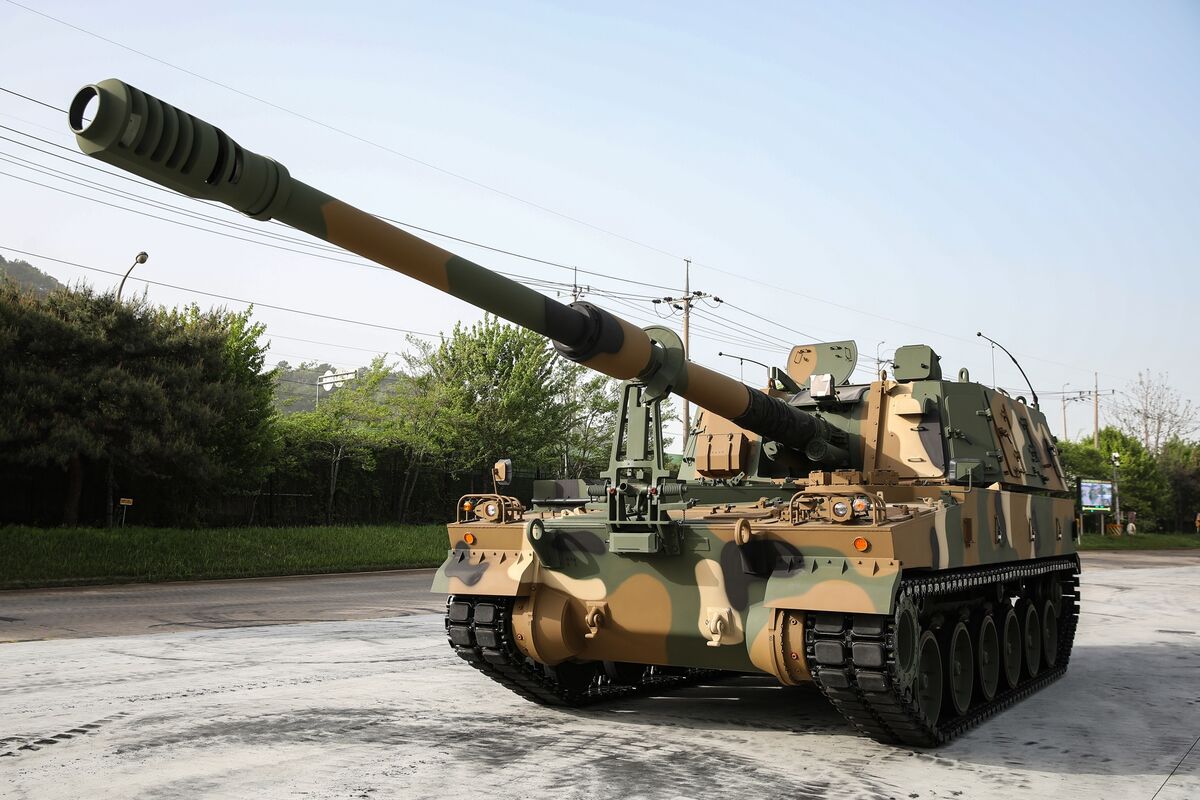
Asian defense stocks are seeing renewed upside as the Iran war and broader Middle East tensions fuel a global arms buildup. Hanwha Systems, LIG Defense & Aerospace, and Astroscale are among the top five defense performers worldwide this year, with BofA Securities and Jupiter Asset Management framing the rally as a longer-term growth story rather than a short-term trade.
The market is starting to re-rate Asian defense as a multi-year industrial cycle, not a headline-driven spike. The important second-order effect is that regional procurement is likely to shift from legacy platforms to layered systems — sensors, electronic warfare, command-and-control, and space-adjacent assets — which is a better mix for firms with software, integration, and recurring maintenance revenue than for pure hardware primes. That broadens the opportunity set beyond the obvious beneficiaries and should compress the historical gap between “cyclical industrial” multiples and “strategic technology” multiples.
The strongest near-term winner is likely the supply chain behind these names: domestic electronics, propulsion, optics, and secure communications vendors should see higher order visibility before the primes do, because governments can announce budgets faster than they can deliver finished platforms. A less obvious beneficiary is capital markets access — rising strategic value often lowers funding costs and improves backlog visibility, which can create a reflexive rally in smaller, levered defense subcontractors. Conversely, commercial aerospace suppliers with constrained capacity may see margin pressure if defense demand crowds out civilian recovery.
The key risk is that the trade is front-running budget authorization rather than execution. Defense equities can overshoot in the first 1-3 months on positioning and then stall if legislative approval, procurement timing, or coalition politics slow actual spending; that creates a window where the most crowded names underperform even if the thematic thesis remains intact. A second risk is that any de-escalation narrative or ceasefire reduces urgency, but historically the bigger issue is not peace — it is delay, which can flatten momentum once investors realize revenue recognition is 12-24 months away.
The contrarian view is that the market may be underestimating the durability of the cycle but overestimating immediate earnings translation. The right expression is to own the picks-and-shovels names with order-book leverage and avoid paying peak multiples for the most visible winners, which are likely already discounting several years of capex. If this is a genuine rearmament regime, the next phase should favor companies with exposure to maintenance, ammunition replenishment, satellites, and secure software rather than just headline weapons systems.
AI-powered research, real-time alerts, and portfolio analytics for institutional investors.
Request DemoOverall Sentiment
moderately positive
Sentiment Score
0.45
