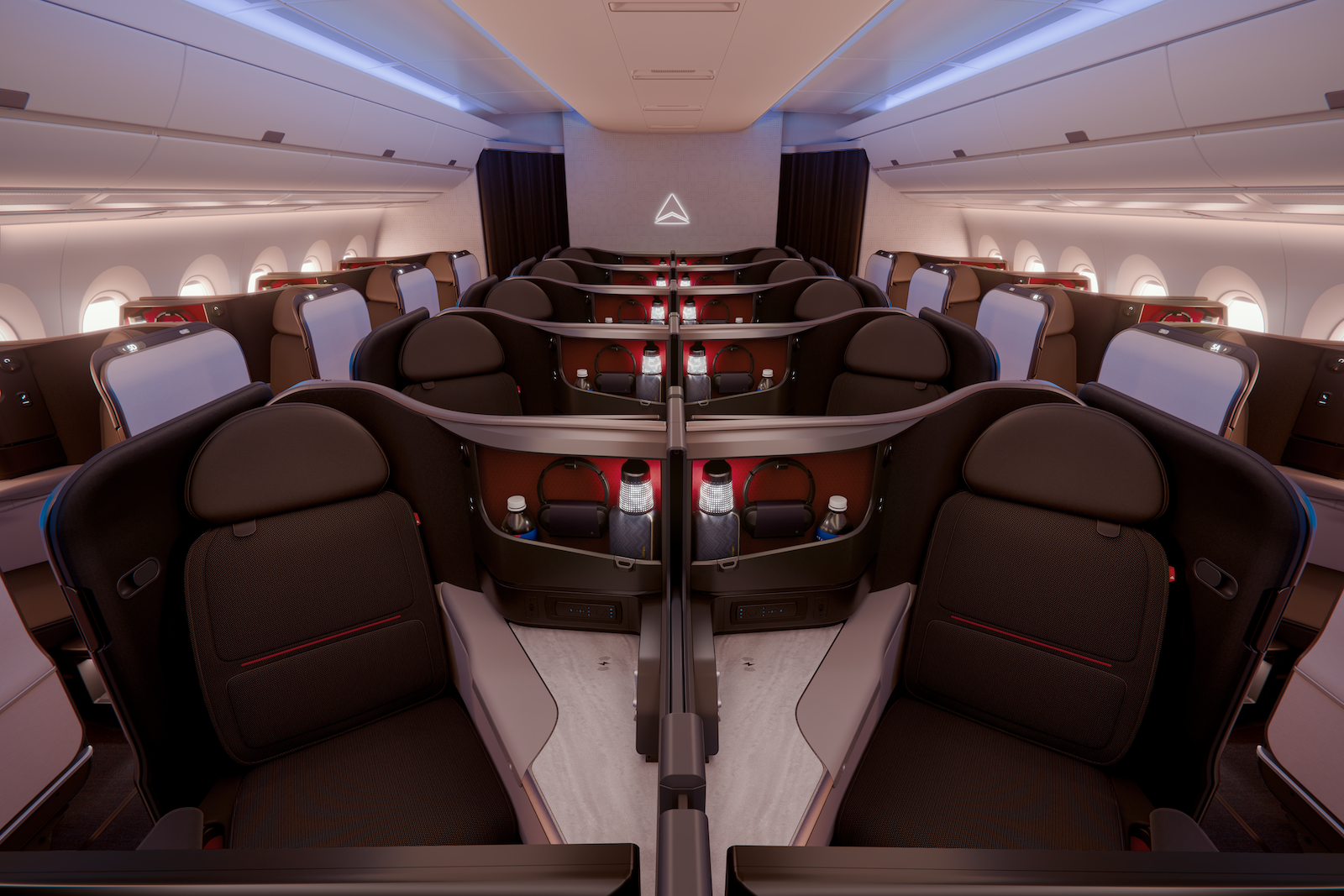
Delta announced a next-generation Delta One suite product for its Airbus A350-1000, featuring 53 suites, 33% more than on current Delta aircraft, plus 24-inch 4K seatback screens and upgraded amenities. The carrier also plans a September retrofit of 42 Airbus A330-200/-300 aircraft with refreshed cabins, including true Delta One suites and more Premium Select/Comfort seats. The updates support Delta’s premium positioning and should improve the long-haul customer experience, though the news is more product and fleet refresh than a near-term financial catalyst.
Delta is signaling that premium seating is no longer a marketing feature but the core load-factor and yield engine. The second-order implication is that the industry’s “premium race” is now becoming a capex arms race, which should widen the product gap between carriers with strong balance sheets and those forced to preserve cash. That favors DAL over peers with less flexibility, while simultaneously pressuring unit-cost visibility for airlines that need to match the front-cabin experience without Delta’s scale or corporate revenue mix. The retrofit plan matters more than the new aircraft in the near term because it converts legacy widebodies from a customer-experience liability into a yield-management asset without waiting for fleet renewal. That should support international premium cabin pricing on Europe, South America, and Middle East routes over the next 12-24 months, but also creates execution risk: cabin conversion slippage, supply-chain bottlenecks, or certification delays would defer the benefit while costs start immediately. For suppliers, this is a modest tailwind for interior equipment and seat OEMs, but the bigger winner is the airline that can monetize premium demand faster than competitors can imitate. Contrarian angle: the market may be underestimating how much of this is defensive rather than expansionary. If DAL’s premium share is already near saturation on key hubs, the incremental ROI may come more from protecting share against UAL than from net-new demand, meaning the upside is real but not infinite. The bigger issue is that premium-heavy aircraft are less forgiving in a downturn; if corporate travel softens or long-haul demand normalizes, the revenue premium can compress quickly while the higher fixed-cost cabin configuration stays in place. For UAL, the message is competitive pressure, not imminent structural damage. United still has a meaningful product narrative, but Delta’s retrofit cadence reduces the window where UAL can claim a durable front-cabin advantage, especially on transatlantic and Middle East flying. BA is a secondary beneficiary only through incremental widebody and cabin-demand support, while TPG is largely a sentiment bystander here.
AI-powered research, real-time alerts, and portfolio analytics for institutional investors.
Request DemoOverall Sentiment
mildly positive
Sentiment Score
0.35
Ticker Sentiment
