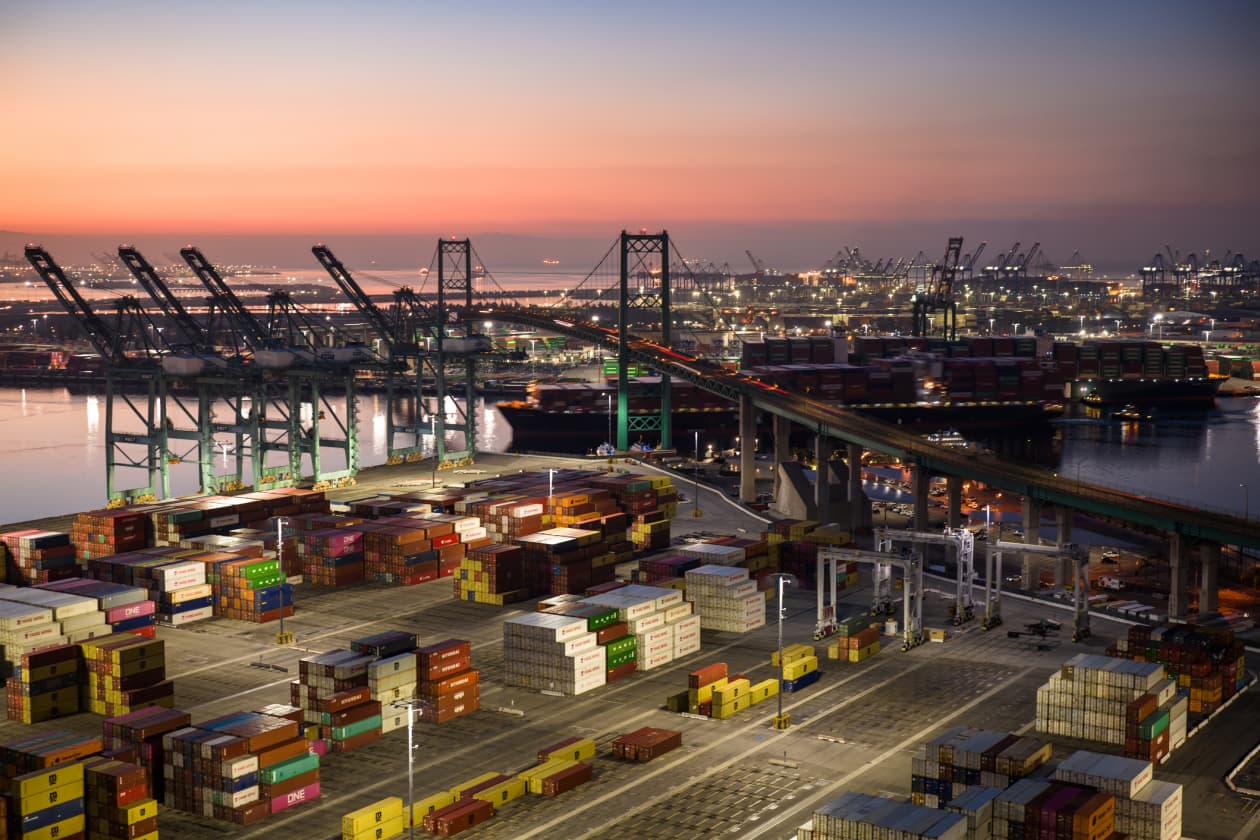
The conflict with Iran is being described as the biggest threat to global shipping since COVID-19, prompting major U.S. container ports to scale up security and confront rising bunker-fuel prices. Carriers are avoiding higher-risk routes (e.g., Strait of Hormuz alternatives), lengthening voyages and increasing shipping costs and supply-chain risk, compounding disruptions already caused by tariffs and trade tensions.
Think in terms of unit economics: a 10–25% increase in average voyage distance (or steaming time) translates to a proportional rise in fuel burn and crew costs, which for a 10,000-TEU vessel is roughly an incremental $50–$150 per TEU on a single long-haul rotation. Carriers with high contractual leverage on premium lanes or with newer, fuel-efficient tonnage can convert a large share of that incremental cost into margin within 1–3 months; commoditized, spot-exposed operators cannot.
Insurance and financing are the nonlinear multipliers. A rapid reclassification of a region into an exclusion zone can double war-risk and P&I premia inside weeks, turning what looks like a manageable per-voyage surcharge into a 10–30% hit to shipowner EBITDA if left unhedged. Lenders and leasing lessors will increasingly demand fuel-efficiency covenants or higher spreads on older tonnage over the next 6–18 months, accelerating scrappage economics for older, less-efficient ships.
Modal substitution and hinterland capacity are the secular secondaries. Ports with immediate intermodal capacity convert shipping volatility into market share gains; inland railroads with scarce lift can increase yield by 3–7% over 6–12 months. Conversely, asset-light 3PLs and shippers carrying inventory risk face margin compression until contractual pass-through mechanisms reset — that reset is typically 2–4 quarters on large corporate logistics contracts, creating a predictable earnings-lag arbitrage window.
AI-powered research, real-time alerts, and portfolio analytics for institutional investors.
Overall Sentiment
mildly negative
Sentiment Score
-0.35
