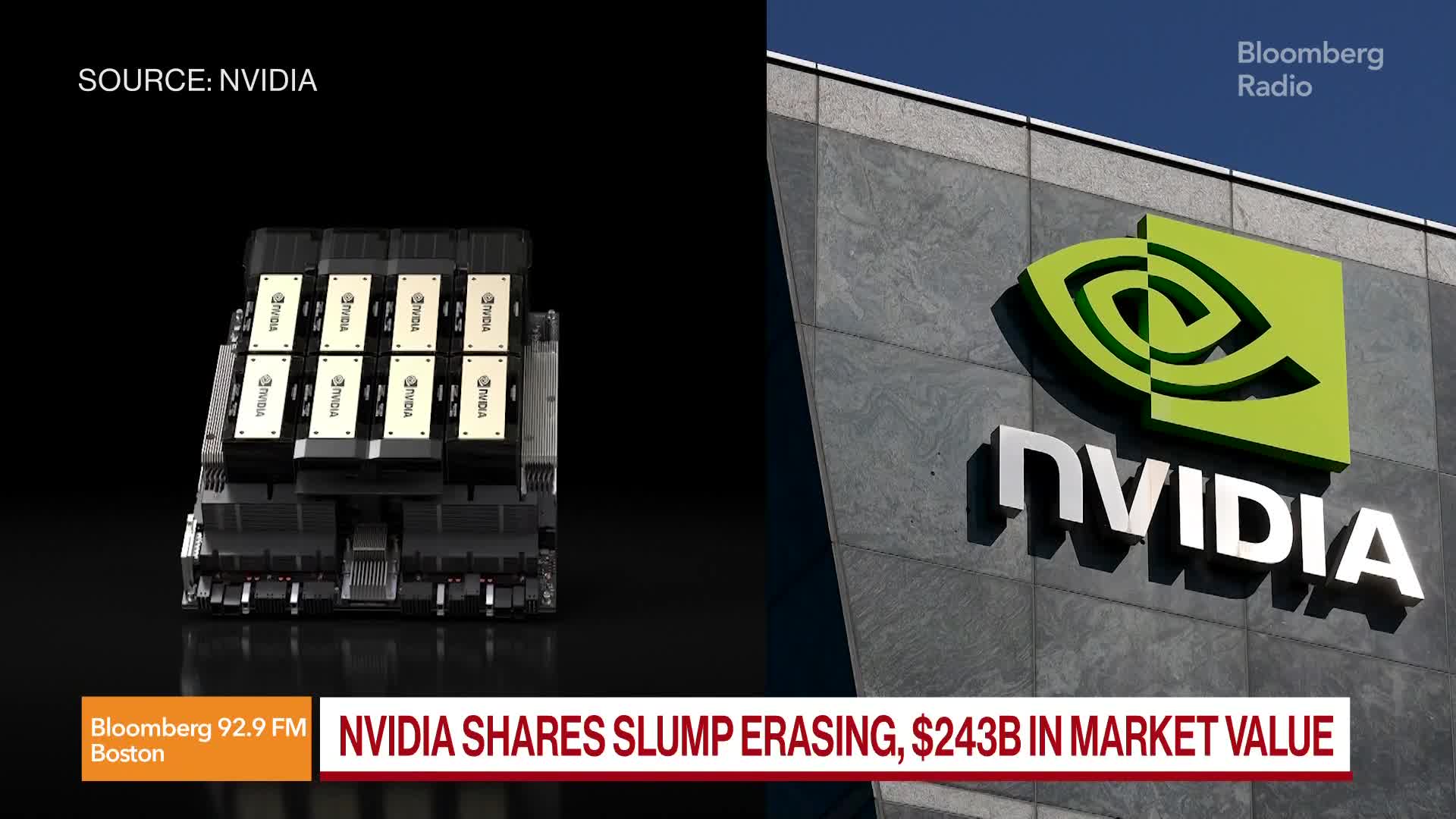
Large hyperscaler CapEx is accelerating structural demand and competitive dynamics in AI infrastructure: Meta (Zuckerberg) is reportedly planning up to $600 billion in CapEx through 2028, while hyperscalers including OpenAI have discussed adding tens of gigawatts of capacity (e.g., up to 26 GW). Google’s seventh‑generation TPUs and the improved Gemini model have closed the performance/cost gap with GPU‑based solutions, creating an incentive for buyers to diversify away from Nvidia chips (Jensen estimated ~$30–35 billion of Nvidia chips per gigawatt). The net effect: potential large revenue pools for chip suppliers but increased pricing/competitive pressure and investor caution on valuation multiples despite strong revenue guidance (references to ~ $330 billion revenue guidance and multitrillion market caps).
Market structure: Hyperscaler capex through 2028 (article cites up to ~$600B for one player and industry plans of multi-gigawatt builds) materially increases total silicon demand but creates a two-tier market: NVDA retains GPU dominance for training, while GOOGL TPUs and other ASICs attack inferencing economics (Jensen's $30–35B/gigawatt figure implies tens of billions in incremental chip demand per large build). Expect pricing pressure on training GPUs over 12–36 months as buyers diversify to lower-cost TPUs/ASICs for inference; NVDA still captures high-margin training spend but unit growth could decelerate vs. consensus.
Risk assessment: Tail risks include US export controls or antitrust actions that cut off NVDA or Google supply chains, and a rapid model-performance swing (Anthropic/OpenAI innovations) that shifts computing mix; probability low but P&L impact high. Short-term (days–weeks) headline risk around earnings or government actions; medium (3–12 months) risk around contract announcements and capex pacing; long-term (2024–2028) structural risk is vertical integration by cloud providers reducing third-party chip spend. Hidden dependency: hyperscalers’ internal software/ops efficiency (tokens/W) can dramatically reduce incremental hardware TAM.
Trade implications: Tactical: overweight GOOGL (exposure to TPU-led margin capture in cloud/inference) and trim or hedge NVDA exposure to lock gains — size by portfolio risk notional. Use 6–12 month GOOGL LEAP call spreads to capture 20–35% upside if TPU adoption accelerates; for NVDA, implement 3–6 month 15–25% OTM put spreads or sell near-term covered calls to monetize elevated IV while preserving upside. Rotate modestly into Cloud/Infra names and underweight pure-play GPU multiple exposure; rebalance around earnings and any hyperscaler capex announcements within the next 60–120 days.
Contrarian angles: Consensus still prices NVDA as unassailable — that understates capital-expenditure-driven supplier diversification and Google’s cost advantage; market may be underpricing GOOGL’s TAM for inferencing by 2026. Conversely, if NVDA maintains architectural lead or benefits from ecosystem lock-in, shorting NVDA is risky and should be hedged. Historical parallel: transitions from CPU to GPU accelerated new winners (NVIDIA) but ultimately created specialized ASIC challengers; expect a multi-year, non-linear share reallocation rather than abrupt displacement.
AI-powered research, real-time alerts, and portfolio analytics for institutional investors.
Request DemoOverall Sentiment
mildly positive
Sentiment Score
0.27
Ticker Sentiment
