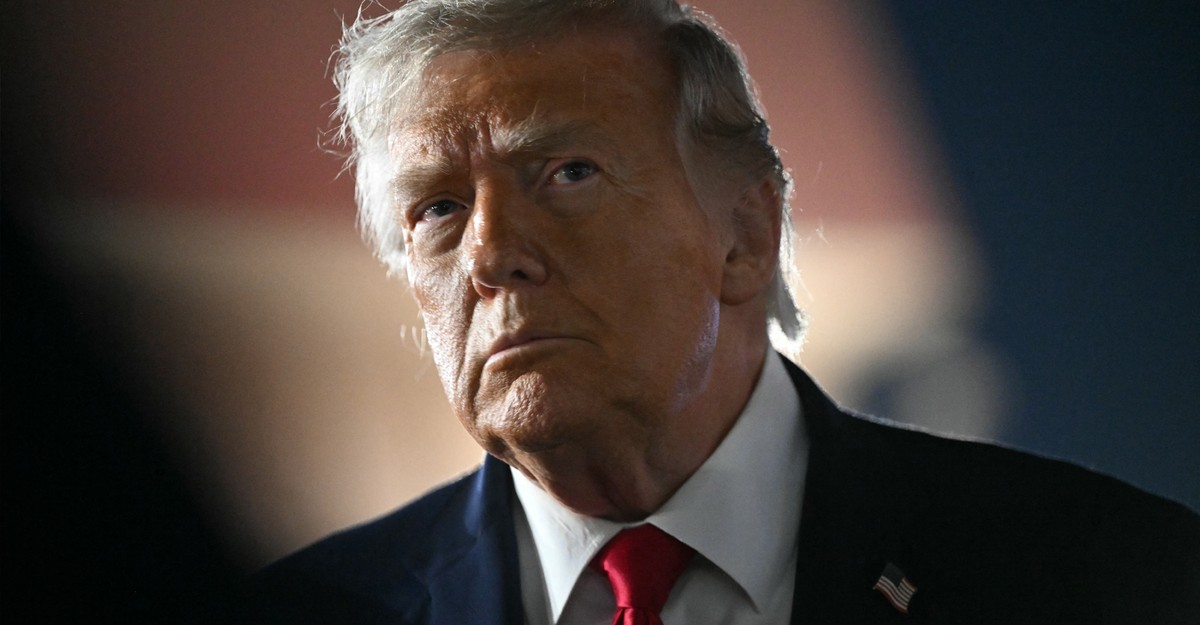
President Trump announced a U.S.-Iran deal to end the war, but the article frames it as a U.S. capitulation: Iran allegedly keeps its regime intact, sanctions relief, and access to roughly $24 billion upfront and potentially $300 billion for reconstruction. The agreement is said to leave the Strait of Hormuz still at risk, with U.S. weapons stocks depleted and consumers facing higher gas prices. The piece suggests the market impact could be broad, given the geopolitical shock, energy implications, and uncertainty around follow-on negotiations.
The market takeaway is not “peace,” it’s a forced de-escalation that still leaves the premium for Gulf risk structurally elevated. Even if hostilities pause, the relevant variable for energy and macro is not headline ceasefire status but whether Iran retains the ability to intermittently threaten shipping, calibrate proxy violence, and extract concessions later; that keeps implied volatility in crude and regional credit from collapsing back to pre-conflict levels.
The bigger second-order effect is that Washington has effectively signaled limits on follow-through, which weakens deterrence across the region. That improves Tehran’s bargaining power, pressures Israel into more unilateral action over time, and raises the probability of a stop-start conflict cycle rather than a clean resolution. For EM investors, this is important because Gulf sovereigns may face a higher risk premium on external funding just as they are likely to absorb reconstruction and security-related fiscal burdens.
Energy is the most immediate transmission channel, but the more interesting trade is the balance sheet impact on defense and munitions supply chains. A short, messy conflict that depletes U.S. precision inventories while not producing strategic closure is typically bullish for primes with replenishment backlogs and for suppliers of seekers, propulsion, and air defense interceptors, with the lagged upside showing up over the next 2-4 quarters. Conversely, consumer-sensitive sectors should get a temporary tailwind if gasoline retraces, but any relief is fragile because the market will price in a renewed tail-risk premium the moment the agreement looks unenforceable.
Consensus may be underestimating how much of this outcome is already priced into crude and how little is priced into the policy credibility damage. The near-term move in energy could fade if the ceasefire holds for a few sessions, but the medium-term setup remains asymmetric: lower realized volatility than during active strikes, yet persistently higher floor pricing because the Strait risk is now a recurring political option rather than a one-off shock.
AI-powered research, real-time alerts, and portfolio analytics for institutional investors.
Request DemoOverall Sentiment
strongly negative
Sentiment Score
-0.78
