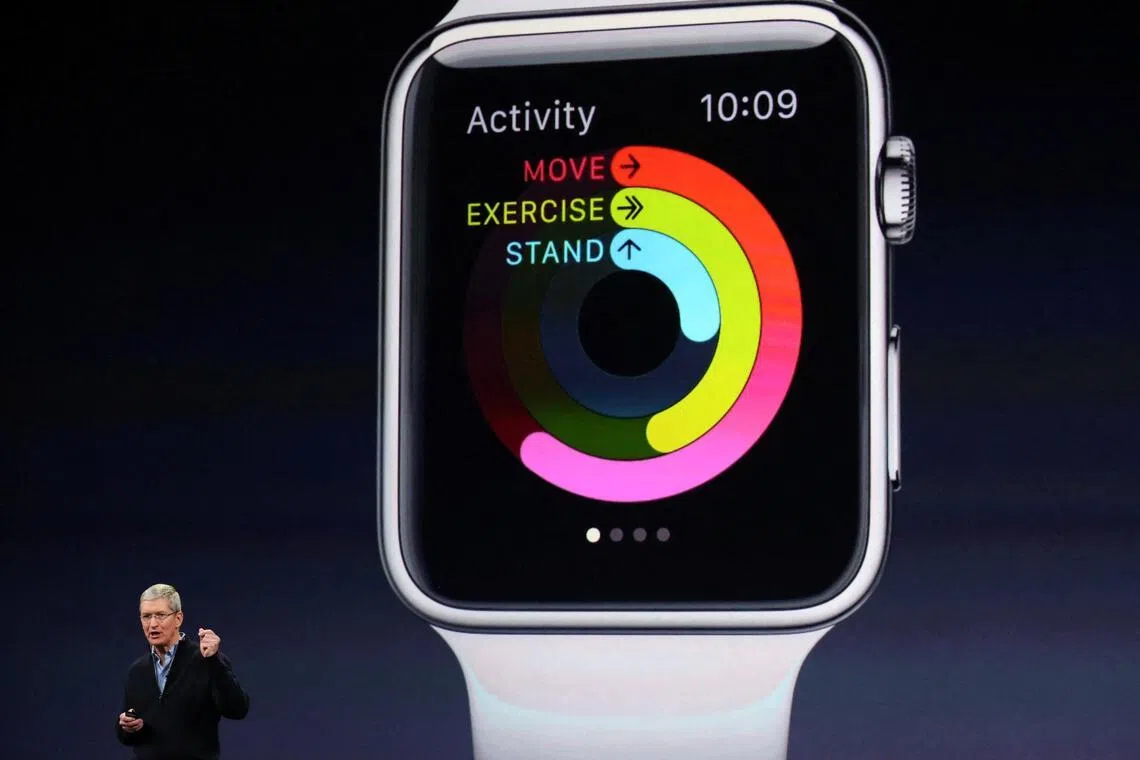
Tim Cook said Apple Maps was his "first really big mistake" as CEO, citing the flawed 2012 launch, while contrasting that with Apple Watch as his proudest work. He highlighted Apple Watch health features, including a user note saying the device saved their life, and said Apple has since built the best map app on the planet. The article is mainly a retrospective on leadership, product execution, and Cook's upcoming transition rather than a material business update.
This reads as low-impact headline theater for the stock, but it is still useful for mapping governance and product-velocity risk into the post-Cook transition. The bigger signal is that the next regime at Apple is likely to place more emphasis on execution discipline and fewer moonshot-style strategic detours; that should modestly improve capital allocation certainty, but it also reduces the odds of a near-term category-opening surprise that can re-rate the multiple. In other words, the succession narrative is more about sustaining the current earnings machine than expanding the valuation framework.
The most actionable second-order implication is for services and health as the real operating-system of Apple’s growth. Management’s pride in wearables/health reinforces that the install base monetization story is now increasingly tied to regulated, data-rich features that can deepen switching costs and improve retention, which is bullish for long-duration revenue durability rather than immediate upside. Competitively, this raises the bar for point solutions in health tech and for Android OEMs attempting to differentiate on hardware alone; Apple’s moat is less about devices and more about embedded behavioral lock-in.
From a risk perspective, the main tail event is not the retrospective admission of a mistake, but whether a new CEO changes the pace of product ambition during a transition window. Over the next 3-12 months, the market will likely tolerate modest operational conservatism, but any slowdown in flagship innovation cadence could compress the premium multiple if investors conclude the company is entering a harvest phase. Conversely, if the successor telegraphs continuity plus a sharper product pipeline, the stock can re-accelerate because the market has already priced a high degree of execution stability.
Contrarian take: the consensus may overestimate how much succession uncertainty matters and underestimate how much Apple’s valuation is actually anchored to optionality in health, services, and ecosystem monetization. The negative read on past failures is largely noise; the real issue is whether Apple can keep converting its installed base into higher ARPU without increasing churn or regulatory friction. That means the cleanest edge is not directionally bearish on AAPL, but relative: own Apple for quality, hedge duration-sensitive growth exposure elsewhere, and wait for any transition-driven dip to add.
AI-powered research, real-time alerts, and portfolio analytics for institutional investors.
Request TrialOverall Sentiment
neutral
Sentiment Score
0.05
Ticker Sentiment
