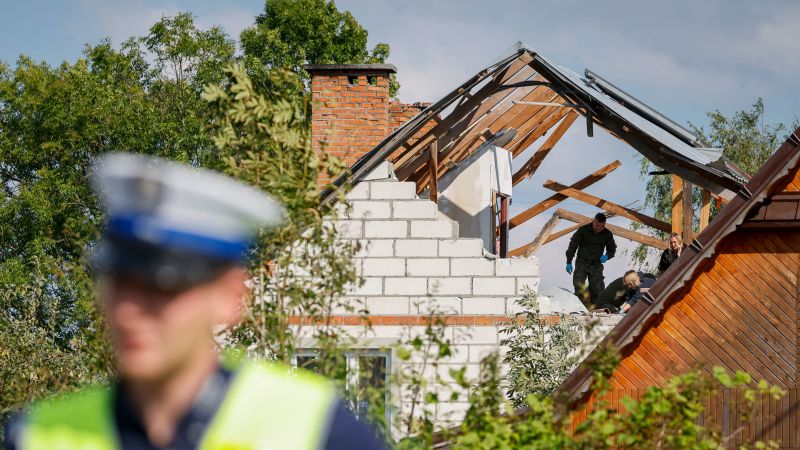
NATO allies are sharply divided on whether to adopt a shoot-down policy for Russian aircraft violating alliance airspace, despite a recent surge in incursions across Eastern Europe. While countries like Poland and Estonia advocate for a forceful response to deter Russian "reckless behavior," Germany and others urge restraint due to escalation risks and the potential for accidental incursions. This internal tension was evident in the recent North Atlantic Council statement, which committed to "all necessary military and non-military tools" but avoided explicit shoot-down language, underscoring significant challenges in forming a unified deterrence strategy and creating geopolitical uncertainty regarding NATO's red lines.
A significant strategic rift is developing within NATO over its rules of engagement, prompted by a series of Russian military incursions into allied airspace. The debate pits eastern flank members, including Poland and Estonia, who advocate for a clear and forceful shoot-down policy to deter what they term Russia's 'reckless and dangerous behavior,' against a more cautious bloc led by Germany, which fears being drawn into an 'escalation trap.' This division was evident in the recent North Atlantic Council meeting, where a joint statement was diluted to ambiguous language committing to 'all necessary military and non-military tools' rather than a specific threat of force. The situation is complicated by assessments from senior military leaders, such as US General Alexus Grynkewich, who suggested one recent incursion was 'likely accidental,' highlighting the high risk of miscalculation. The frequency of recent incidents—including 21 drones launched at Poland, an aircraft overflight of a German frigate, and repeated violations of Norwegian and Estonian airspace—underscores that this is a tangible and escalating security challenge, not a theoretical one. The lack of a unified policy creates significant geopolitical uncertainty, as NATO's red lines remain intentionally vague, elevating the risk of an unintended military confrontation.
AI-powered research, real-time alerts, and portfolio analytics for institutional investors.
Request DemoOverall Sentiment
moderately negative
Sentiment Score
-0.50
