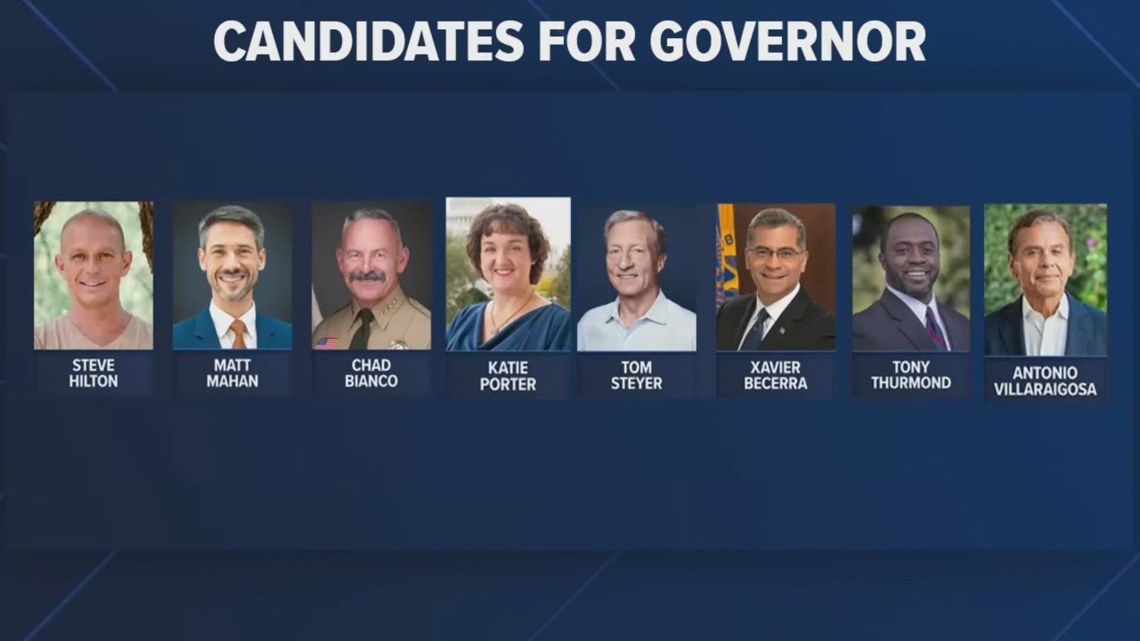
A new California governor poll shows Democrat Xavier Becerra tied for first with Republican Steve Hilton at 18%, with Chad Bianco next at 14% and 14% of voters undecided. The shift increases the odds of two Republicans advancing under California’s top-two primary system, prompting renewed debate over the ballot structure and party consolidation efforts. The article is politically significant but has limited direct market impact.
The market-relevant read-through is not the governor’s race itself, but the signaling value for California policy mix over the next 12-18 months. A tighter Democratic field reduces the probability of a clean pro-business, anti-regulatory tilt in the statehouse; if Democrats consolidate enough to avoid a two-Republican November slate, expect heavier odds of a more activist agenda on labor, utility oversight, and local ballot-linked tax policy. That matters most for rate-sensitive and policy-exposed California franchises where incremental regulation can compress multiples faster than it changes near-term fundamentals.
The second-order effect is on turnout and down-ballot control. If top-of-ticket enthusiasm fragments, the marginal winner may be the party with better ballot discipline rather than better brand equity, which tends to favor machines over moderates. For investors, that creates an asymmetric risk into the summer: not a binary election trade, but a rolling repricing of legislative probabilities that can affect insurers, utilities, healthcare, and consumer names with California concentration. The most interesting setup is that the current move is driven by consolidation dynamics, so it can reverse quickly if remaining candidates coalesce or if polling normalizes once undecideds clear.
The contrarian view is that the headline tie likely overstates final-state volatility because the pool of undecideds is still large enough to reshuffle the order again, and California’s electorate often overweights late-arriving, low-information voters. More importantly, a Republican advance is not automatically anti-market: a two-GOP November would probably intensify down-ballot Democratic mobilization, which could actually strengthen the odds of aggressive state policy on taxes and regulation. So the more dangerous outcome for policy-sensitive equities may be not a Republican surge, but a late Democratic consolidation that restores institutional momentum without changing the top-line headline.
Time horizon matters: this is a 2-6 week positioning event for sentiment, but a 6-12 month event for policy risk premium. The biggest tail risk is a narrative shift that turns this into a referendum on California governance, pushing higher turnout and more extreme legislative mandates. If that happens, the impact will likely show up first in valuation multiples rather than earnings revisions.
AI-powered research, real-time alerts, and portfolio analytics for institutional investors.
Request DemoOverall Sentiment
neutral
Sentiment Score
0.05
