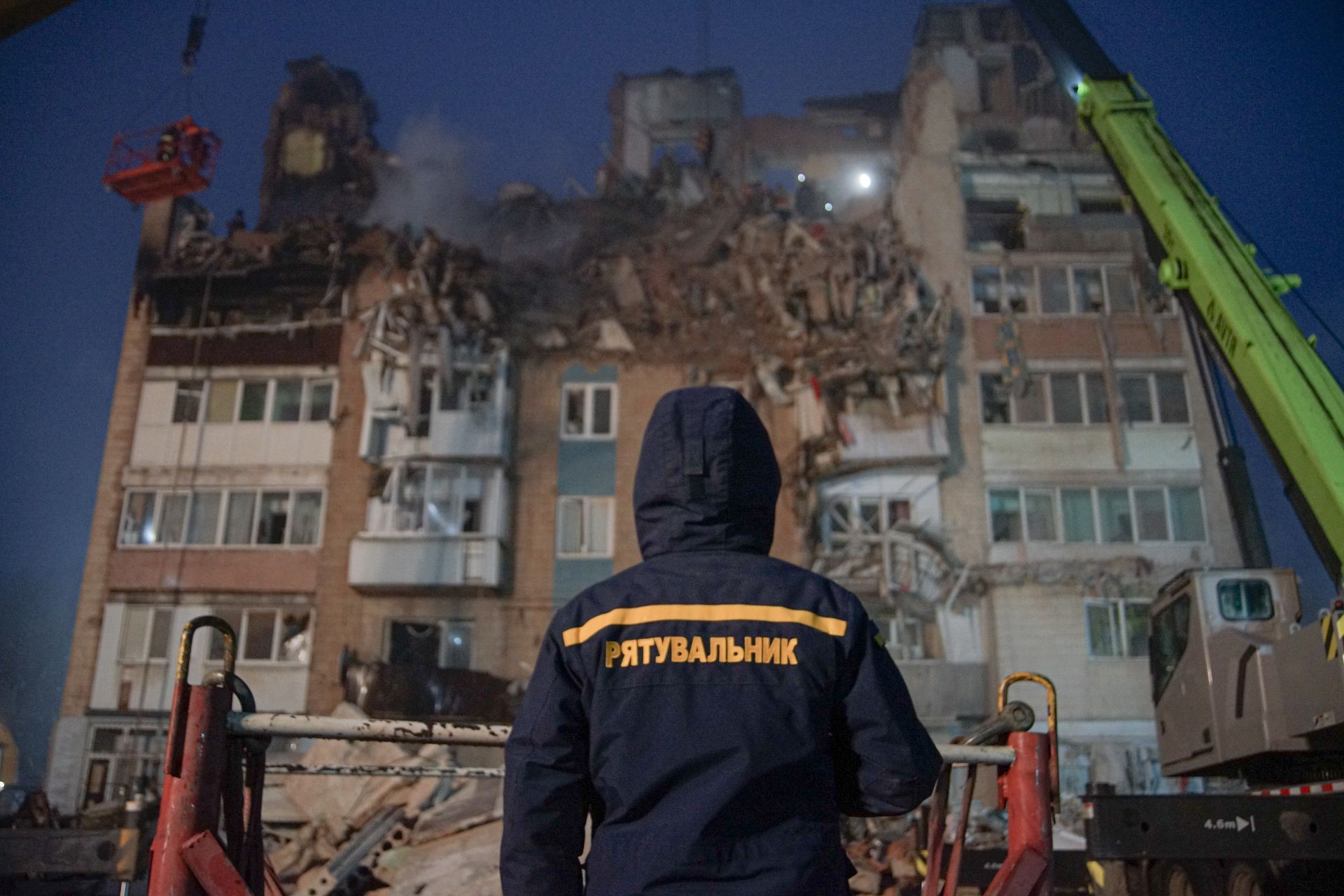
Russian forces carried out a large-scale overnight missile attack on multiple western Ukrainian regions on Nov. 19, striking Ternopil with Kh-101 missiles launched from aircraft in Russia’s Vologda and Astrakhan oblasts; an apartment building collapse left at least 28 dead (including three children), 94 injured (including 18 children) and 16 still missing as rescue teams continue manually searching heavily damaged nine-story blocks. Over 230 rescuers are working the scene, authorities warned that toxic substances in Ternopil’s air rose to six times normal levels, local officials declared days of mourning and canceled public events, and the Security Service has opened a war-crimes investigation. The strike — affecting oblasts more than 500 km from the front line — underscores Russia’s long-range strike capability and raises security and humanitarian risk assessments for areas previously considered distant from the fighting.
Russian forces carried out a large-scale overnight missile attack on Nov. 19 that struck western Ukrainian oblasts including Ternopil, Khmelnytskyi, Ivano-Frankivsk and Lviv; authorities say Kh-101 missiles were launched from aircraft in Russia's Vologda and Astrakhan oblasts. In Ternopil an apartment strike damaged two nine‑story buildings (damage from 3rd to 9th floors), killing at least 28 people (including three children), injuring 94 (including 18 children) and leaving 16 missing as over 230 rescuers from nine regions conduct manual search-and-rescue operations.
Local officials reported a sixfold rise in airborne toxic substances and designated Nov. 19–21 as days of mourning, while the Security Service of Ukraine opened a criminal case under Article 438 (war crimes). The strike struck targets more than 500 km from the front line, underscoring Russian long‑range strike capability and elevating humanitarian, infrastructure and legal risk profiles for areas previously considered insulated from direct attack.
Sentiment metrics are extremely negative (score -0.85) though estimated market impact is moderate (0.3), implying limited immediate market contagion but meaningful sectoral implications: increased demand signals for air‑defense, reconstruction and insurance/recovery services and heightened policy and legal risk that could influence defense procurement and fiscal allocations in coming weeks.
AI-powered research, real-time alerts, and portfolio analytics for institutional investors.
Request DemoOverall Sentiment
extremely negative
Sentiment Score
-0.85
