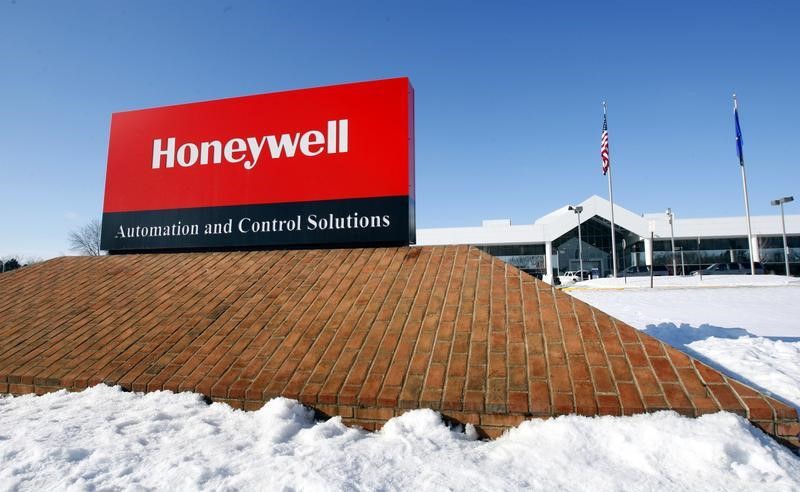
Jefferies reiterated a Hold on Honeywell with a $245 price target versus the current $234.93 (modest upside). It expects Q1 adjusted EPS of $2.31 (vs $2.32 consensus) and Q1 margins of 22.5% (+10 bps YoY), but cut aerospace organic growth to 6% from 7% (consensus 9%) and sees aerospace margins down ~30 bps to 26%. Jefferies still expects Honeywell to maintain full-year 2026 guidance, while the company announced a $500M multi-year U.S. defense supply framework, asset/license deals with Innovative Aerosystems, and an AI security collaboration with Rhombus.
Honeywell’s recent portfolio reorientation toward licensing and third‑party production likely reduces near‑term capital intensity but also shifts revenue mix away from higher‑visibility, sticky aftermarket receipts toward more cyclical OEM flows. That increases earnings sensitivity to aircraft delivery cadence and OEM mix shifts; expect realized margins to oscillate with orderbook timing rather than smooth recurring cash generation.
A strategic pivot into defense production and expanded systems manufacturing creates a long lead‑time optionality: if execution goes well, it compounds revenue durability, but the value is path‑dependent on multi‑quarter factory ramps, subcontractor throughput and inventory build — any slippage is a direct margin hit. The secondary winners from a successful ramp are component and test‑equipment suppliers; the secondary losers are legacy MRO players who may face stronger OEM competition.
The move to embed AI in security products is a classic software attach play that can re‑rate multiples only if management converts feature wins into measurable ARR and margin expansion over several quarters. Given the crowded competitive set, proof points should include ARR retention, gross churn improvement and time‑to‑monetization metrics rather than product announcements alone.
Near‑term, the stock is exposed to an earnings print and updated guidance that will be judged on conversion of weaker aerospace volumes into full‑year targets; misses would likely compress the multiple quickly, whereas maintained guidance without tangible beat‑and‑raise signals would leave upside capped. Monitor supply‑chain cadence, aftermarket revenue trendline and ARR/recurring revenue disclosure as the three high‑signal indicators over the next 3–12 months.
AI-powered research, real-time alerts, and portfolio analytics for institutional investors.
Request DemoOverall Sentiment
mixed
Sentiment Score
0.05
Ticker Sentiment
