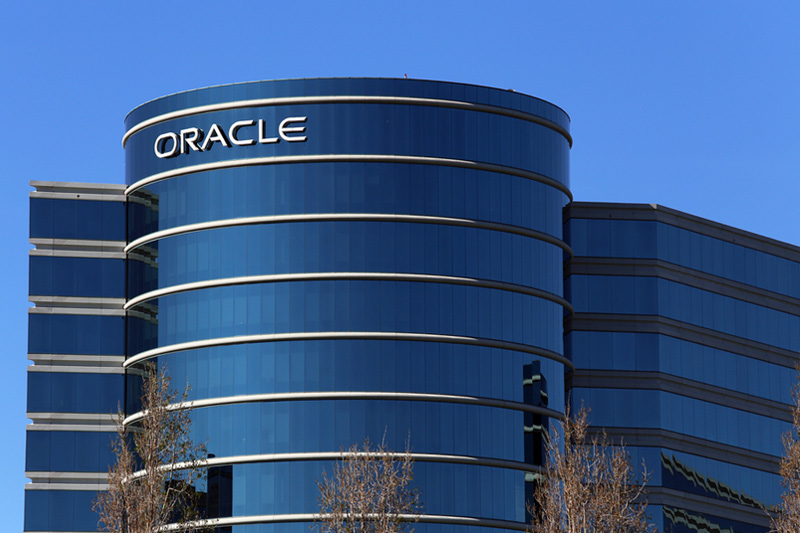
Oracle is expected to report Q3 FY2026 revenue of ~$17.121B (Street $16.91B) with company guidance for revenue growth of 19%-21% YoY in USD (16%-18% constant currency) and non-GAAP EPS of $1.70-$1.74 (USD). Multiple sell- and buy-side firms trimmed price targets (Scotiabank $215; TD Cowen $250 from $350; Piper $240; Jefferies $320 from $400; Barclays $310) but largely kept positive ratings, while Bloomberg reports Oracle plans thousands of job cuts and a cloud hiring pause. Broader market note: TSX futures dropped as oil surged above $100/bbl amid escalating Iran tensions.
Oracle’s pivot into heavy AI/OCI infrastructure creates a two-speed competitive map: GPU and interconnect suppliers (NVIDIA, select OEMs) capture incremental hardware dollars immediately, while legacy enterprise software competitors can steal short-term wallet share if Oracle tightens hiring or delays sales motions. Expect procurement timing shifts at large customers — one quarter of capex reallocation from third-party clouds to on-prem/OCI makes service sales lumpy and amplifies quarter-to-quarter revenue volatility.
Primary risks cluster around margin and cash-flow timing rather than technology adoption. In the next 0–3 months, market moves will be driven by headline execution (QoQ churn, hiring announcements, near-term margin prints); over 6–18 months the key catalyst is ROI proof-points from enterprise GenAI deployments — if customer TCO benefits aren’t visible by then, re-rating pressure can persist. Energy and datacenter opex sensitivity is an under-appreciated vector: sustained power-price shocks can add low-single-digit percentage points to cloud providers’ operating costs, compressing incremental margins on infrastructure-heavy investments.
The consensus is anchored to near-term margin noise and sell-side PTs; the contrarian angle is that disciplined capex plus targeted workforce optimization can preserve long-term gross margins and expand the moat as AI workloads centralize. That implies a convex risk/reward — downside if execution falters, but disproportionate upside if OCI becomes a preferred enterprise AI stack within 12–24 months, because market multiples for credible AI infrastructure leaders are materially higher than legacy application peers.
AI-powered research, real-time alerts, and portfolio analytics for institutional investors.
Request DemoOverall Sentiment
mixed
Sentiment Score
0.00
Ticker Sentiment
